🦴 PREHISTORIC
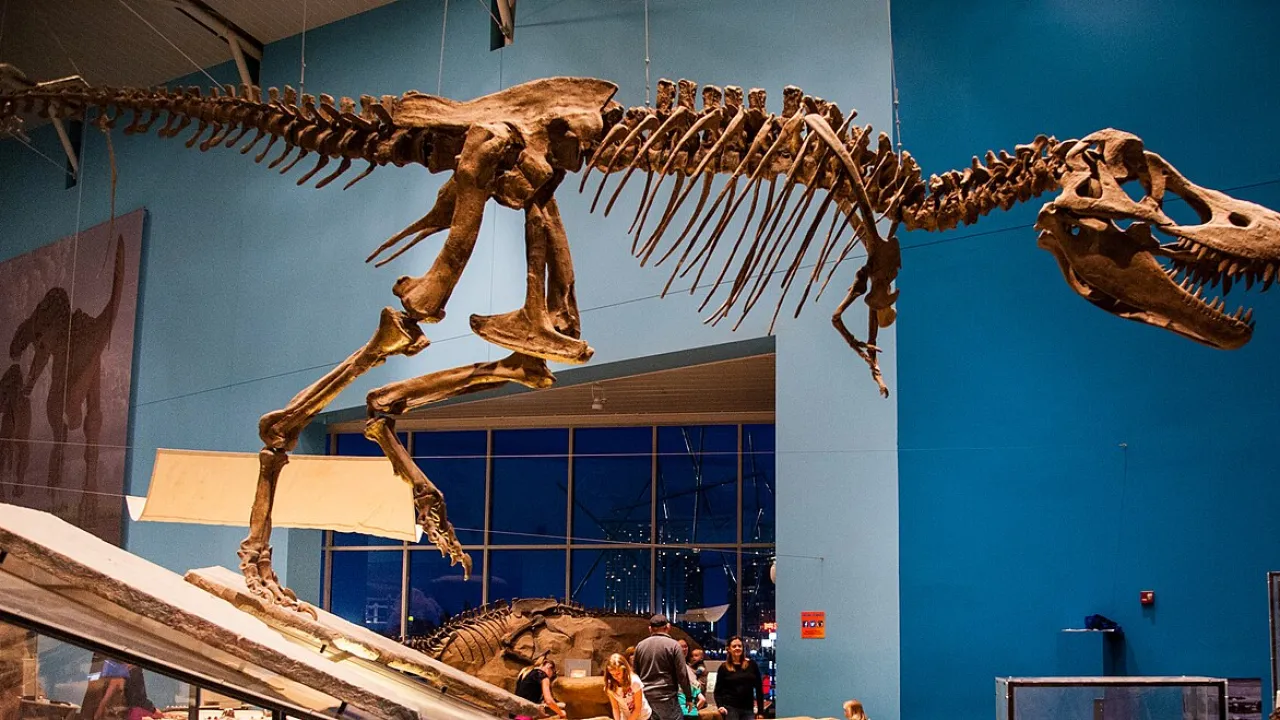
🦴 Tarbosaurus bataar • Tyrannosauridae
VA Science SOL 2.5, 3.4, 3.5, 5.8 (Fossils, Adaptations & Earth History)
Tarbosaurus
Asia's Locking-Jawed Giant Cousin of T. rex
Grade 2 • Developing • 108 words
🌋 Geologic Period & RegionLate Cretaceous (70 MYA) • Gobi Desert, Mongolia & China
📏 Size & Weight33–39 ft (10–12 m) long • 4–5 tons
🦴 Diet & FossilsApex Carnivore • Nemegt Formation
⚡ Survival SuperpowerUnique locking lower jawbone and ultra-tiny two-fingered arms
🤯 Mind-Blowing Fact • Grade 1
Proportionally, Tarbosaurus had the shortest arms of any giant tyrannosaur ever discovered!
✨ Word Sparks (Grade 1 Glossary)
Tap 🔊 to hear
hero
A brave and mighty champion admired by all
lock
To fit together firmly without slipping apart
cousin
A closely related member of the same family
🪝
Meet T. rex's giant cousin from Asia—why were its arms even tinier?
1
Hero of the Gobi
Roar! Heavy footsteps shake a green forest in ancient Mongolia. Out steps Tarbosaurus, a giant of T. rex! Its second name, bataar, comes from the Mongolian word for .
2
Smallest Giant Arms
Everybody laughs at T. rex's short arms, yet Tarbosaurus had even smaller arms for its huge body! Each little hand had two fingers.
3
Locking Jaws
Its tall head held more than sixty thick, sharp teeth. Special ridges locked its lower jaw stiff when it bit!
1. Where did Tarbosaurus live 70 million years ago?
2. What does 'bataar' in Tarbosaurus bataar mean?
🤯 Mind-Blowing Fact • Grade 2
Scientists found a fossilized two-year-old baby Tarbosaurus skull just eleven inches long, showing youngsters started out slim and agile!
✨ Word Sparks (Grade 2 Glossary)
Tap 🔊 to hear
snout
The front nose and jaw part of a skull
joint
The place where two bones meet and move
agile
Quick, light, and easy in movement
🪝
Why did Asia's giant tyrannosaur have a narrower face and a locking jaw?
1
Ruler of Ancient Mongolia
Imagine traveling back 70 million years to the Gobi Desert, only instead of dry sand, you see wide rivers and tall forests! Striding along a riverbank is Tarbosaurus bataar, a forty-foot, five-ton predator whose name means 'alarming hero lizard.' At first glance, you might mistake it for North America's Tyrannosaurus rex!
2
A Narrower Skull That Locked Tight
Look closer at its four-foot-long skull and you will spot cool differences. Tarbosaurus had a narrower than T. rex, so its eyes faced more to the sides. Inside its lower jaw, a special bony peg-and-ridge locked stiffly when clamping huge plant-eaters.
3
Hunting Giant Prey
Instead of horned Triceratops, Tarbosaurus hunted long-necked sauropods like Nemegtosaurus and big duck-billed Saurolophus.
1. How did the skull shape of Tarbosaurus differ from T. rex?
2. Which big plant-eaters shared ancient Mongolia with Tarbosaurus?
🤯 Mind-Blowing Fact • Grade 3
Dozens of Tarbosaurus skeletons have been excavated in Mongolia's Nemegt Formation, making it one of the best-preserved giant carnivores on Earth!
✨ Word Sparks (Grade 3 Glossary)
Tap 🔊 to hear
stereo vision
Both eyes overlapping forward to judge exact distance
rigid
Stiff and firm without bending under force
meandering
Winding back and forth in smooth river curves
🪝
How did Tarbosaurus hunt giant long-necked sauropods in dark prehistoric forests?
1
A Lush Gobi Oasis
Today Mongolia's Gobi Desert is famous for windswept cliffs, yet 70 million years ago its Nemegt Basin brimmed with rivers, marshes, and conifer woods. Prowling those shady trails was Tarbosaurus bataar, unearthed by a joint Soviet-Mongolian expedition in 1946 and named by paleontologist Evgeny Maleev in 1955.
2
Super Senses of Smell and Hearing
Braincase casts of Tarbosaurus revealed a fascinating sensory toolkit. Because its snout stayed narrow even at the back, Tarbosaurus lacked the wide forward of T. rex. Instead, huge smell bulbs and highly developed hearing nerves helped it pinpoint giant prey rustling through dense forest undergrowth.
3
The Secret Locking Jaw
Most tyrannosaurs had slightly flexible lower jaw joints to absorb struggling prey. Tarbosaurus evolved the opposite trick: a bony ridge on one lower jawbone locked neatly into a pocket on the next bone, stiffening its sixty-four-toothed jaw like a steel vise!
4
Tailored for Titanosaurs
Paleontologists think that , slicing bite helped Tarbosaurus tackle massive, thick-skinned sauropods rather than fast-turning horned dinosaurs.
1. Which two senses were especially powerful in Tarbosaurus according to braincase scans?
2. Why did Tarbosaurus evolve a stiff locking ridge inside its lower jaw?
🤯 Mind-Blowing Fact • Grade 4
Fossilized gastralia and foot bones of giant herbivore Deinocheirus preserve deep bite grooves matching the exact tooth spacing of Tarbosaurus bataar!
✨ Word Sparks (Grade 4 Glossary)
Tap 🔊 to hear
mandible
The lower jawbone structure holding bottom teeth
flange
A projecting bony rim that strengthens or locks joints
land bridge
Exposed strip of land connecting two continents
🪝
Why did North America's T. rex have wide binocular vision while Asia's Tarbosaurus locked its jaws stiff?
1
Two Continents, Two Giant Designs
Imagine standing along a misty floodplain in Mongolia's Nemegt Basin 70 million years ago as a twelve-meter, five-ton Tarbosaurus bataar emerges from araucaria groves. Because Asia and western North America connected intermittently via an ancient Bering , Tarbosaurus and Tyrannosaurus rex shared an exceptionally close evolutionary bond. Yet comparing their skulls side by side reveals how different prey shaped two distinct giant hunters.
2
Biomechanics of a Rigid Mandible
In 2003, paleontologists Jørn Hurum and Karol Sabath compared the cranial mechanics of both giants. Whereas T. rex evolved a dramatically widened rear skull to resist violent sideways thrashing from horned ceratopsians like Triceratops, Mongolia lacked giant ceratopsians. Instead, Tarbosaurus retained a narrower cranium equipped with sixty to sixty-four teeth and a unique intramandibular locking between its angular and dentary bones, turning its lower jaw into a stiff, vertical shearing beam ideal for wounding colossal titanosaurian sauropods.
3
Endocast Clues to Forest Life
Endocranial studies by Sergei Saveliev showed Tarbosaurus had smaller optic lobes and narrower binocular overlap than T. rex, compensated by giant olfactory bulbs and keen auditory nerves tuned to vocalizations and footsteps in wooded wetlands.
4
Growing Up With Deinocheirus and Therizinosaurus
Nimble juveniles hunted swift ornithomimosaurs while five-ton adults challenged giant Saurolophus and stayed wary of giant-clawed Therizinosaurus!
1. According to Hurum and Sabath's skull research, why did Tarbosaurus and T. rex evolve different jaw mechanics?
2. Which bizarre giant-clawed Nemegt dinosaur left bones bearing Tarbosaurus bite marks?
🤯 Mind-Blowing Fact • Grade 5
The 29-centimeter juvenile Tarbosaurus skull described in 2011 showed young individuals had slender knife-like teeth so different from adults that they avoided competing with their own parents for food!
✨ Word Sparks (Grade 5 Glossary)
Tap 🔊 to hear
ontogeny
How an individual organism grows and changes from hatchling to adult
mesopredator
A mid-sized hunter feeding on smaller prey below apex giants
Beringia
The prehistoric land bridge linking northeastern Asia and Alaska
🪝
How do cranial stress modeling and juvenile ontogeny illuminate the ecological triumph of Tarbosaurus bataar?
1
Titan of the Nemegt Basin
Seventy million years ago during the early Maastrichtian stage, braided river channels and alluvial plains nourished the rich Nemegt ecosystem across southern Mongolia. Towering as its undisputed apex predator was Tarbosaurus bataar, first recovered by the 1946 Soviet-Mongolian Paleontological Expedition and described by Evgeny Maleev in 1955. Measuring ten to twelve meters in length and weighing four to five metric tons, Tarbosaurus is represented by more than thirty articulated skulls and skeletons—second only to Albertosaurus and Tyrannosaurus among large tyrannosaurids.
2
Intramandibular Locking and Stress Distribution
Comparative osteology by Jørn Hurum and Karol Sabath demonstrated a striking structural divergence from Tyrannosaurus rex. While T. rex expanded its temporal region laterally to endure torsional loads from struggling ceratopsids, Tarbosaurus possessed a narrower snout whose nasal bones channeled bite forces backward into swollen lacrimals. Simultaneously, a prominent bony ridge on the surangular-angular complex interlocked into the rear of the dentary, immobilizing the intramandibular joint for rigid orthal slicing against titanosaurians like Nemegtosaurus and Opisthocoelicaudia.
3
Extreme Forelimb Vestigiality and Sensory Neuroanatomy
Proportionally, Tarbosaurus carried the most reduced forelimbs of any tyrannosaurid, coupled with a vestigial metacarpal III sliver alongside two clawed digits. Endocranial casts reveal enormous olfactory bulbs, acute cochlear development, and modest optic lobes suited for olfactory tracking and acoustic signaling in forested habitats.
4
Ontogenetic Niche Shift
In 2011, Takanobu Tsuihiji and colleagues described an extraordinary twenty-nine-centimeter skull from a two-to-three-year-old juvenile Tarbosaurus. Lacking deep bone-crushing jaws, sleek youngsters occupied a separate niche before undergoing dramatic craniofacial deepening during adolescence.
5
Biogeographic Link Across Beringia
Phylogenetic analyses confirm that late-Cretaceous dispersal across the Beringian corridor linked Asian Tarbosaurus directly to the ancestry of North America's Tyrannosaurus rex.