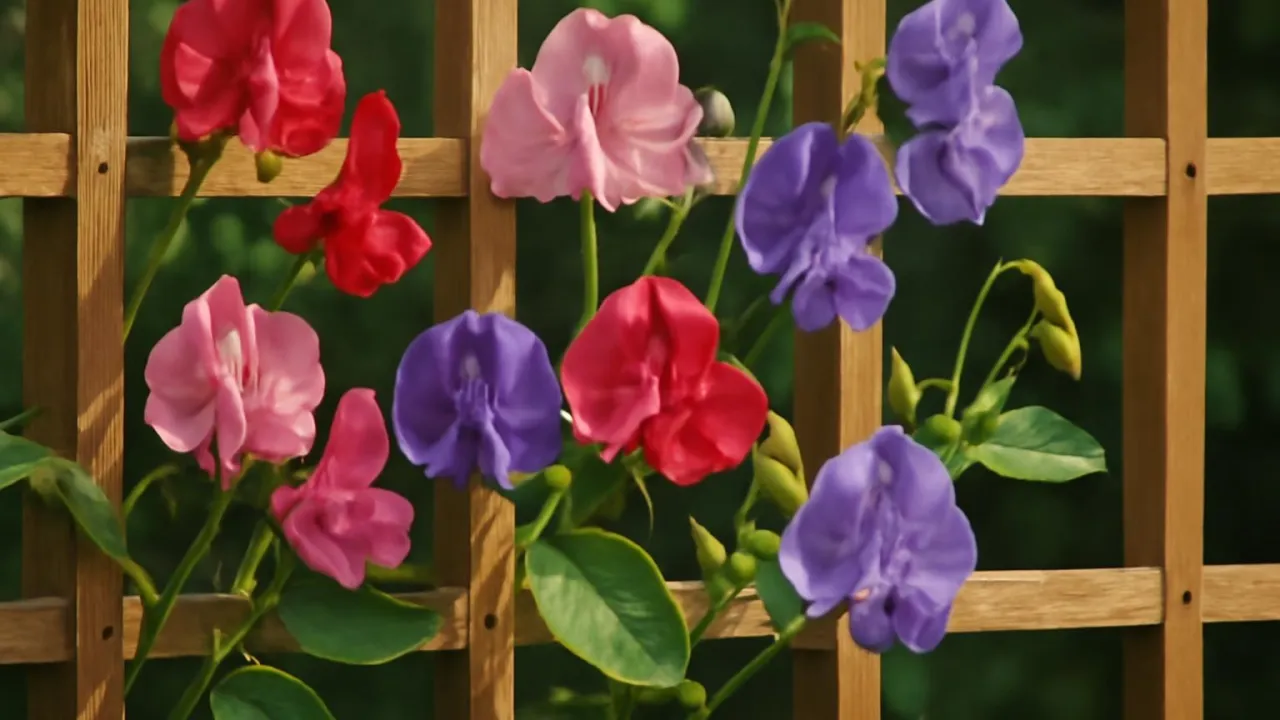
Sweet peas can grow up to six feet tall by climbing with tiny tendrils!
✨ Word Sparks (Grade 2 Glossary)
Tap 🔊 to hear
pollinator
An animal that helps flowers make seeds.
tendril
A tiny part that helps plants climb.
seed
A small part that grows into a plant.
🪝
Have you ever smelled a flower that smells like candy?
1
Bright and Colorful Flowers
Sweet pea flowers come in many bright colors like pink and purple. They grow on green vines that climb fences or poles. The flowers look soft, and their colors attract bees and butterflies.
2
How Sweet Peas Grow
Sweet peas start as small planted in soil. After sprouting, they grow long vines that need support to climb. The plants can reach up to six feet tall when they have something to hold onto.
3
A Lovely Sweet Smell
Sweet peas have a strong sweet smell that bees love. This fragrance helps attract to the flowers. Pollinators help the plants make to grow new sweet peas.
Sweet pea flowers can climb six feet tall by using curly tendrils to grab supports!
✨ Word Sparks (Grade 3 Glossary)
Tap 🔊 to hear
pollination
When pollen moves to help make seeds.
adaptation
A change that helps plants survive.
tendril
A curly part that helps plants climb.
🪝
Did you know sweet peas use their scent to attract helpful pollinators?
1
Bright Colors and Soft Petals
Sweet pea flowers display bright colors like pink, purple, and white that attract pollinators. Their petals are soft and delicate, making them visually appealing. These colors serve as a natural signal to bees and butterflies. This helps the plant reproduce by encouraging .
2
Climbing with Tendrils
Sweet peas have thin, curly that coil around supports to climb upward. This climbing ability helps the plant reach sunlight in crowded environments. Tendrils act like hooks, allowing the vine to hold tightly to fences or other plants. This prevents the plant from being shaded by taller vegetation.
3
Fragrant Scent for Pollination
The sweet fragrance of sweet pea flowers attracts pollinators such as bees and butterflies. occurs when these animals transfer pollen between flowers, helping seeds form. This scent is an important that increases the plant’s chances of reproduction. Without pollinators, sweet peas would not produce seeds effectively.
4
Life Cycle from Seed to Flower
Sweet peas begin life as small seeds planted in soil rich with nutrients. After sprouting, the seedlings grow vines that climb and bloom in spring or early summer. The flowers eventually produce pods containing seeds for the next generation. This life cycle ensures sweet peas continue to grow year after year.
Sweet peas rely on their bright colors and sweet scent to attract pollinators essential for seed production.
✨ Word Sparks (Grade 4 Glossary)
Tap 🔊 to hear
pollinator
An animal that helps flowers make seeds.
adaptation
A change that helps plants survive.
ecosystem
All living things in one place.
🪝
How do sweet peas use their colors and scent to survive in nature?
1
Colorful Flowers and Pollinator Attraction
Sweet pea flowers display vibrant colors like pink, purple, and white, which serve as visual signals to attract such as bees and butterflies. These pollinators are essential for the plant’s reproduction because they transfer pollen between flowers. Without this interaction, sweet peas would struggle to produce seeds and continue their life cycle. The bright colors combined with a strong fragrance work together to maximize pollination success.
2
Climbing Adaptations and Sunlight Access
Sweet peas use thin, curly tendrils to climb fences, trellises, or other plants, allowing them to reach sunlight in crowded environments. This climbing behavior is an important that prevents the plant from being shaded by taller vegetation. By growing upward, sweet peas can photosynthesize more efficiently and produce more flowers. This strategy improves their chances of survival and reproduction in their native habitat.
3
Role in Ecosystems and Human Gardens
In their native Mediterranean habitats, sweet peas provide nectar and pollen to many , supporting local biodiversity. They are also popular in human gardens because of their fragrant flowers and climbing ability. Gardeners often plant sweet peas to attract beneficial insects and add beauty to fences or trellises. However, sweet peas require well-drained soil and full sun to thrive, showing how human care affects their growth.
4
Geographic Origin and Cultivation History
Sweet peas are native to Sicily and southern Italy, where they grow naturally in temperate climates. Over time, gardeners worldwide have cultivated many varieties with different colors and scents. This cultivation has expanded their geographic range far beyond their native habitat. Understanding their origin helps gardeners provide the right conditions to grow healthy sweet peas.
Sweet pea tendrils coil tightly around supports, enabling vines to grow up to six feet tall in one season.
✨ Word Sparks (Grade 5 Glossary)
Tap 🔊 to hear
Fabaceae
The plant family that includes sweet peas.
tendril
A curly part that helps plants climb.
pollination
When pollen moves to help make seeds.
🪝
What makes the sweet pea’s climbing and fragrant flowers a marvel of plant adaptation?
1
Taxonomy and Botanical Classification
Sweet peas belong to the family, scientifically named Lathyrus odoratus, known for nitrogen-fixing abilities. This legume family includes many climbing plants that enrich soil fertility through root nodules. Sweet peas are annual climbers, completing their life cycle within one growing season. Their classification helps scientists understand their ecological roles and relationships with other plants.
2
Physiological Mechanics of Climbing
Sweet peas climb by using specialized that coil tightly around supports, enabling vertical growth. These tendrils are sensitive to touch and can adjust their grip to different surfaces. This climbing mechanism allows sweet peas to access more sunlight and avoid ground-level competition. The plant’s vascular system efficiently transports water and nutrients to support rapid vine growth.
3
Fragrance and Pollination Strategies
The strong sweet fragrance of sweet pea flowers is produced by volatile organic compounds that attract specific pollinators like bees and butterflies. This scent, combined with vivid flower colors, enhances efficiency. Pollinators transfer pollen between flowers, facilitating genetic diversity and seed production. This mutualistic relationship is vital for the plant’s reproductive success.
4
Conservation and Horticultural History
Originally native to Sicily and southern Italy, sweet peas have been cultivated since the 17th century for their ornamental beauty and fragrance. Selective breeding has produced numerous cultivars with diverse colors and scents. While not endangered, sweet peas benefit from conservation of their native habitats and sustainable gardening practices. Their popularity in gardens worldwide supports biodiversity and pollinator populations.
5
Quantitative Comparisons and Growth Data
Sweet pea vines can grow up to six feet (1.8 meters) tall within a single season under optimal conditions. Their flowers measure about one to two inches (2.5 to 5 centimeters) across, displaying a range of colors. The plants require full sun and moderate watering, thriving in temperatures between 55 and 70 degrees Fahrenheit (13 to 21 degrees Celsius). These growth parameters guide gardeners in cultivating healthy sweet peas.