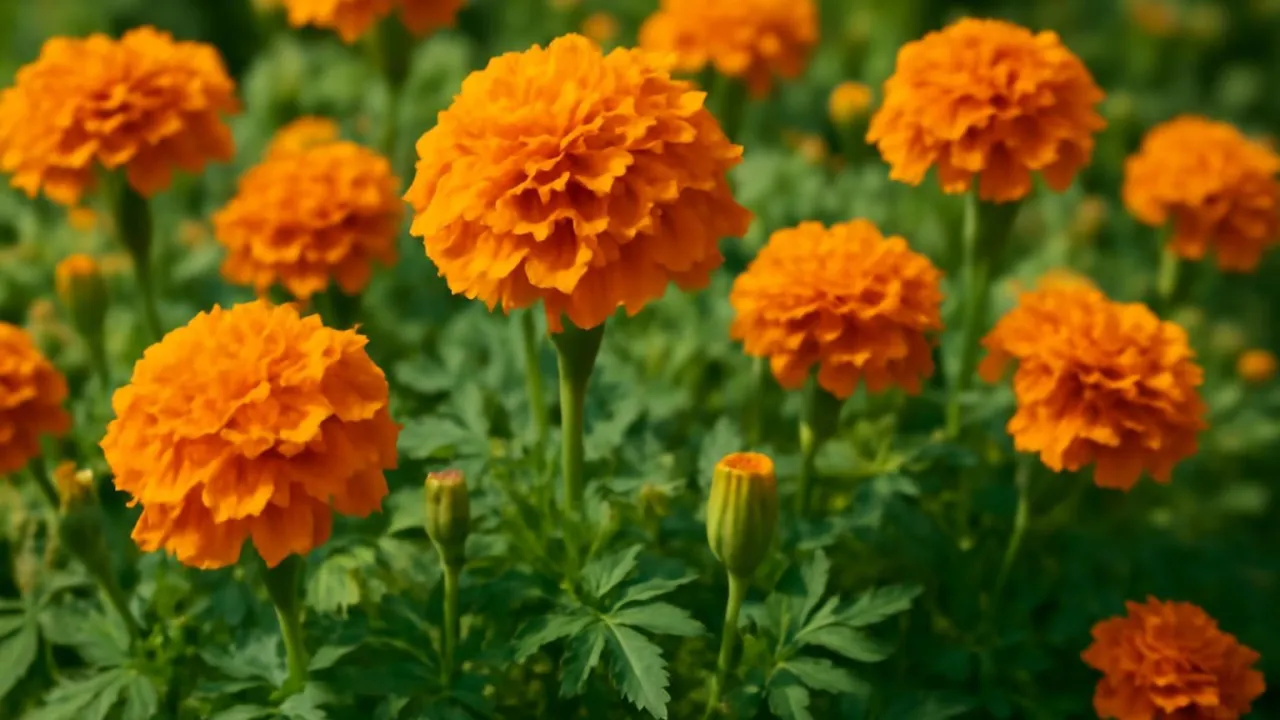
Marigolds can protect nearby plants by keeping harmful bugs away!
✨ Word Sparks (Grade 2 Glossary)
Tap 🔊 to hear
nectar
Sweet juice from flowers
pollinator
Animal that helps flowers make seeds
pest
Bug that can harm plants
🪝
Have you ever smelled a marigold’s fresh, citrusy scent?
1
Colors and Shape
Marigolds have bright orange and yellow petals that look like small suns. Their round flowers bloom in gardens and fields. Bees and butterflies visit them often for .
2
Where They Grow
Marigolds grow best in warm places with lots of sunlight and well-drained soil. They need regular watering but do not like too much water. People plant marigolds in gardens around the world.
3
Special Features
Marigolds have a strong smell that keeps many bugs away from other plants. This natural repellent helps protect vegetables and flowers nearby. Their bright colors also attract helpful .
Did you know marigolds use bright colors and scent to protect themselves?
1
Colorful Defense
Marigolds have bright orange and yellow petals that act as a warning to . Their vivid colors also attract pollinators like bees and butterflies essential for reproduction. This helps marigolds survive in many environments.
2
Growing Habitats
Marigolds thrive in sunny gardens and fields with well-drained soil that provides necessary nutrients. They need moderate watering and warm temperatures to grow strong and healthy. These conditions help marigolds complete their life cycle each year.
3
Natural Pest Control
Marigolds produce a strong scent that repels many harmful insects, acting as a natural pesticide. This scent helps protect nearby plants from pests and reduces the need for chemical pesticides. Farmers often plant marigolds near crops for this reason.
4
Life Cycle and Pollination
Marigolds start as seeds that sprout into seedlings before blooming into flowers. Pollinators transfer pollen between flowers, enabling seed production and plant reproduction. This process is vital for marigold survival and ecosystem health.
Marigolds’ natural pest-repelling scent helps reduce chemical pesticide use worldwide!
✨ Word Sparks (Grade 4 Glossary)
Tap 🔊 to hear
symbiosis
Two living things helping each other
nematode
Tiny worm that can harm plants
pollinator
Animal helping flowers make seeds
🪝
How do marigolds’ bright petals and scent shape their garden homes?
1
Bright Petals and Survival
Marigolds’ bright orange and yellow petals serve as visual signals that deter predators and attract simultaneously. This dual role helps marigolds survive by reducing threats and ensuring reproduction through pollination. Their coloration is a key adaptation in their native habitats, helping them thrive in diverse environments.
2
Ecosystem Roles and Benefits
Marigolds play an important role in food webs by supporting like bees and butterflies with nectar. Their scent repels pests such as and aphids, protecting nearby plants and crops. This symbiotic relationship benefits both the marigolds and surrounding organisms, maintaining garden health and balance.
3
Geographic Distribution and Growth
Native to Mexico and Central America, marigolds have spread worldwide due to their pest-repellent properties and easy cultivation. They thrive in warm climates with full sun and well-drained soil, adapting well to garden and agricultural settings. Their growth supports diverse ecosystems globally and helps farmers reduce pesticide use.
4
Human Impact and Uses
Humans use marigolds in gardens to naturally reduce pests without chemicals, promoting sustainable agriculture. They are also used in traditional medicine and cultural ceremonies in many countries. The plant’s ability to protect crops reduces pesticide use and benefits the environment, supporting healthier ecosystems and food production.
Marigolds can reduce harmful nematode pests by up to 90 percent in agricultural fields!
✨ Word Sparks (Grade 5 Glossary)
Tap 🔊 to hear
thiophenes
Natural chemicals that repel pests
nematode
Tiny worm that harms plant roots
integrated pest management
Using natural ways to control pests
🪝
What scientific secrets make marigolds powerful natural protectors in gardens worldwide?
1
Taxonomy and Botanical Classification
Marigolds belong to the genus Tagetes within the Asteraceae family, which includes daisies and sunflowers. This genus contains about 50 species, mostly native to Mexico and Central America. Their classification helps scientists understand their evolutionary adaptations and relationships. Understanding taxonomy reveals how marigolds are related to other flowering plants.
2
Physiological Mechanics and Defense
Marigolds produce chemical compounds called that act as natural pesticides, deterring and insect pests effectively. These compounds are released from roots and leaves, creating a protective zone around the plant. The bright petals also attract beneficial pollinators, ensuring reproduction. This chemical defense reduces the need for synthetic pesticides in agriculture.
3
Conservation and Botanical History
Historically, marigolds have been cultivated for centuries in indigenous cultures for medicinal and ceremonial uses. Their pest-repellent properties have led to widespread agricultural adoption, reducing chemical pesticide dependence. Conservation efforts focus on preserving native species diversity amid habitat loss. Protecting marigold habitats supports biodiversity and ecological balance.
4
Quantitative Comparisons and Growth
Marigolds typically grow between 6 and 36 inches tall, with flower heads ranging from 1 to 3 inches in diameter. They thrive in temperatures between 70 and 85 degrees Fahrenheit and require about 1 inch of water weekly. Their growth rate and pest protection make them valuable in sustainable farming. Compared to other flowers, marigolds have a faster growth cycle and stronger pest defense.
5
Ecological and Agricultural Impact
Marigolds contribute significantly to by reducing harmful populations by up to 90 percent in some crops. Their presence supports pollinator populations, enhancing biodiversity and crop yields. This ecological role makes marigolds essential for environmentally friendly agriculture. Farmers worldwide rely on marigolds to improve crop health naturally and sustainably.