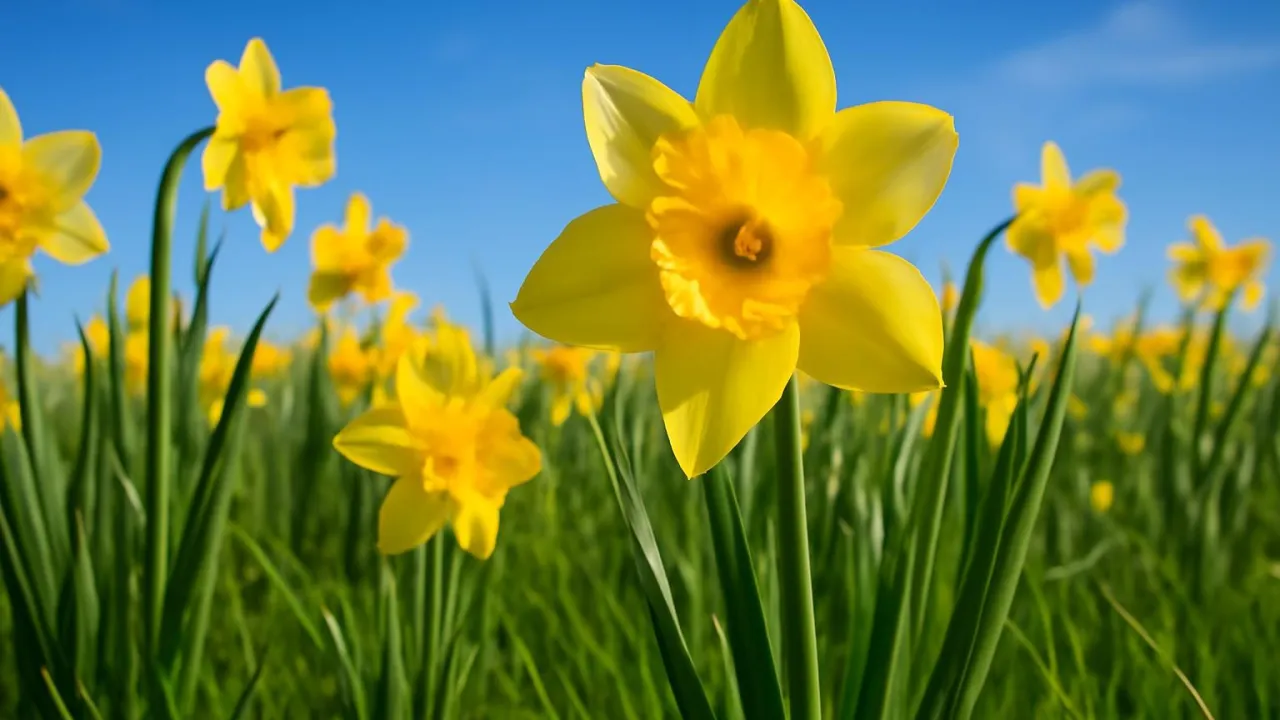
Some daffodil bulbs can live and bloom for over 10 years!
✨ Word Sparks (Grade 2 Glossary)
Tap 🔊 to hear
bulb
A round part underground that grows a plant.
nectar
Sweet juice inside flowers for insects.
shoot
A young plant stem growing up from the ground.
🪝
Did you know daffodils are one of the first flowers to wake up after winter?
1
Trumpets of Spring
Daffodils have bright yellow or white petals that look like trumpets. They bloom in early spring, even when the air is still chilly. Their cheerful color makes gardens look sunny. Daffodils can even grow in parks and yards.
2
How Daffodils Grow
Daffodils start as underground, sleeping all winter long. When spring comes, the bulb sends up green and leaves. Soon, the flower opens at the top of the stem. Bees and bugs visit to drink sweet .
3
What Daffodils Need
Daffodils need sunlight and water to grow strong and tall. They like soft, moist soil that drains well. People plant daffodil in the fall before the ground freezes. The bulbs rest until it’s time to bloom again.
Daffodils are poisonous if eaten by people or pets, so don’t taste them!
✨ Word Sparks (Grade 3 Glossary)
Tap 🔊 to hear
bulb
A round underground part that stores food.
adaptation
A special feature that helps something survive.
photosynthesis
How plants use sunlight to make food.
🪝
What flower can grow through cold soil and bloom before almost any other?
1
The Early Bloomer
Daffodils are famous for blooming when winter is barely over. Their bright yellow or white petals form a trumpet shape, which stands out in gardens and fields. These flowers can even push through snow to reach sunlight. Daffodils are a sign that spring is truly here.
2
Life of a Daffodil
A daffodil starts as a , which stores food underground during winter. When temperatures rise, the bulb sends up shoots and leaves, using stored nutrients for energy. The flower opens at the top of a tall green stem. After blooming, the plant makes seeds and the bulb prepares for next year.
3
How Daffodils Survive
Daffodils have special to survive cold weather and hungry animals. Their are tough and store nutrients, helping them grow quickly in early spring. The plant’s leaves make food from sunlight using . Daffodils are also poisonous to many animals, so most creatures leave them alone.
4
Helping Bees and People
Daffodils provide nectar for early pollinators like bees, which need food after winter. People love daffodils for their beauty and because they return year after year. In some places, daffodils are used in gardens to keep pests away. Their bright colors make everyone feel happy after a long winter.
Daffodils have been grown in gardens for over 1,000 years and are symbols of hope worldwide.
✨ Word Sparks (Grade 4 Glossary)
Tap 🔊 to hear
dormant
Resting or sleeping, not growing.
erosion
When soil is worn away by water or wind.
pollinator
An animal that moves pollen between flowers.
🪝
How does a daffodil outsmart winter and become one of the first flowers to bloom each year?
1
Spring’s Golden Messenger
Daffodils are among the earliest flowers to bloom, often appearing while snow still lingers on the ground. Their trumpet-shaped blooms can be yellow, white, or even orange, making them easy to spot in gardens, meadows, and forests across Europe and North America. Daffodils grow from underground bulbs, which store nutrients during the cold months. This energy reserve allows them to grow rapidly as soon as temperatures rise.
2
A Clever Life Cycle
The daffodil’s life cycle starts in autumn, when gardeners plant bulbs in cool soil. Throughout winter, the bulbs remain , protected from freezing by their tough outer layers. As spring arrives, the bulbs send up shoots and leaves, quickly followed by flowers. After blooming, daffodils make seeds and store energy in their bulbs for the next year, allowing them to return again and again.
3
Survival Tricks and Defenses
Daffodils have evolved several adaptations to survive harsh weather and hungry animals. Their leaves and bulbs contain chemicals that are poisonous to most animals, so deer and rabbits avoid eating them. The plant’s early blooming helps it take advantage of sunlight before trees grow leaves and shade the ground. Photosynthesis in their leaves creates food that is stored for future growth.
4
Daffodils in Nature and Culture
Daffodils play a helpful role in their ecosystems by providing nectar to early like bees. People also value daffodils for their beauty and because they signal the end of winter. In some regions, wild daffodils help prevent soil by holding dirt in place with their roots. Daffodils are celebrated in festivals and even used as symbols of hope and new beginnings in many cultures.
1. Why do daffodils bloom before trees have leaves?
2. How do daffodils help the soil?
🤯 Mind-Blowing Fact • Grade 5
A single daffodil bulb can produce up to 20 flowers over its lifetime, brightening gardens for decades.
✨ Word Sparks (Grade 5 Glossary)
Tap 🔊 to hear
alkaloid
A chemical in plants that can be poisonous.
cultivar
A plant variety bred by people for gardens.
perennial
A plant that lives for many years.
🪝
What secrets let daffodils burst into bloom while most plants are still sleeping underground?
1
Botanical Identity and Origins
Daffodils belong to the genus Narcissus, with Narcissus pseudonarcissus being the classic wild daffodil species native to Europe. These plants are part of the Amaryllidaceae family, which includes other well-known bulbs like snowdrops and amaryllis. Daffodils have been cultivated for centuries, and over 25,000 registered exist today, displaying a variety of colors and forms. Their native habitat includes meadows, open woodlands, and riverbanks, but they are now naturalized in temperate regions worldwide. Botanically, daffodils are true bulbs, which means their storage organ is made of layered, modified leaves.
2
Physiology and Early Blooming Mechanics
Daffodils’ ability to bloom early is due to their unique physiological adaptations. Their bulbs store carbohydrates and nutrients collected during the previous growing season, allowing rapid growth as soon as soil temperatures reach about 50°F (10°C). The flower bud forms inside the bulb months before it emerges, protected from frost by several layers of leaf tissue. As the stem elongates, it pushes through cold soil, and the flower opens even when nighttime temperatures dip below freezing. This strategy lets daffodils take advantage of abundant early spring sunlight before trees leaf out and shade the ground.
3
Ecological Roles and Interactions
Daffodils play several important roles in ecosystems and gardens. Their early blooms provide nectar and pollen for pollinators such as honeybees and solitary bees, which are often active before other flowers are available. The plant’s compounds make it toxic to most herbivores, protecting it from being eaten by deer, rabbits, and rodents. Daffodils can form dense colonies that help stabilize soil and reduce erosion on slopes and riverbanks. In gardens, they are often planted as natural pest barriers because their toxicity deters many common pests.
4
Human Uses and Cultural Significance
Humans have admired and cultivated daffodils for over a thousand years, using them as symbols of hope, rebirth, and new beginnings in many cultures. In Wales, the daffodil is a national symbol worn on Saint David’s Day, while in other countries it represents the arrival of spring. Daffodils are also important in horticulture, with breeders developing new for gardens and flower shows. However, all parts of the daffodil are poisonous if ingested, and the sap can irritate skin, so handling with care is important. Despite this, daffodils are celebrated for their beauty and resilience.
5
Conservation, Quantitative Traits, and Fun Comparisons
Wild daffodil populations have declined in some areas due to habitat loss and overharvesting, making conservation efforts important for preserving native species. A typical daffodil plant grows 12–18 inches (30–45 cm) tall, with flowers about 2–4 inches (5–10 cm) wide. Daffodil bulbs can survive freezing temperatures as low as 14°F (-10°C) and may live and bloom for 20 years or more. In comparison, daffodils bloom weeks before tulips and can even push through late snowfalls. Their early arrival and bright color make them one of the most recognizable signs of spring across the world.