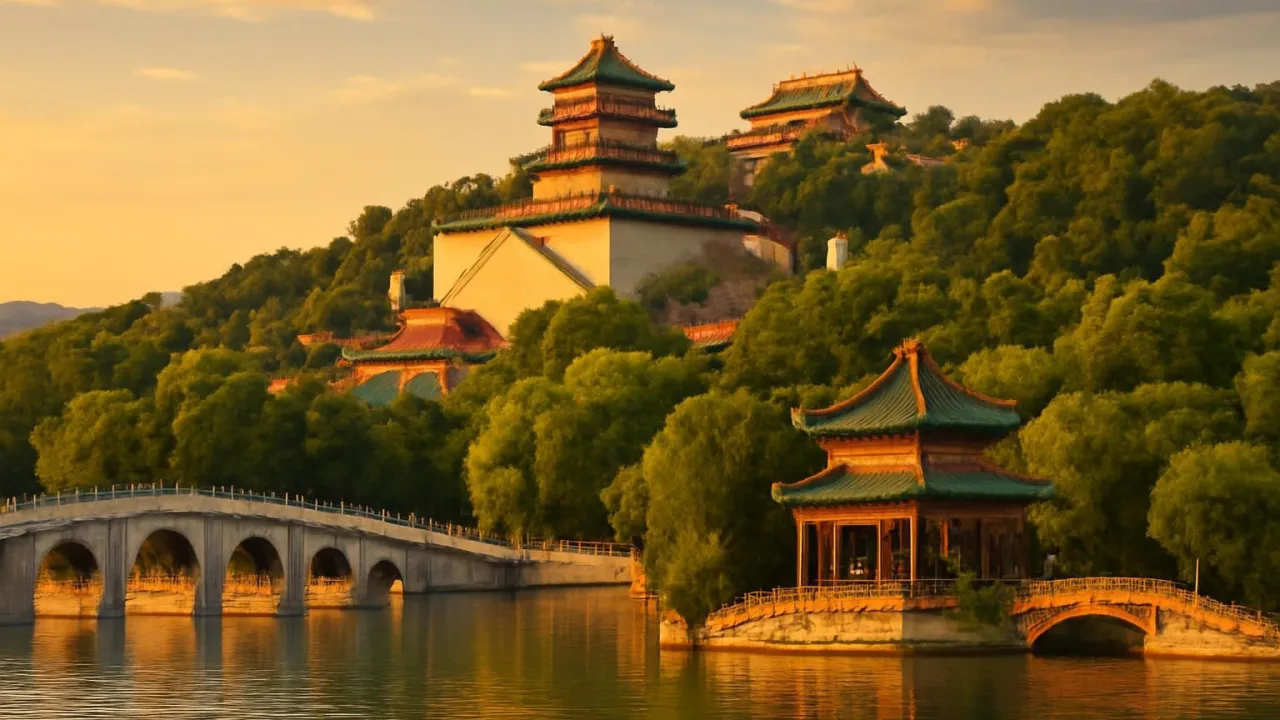
The Long Corridor at the Summer Palace is over 2,300 feet long.
✨ Word Sparks (Grade 2 Glossary)
Tap 🔊 to hear
corridor
A long covered walkway
incense
A sweet-smelling stick for burning
garden
A place with many plants and flowers
🪝
What would it feel like to walk over a long stone bridge above shining water?
1
A Garden for Royalty
The Summer Palace was made for Chinese emperors. They came here to rest and enjoy nature. People still visit this peaceful place today.
2
A Lake Full of Life
Kunming Lake is huge and sparkles in the sun. Colorful boats glide across the water, and ducks swim nearby. Many visitors take boat rides or feed the birds.
3
Bridges and Beautiful Buildings
There are many stone bridges and fancy halls. The Tower of Buddhist stands tall on Longevity Hill. Flowers and trees grow everywhere in the .
The Long Corridor’s beams are painted with scenes from famous Chinese stories.
✨ Word Sparks (Grade 3 Glossary)
Tap 🔊 to hear
dynasty
A family that rules for many years
engineering
Building things in smart ways
arch
A curved shape in bridges or doors
🪝
Imagine the echo of your footsteps as you walk under painted beams beside a sparkling lake.
1
A Royal Retreat
The Summer Palace was built as a peaceful escape for Qing emperors. Surrounded by gardens, lakes, and hills, it offered a cool place to relax in the summer. Today, thousands of people visit each year to enjoy its beauty. The palace is a symbol of Chinese art and history.
2
Kunming Lake and Longevity Hill
Kunming Lake covers most of the palace grounds and reflects the sky like a mirror. The man-made lake was dug by hand and filled with water from nearby springs. Longevity Hill rises above the lake, topped by the Tower of Buddhist Incense. Visitors climb its steps for amazing views of the gardens below.
3
Bridges, Halls, and the Long Corridor
The palace is famous for its elegant bridges and colorful halls. The Long Corridor stretches beside the lake, decorated with over 14,000 paintings. Its covered walkway protects visitors from rain and sun. Stone bridges with graceful connect different parts of the gardens.
4
Art, Nature, and Engineering
The Summer Palace blends art, nature, and clever . The gardens use rocks, water, and plants to create harmony. Engineers designed the lake to help control flooding and provide water. The palace’s structures show balance and beauty in every detail.
2. What protects visitors as they walk the Long Corridor?
🤯 Mind-Blowing Fact • Grade 4
Kunming Lake was dug by hand by thousands of workers in the 1700s.
✨ Word Sparks (Grade 4 Glossary)
Tap 🔊 to hear
imperial
Related to an emperor or empire
UNESCO
A group that protects world treasures
legend
A famous old story from history
🪝
What secrets might you uncover walking through painted corridors where emperors once strolled?
1
A Masterpiece of Imperial Design
The Summer Palace, rebuilt during the Qing Dynasty, served as a luxurious summer retreat for China’s emperors. Its design blends natural landscapes with carefully planned architecture, creating a tranquil escape from the bustling city. Visitors today can explore the same gardens, halls, and lakes that once hosted royal celebrations. The palace reflects the artistry and grandeur of ancient Chinese civilization.
2
Kunming Lake: Beauty and Function
Kunming Lake, covering nearly three-quarters of the palace grounds, was entirely man-made and filled with spring water. Engineers designed the lake not only for beauty but also to help prevent flooding in Beijing. The lake’s shape was inspired by the West Lake in Hangzhou, another famous Chinese landmark. Its calm surface mirrors the sky, while stone bridges and willow trees line the shore.
3
The Long Corridor and Painted Wonders
The Long Corridor, stretching over 2,300 feet, is the world’s longest painted wooden walkway. Its beams and ceilings are decorated with over 14,000 colorful paintings, each telling stories from Chinese and history. This corridor connects the palace’s main halls and offers shelter from both rain and sun. Walking its length, visitors can admire intricate art while enjoying views of the lake and gardens.
4
Cultural Legacy and Global Recognition
The Summer Palace is recognized as a World Heritage site for its outstanding design and historical value. It stands as a symbol of harmony between humans and nature, showing how architecture can blend with the environment. People from around the world visit to learn about Chinese culture and history. The palace’s influence can be seen in garden designs across East Asia and beyond.
1. How did engineers help protect Beijing using the palace lake?
2. What makes the Long Corridor unique in the world?
🤯 Mind-Blowing Fact • Grade 5
The Summer Palace’s Long Corridor contains more painted scenes than any other walkway on Earth.
✨ Word Sparks (Grade 5 Glossary)
Tap 🔊 to hear
hydrology
The science of how water moves and is used
restoration
Fixing old things to look new again
feng shui
An ancient way to arrange spaces for harmony
🪝
What if you could decode the ancient engineering secrets hidden in every stone, bridge, and painted beam of the Summer Palace?
1
Imperial Vision: The Summer Palace’s Origins
The Summer Palace, or Yiheyuan, represents the pinnacle of Qing Dynasty landscape architecture and imperial leisure. Originally constructed in 1750 under Emperor Qianlong, it was designed as a harmonious retreat blending natural scenery with sophisticated engineering. After suffering damage during the Second Opium War and again in 1900, the palace was meticulously restored, preserving its unique blend of history and artistry. Its design reflects both traditional Chinese garden philosophy and the political power of the emperors who ruled from Beijing. Today, it stands as a living museum of imperial ambition and cultural achievement.
2
Kunming Lake: Handcrafted Hydrology and Symbolism
Kunming Lake, occupying about 540 acres, was entirely excavated by hand by thousands of laborers. Its design was inspired by the famous West Lake in Hangzhou, but it also served critical hydrological functions, acting as a reservoir to prevent flooding in the capital. The lake’s depth averages 5 to 6 feet, allowing for boating and scenic reflections of Longevity Hill. Engineers carefully calculated the water flow from nearby springs, ensuring a sustainable supply. The lake’s shape, resembling a peach, symbolizes longevity and prosperity in Chinese culture.
3
Architectural Marvels: The Long Corridor and Tower of Buddhist Incense
The Long Corridor, stretching over 2,388 feet, is renowned for its 14,000 hand-painted panels depicting scenes from classic literature and folklore. Its wooden structure was engineered to withstand Beijing’s seasonal weather, with a gently sloping tiled roof and open sides for ventilation. The Tower of Buddhist Incense rises 131 feet atop Longevity Hill, constructed with intricate brackets and stone foundations to resist earthquakes. Both structures demonstrate advanced Qing-era architectural techniques, blending beauty, durability, and function.
4
Cultural Significance and Global Influence
As a UNESCO World Heritage site, the Summer Palace is celebrated for its integration of natural and man-made elements, influencing garden design throughout East Asia. Its layout follows principles, aligning water, hills, and buildings for harmony and balance. The palace served as a political and cultural center, hosting imperial ceremonies and artistic performances. Today, it attracts millions of visitors annually, fostering appreciation for Chinese history, art, and environmental design.
5
Preservation, Restoration, and Modern Legacy
Ongoing efforts ensure the palace’s wooden structures, paintings, and stonework remain vibrant for future generations. Conservationists use traditional materials and techniques to preserve the site’s authenticity, while modern engineering helps protect it from pollution and erosion. The Summer Palace stands as a testament to human creativity and resilience, bridging ancient wisdom with contemporary stewardship. Its legacy endures as both a national treasure and a global symbol of harmonious landscape architecture.