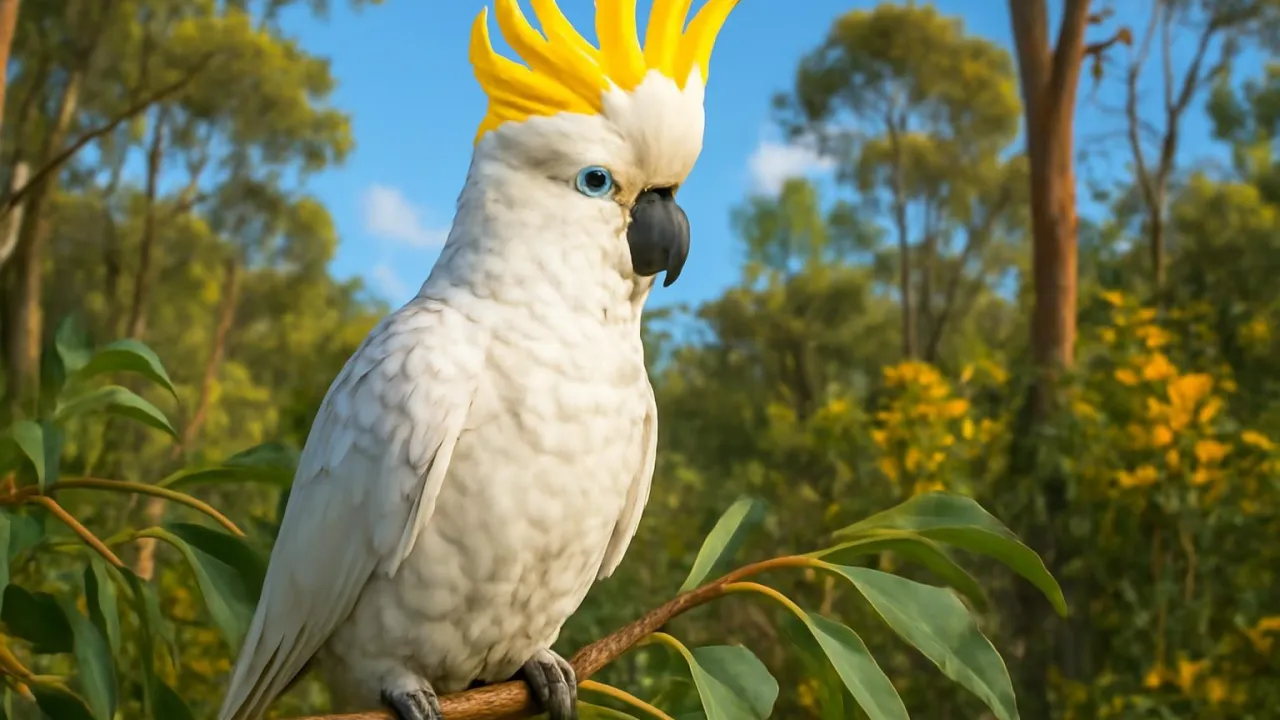
Sulphur-crested cockatoos can mimic sounds and even learn words!
✨ Word Sparks (Grade 2 Glossary)
Tap 🔊 to hear
nest
A safe place for bird eggs
mimic
To copy a sound or action
woodland
A place with lots of trees
🪝
Did you know some birds can scream like a siren?
1
A Crown of Yellow
The sulphur-crested cockatoo has white feathers and a yellow crest. Its crest pops up when it is excited or scared. These birds are easy to spot because of their bright crown.
2
Forest Homes
Sulphur-crested cockatoos live in forests and in Australia and nearby islands. They like to in tree holes high above the ground. The trees keep them safe from many dangers.
3
What’s for Dinner?
These birds love to eat seeds, nuts, and fruits. Their strong beaks help them crack open hard shells. Sometimes, they even use sticks to help get food.
A flock of cockatoos can be heard from over a mile away!
✨ Word Sparks (Grade 3 Glossary)
Tap 🔊 to hear
flock
A group of birds together
predator
An animal that hunts others
adaptation
A special way to survive
🪝
What bird can out-scream a rock concert?
1
A Splash of Yellow
Sulphur-crested cockatoos are large, white parrots with a bright yellow crest. Their crest feathers stand up when they are surprised or excited. These crests help them show feelings to other birds. The yellow color makes them easy to spot in green trees.
2
Living in the Treetops
These cockatoos live in forests, woodlands, and even city parks in Australia. They build nests in hollow tree trunks, which protect their eggs from . Cockatoos often together in noisy groups for safety. Their loud calls warn each other about danger.
3
Super Smart Snackers
Cockatoos eat seeds, nuts, roots, and fruits they find in the wild. Their powerful beaks can crack very tough shells for food. Sometimes, they use sticks as tools to dig or reach snacks. This clever helps them get food other birds cannot.
4
Growing Up Cockatoo
Baby cockatoos hatch from eggs after about a month. Both parents feed and protect the chicks in the nest. The chicks grow strong feathers before they leave the nest to fly. Cockatoos can live for many decades in the wild.
Some cockatoos have been taught to solve puzzles and unlock boxes in experiments!
✨ Word Sparks (Grade 4 Glossary)
Tap 🔊 to hear
canopy
The top layer of tall trees
conservation
Helping protect plants and animals
ecosystem
A place where living things interact
🪝
Could a wild bird’s call wake up a whole neighborhood?
1
A Crest That Talks
The sulphur-crested cockatoo’s striking yellow crest is more than just decoration; it acts as a communication tool. When the bird feels excited, threatened, or curious, it raises its crest to signal its feelings to others. This visual signal helps cockatoos avoid fights and share warnings in their large, noisy flocks. Their bright white and yellow coloring also helps them stand out among the green treetops.
2
Life in the Canopy
Sulphur-crested cockatoos are native to Australia, Papua New Guinea, and parts of Indonesia, where they prefer forests, woodlands, and even urban parks. They nest in hollow tree trunks, which keep their eggs and chicks safe from predators like snakes and goannas. These birds often gather in flocks of up to a hundred, using their screeches to alert others to food or danger. Their strong social bonds help them survive in changing environments.
3
Brains and Beaks
These cockatoos are famous for their intelligence and problem-solving skills, especially when searching for food. They use their powerful beaks to crack open hard nuts and sometimes use sticks as tools to reach seeds or roots. This adaptation allows them to eat foods that many other birds cannot access. In cities, cockatoos have even learned to open garbage bins to find snacks, showing their ability to adapt to human environments.
4
Long Lives, Big Impact
Sulphur-crested cockatoos can live for more than 70 years, making them one of the longest-lived wild birds. Their long lives mean they play a big role in their , spreading seeds and helping forests grow. However, they can sometimes damage crops, which causes conflicts with farmers. efforts focus on protecting their habitats while finding ways for people and cockatoos to live together peacefully.
2. Why do cockatoos sometimes cause problems for farmers?
🤯 Mind-Blowing Fact • Grade 5
A sulphur-crested cockatoo’s screech can be heard over three miles (5 km) away in open country!
✨ Word Sparks (Grade 5 Glossary)
Tap 🔊 to hear
decibel
A unit for measuring sound loudness
biodiversity
Many different living things in one place
territory
An area an animal defends or uses
🪝
What animal can outlive your grandparents and outsmart a locked trash can?
1
Meet the Sulphur-Crested Cockatoo
The sulphur-crested cockatoo (Cacatua galerita) is a large, highly intelligent parrot native to Australia, Papua New Guinea, and parts of Indonesia. Belonging to the family Cacatuidae, this species is instantly recognizable by its brilliant white feathers and the striking sulphur-yellow crest that it raises to communicate excitement or alarm. Adult cockatoos typically measure 17–21 inches (43–53 cm) from beak to tail and weigh between 1.3 and 2.1 pounds (600–950 grams). Their powerful, curved beaks and strong feet are perfectly adapted for climbing, grasping, and manipulating objects in their environment. Sulphur-crested cockatoos are among the most long-lived of all birds, with some individuals in captivity reaching ages of 80 years or more.
2
Communication and Social Intelligence
Sulphur-crested cockatoos are famous for their extraordinary vocal abilities, producing ear-splitting screeches that can reach up to 120 —almost as loud as a thunderclap. These calls serve multiple purposes: they warn flock members of danger, help maintain group cohesion, and even mark . Cockatoos also use their expressive crests and body language to communicate emotions, intentions, and social rank within their flocks. In the wild, they form flocks of up to 100 individuals, displaying complex social behaviors such as mutual preening, coordinated flight, and cooperative foraging. Their intelligence rivals that of some primates, and they are capable of learning to mimic human speech and solve multi-step puzzles.
3
Adaptations for Survival
This species thrives in a range of habitats, from eucalyptus forests and mangroves to urban parks and farmlands. Sulphur-crested cockatoos are opportunistic feeders, consuming seeds, nuts, fruits, berries, roots, and occasionally insects. Their robust beaks can crack open the toughest seed pods, and they have been observed using sticks and other tools to access hard-to-reach food sources. Nesting in tree hollows high above the ground, both parents share the duties of incubating eggs and feeding chicks. Their adaptability has allowed them to flourish even in cities, where they are known to open garbage bins and raid crops, sometimes leading to conflicts with humans.
4
Ecosystem Role and Conservation Challenges
Sulphur-crested cockatoos play a crucial role in their ecosystems by dispersing seeds, which helps regenerate forests and maintain . However, their intelligence and adaptability can bring them into conflict with farmers, as large flocks may damage crops or strip bark from trees. Although the species is currently listed as Least Concern by the IUCN, habitat loss and illegal trapping for the pet trade pose ongoing threats. Conservation programs focus on protecting nesting sites, educating communities, and enforcing laws against wildlife trafficking to ensure healthy wild populations.
5
Amazing Longevity and Human Connections
With lifespans exceeding 70 years in the wild and even longer in captivity, sulphur-crested cockatoos often outlive their human caretakers. Their remarkable memory, playful personalities, and ability to mimic speech make them popular—but demanding—pets. In scientific studies, these cockatoos have demonstrated advanced problem-solving skills, such as unlocking multi-step puzzle boxes and learning by watching others. Their loud calls and bold behavior have made them a symbol of the Australian bush, but they require large territories and complex social interactions to thrive. Understanding their needs is key to ensuring their survival both in the wild and in human care.