1. How does the ozone layer help living things on Earth?
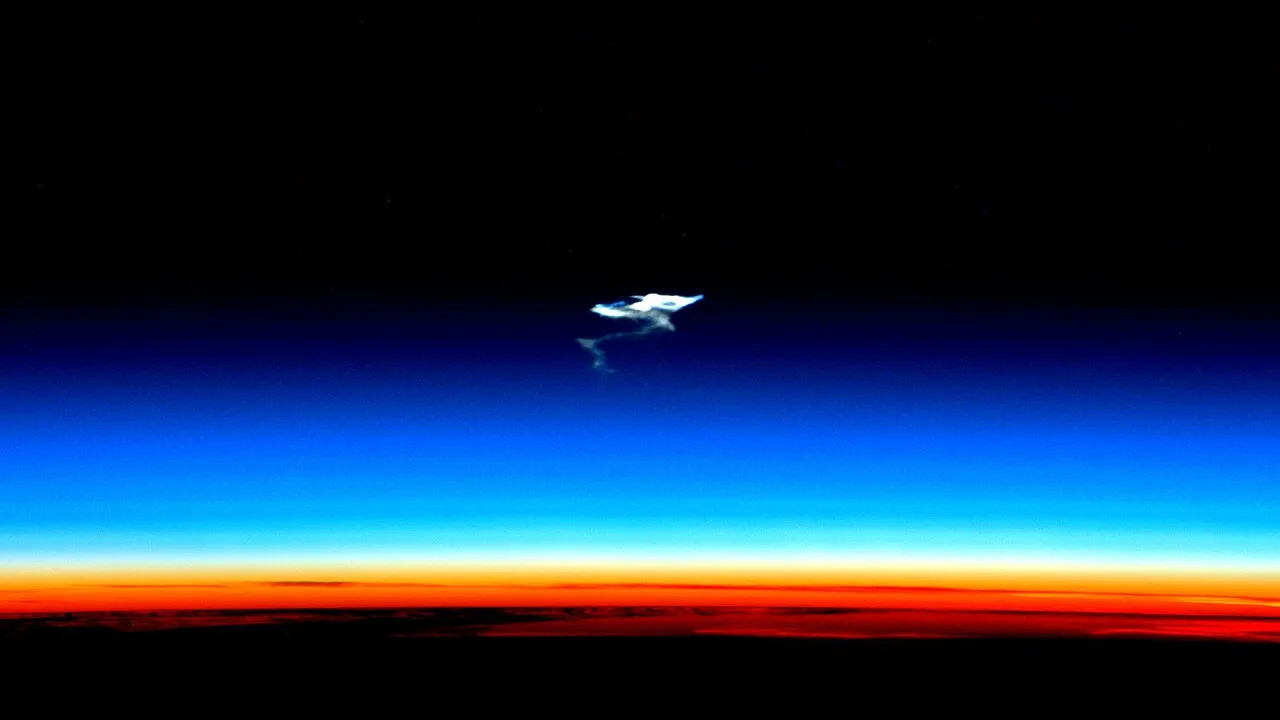
2. Where does the stratosphere sit in Earth's sky?
🤯 Mind-Blowing Fact • Grade 2
Big white helium weather balloons expand to the size of a house in the thin stratosphere before popping and parachuting their sensors safely home!
✨ Word Sparks (Grade 2 Glossary)
Tap 🔊 to hear
Ozone
Special gas made of three oxygen atoms
Ultraviolet
Invisible high-energy sun rays causing bad sunburns
Atom
Tiny basic piece that builds all matter
🪝
Why does the stratosphere get warmer as you go higher—the exact opposite of a mountain?
1
Smooth Layered Skies
Imagine soaring in a jet plane high above gray storm clouds into brilliant blue sunshine! You have reached the bottom of the stratosphere, stretching from about seven miles up to thirty-one miles above Earth. Its name means 'layered' because calm air rests in flat sheets without stormy mixing.
2
Three Oxygen Atoms Team Up
Ordinary oxygen that you breathe pairs up two oxygen together. High in the stratosphere, strong sunlight splits oxygen and joins three atoms together into a superhero molecule called !
3
Soaking Up UV Heat
When molecules soak up invisible (UV) rays from the Sun, they turn that dangerous energy into gentle warmth! That is why the upper stratosphere feels much warmer than its icy bottom.
1. How many oxygen atoms join together to build one molecule of ozone?
2. Why does air get warmer as you go higher up through the stratosphere?
🤯 Mind-Blowing Fact • Grade 3
Every single country in the United Nations signed the 1987 Montreal Protocol—making it the first universally ratified treaty in world history!
✨ Word Sparks (Grade 3 Glossary)
Tap 🔊 to hear
Turbulence
Bumpy swirling wind motion felt by airplanes
CFCs
Old human-made chemicals that damaged sky ozone
Treaty
Official promise signed together by many countries
🪝
How did every country on Earth team up to heal a giant seasonal hole in our ozone shield?
1
Why Airplanes Love the Lower Stratosphere
Ever notice how a bumpy airplane climb suddenly turns smooth once the pilot reaches cruising altitude? Long-distance jets often cruise in the very bottom of the stratosphere! Because warmer air sits above colder air here, vertical updrafts stay calm, dry, and nearly cloud-free.
2
O2 vs. O3 in the Ozone Shield
Between twelve and nineteen miles (twenty to thirty kilometers) high sits the thickest part of the ozone layer. While we breathe two-atom oxygen (O₂), three-atom ozone (O₃) acts as an invisible shield—absorbing ninety-seven to ninety-nine percent of the Sun's damaging ultraviolet radiation!
3
Discovering the Antarctic Ozone Hole
In the 1970s and 1980s, scientists discovered a troubling surprise: human-made chemicals called —once used in old spray cans and refrigerators—were drifting into the stratosphere and breaking ozone molecules apart over Antarctica each spring!
4
World Teamwork Heals the Sky
In 1987, nations around the globe signed the Montreal Protocol to replace with safe alternatives. Today, satellites confirm Earth's ozone shield is steadily healing!
1. Why is flying in the lower stratosphere usually much smoother than flying inside tall troposphere clouds?
2. What happened after nations united under the 1987 Montreal Protocol?
🤯 Mind-Blowing Fact • Grade 4
If all the ozone in Earth's entire stratosphere were squeezed down to sea-level air pressure, our planet-saving sunscreen shield would be just three millimeters thick—as thin as two stacked pennies!
✨ Word Sparks (Grade 4 Glossary)
Tap 🔊 to hear
Stratopause
Upper boundary ceiling topping the stratosphere
Mesosphere
Cold third sky layer where meteors burn
Smog
Hazy ground-level air pollution irritating human lungs
🪝
Why is ozone a life-saving hero fifteen miles up in the stratosphere, yet an unwanted pollutant down at street level?
1
Good Up High, Bad Nearby
Atmospheric scientists share a catchy rhyme about ozone: 'Good up high, bad nearby!' Fifteen miles overhead in the stratosphere, natural ozone (O₃) shields DNA in human skin, crops, and ocean phytoplankton from DNA-damaging ultraviolet rays. Down in the troposphere near busy highways on hot summer days, however, sunlight cooks car exhaust into ground-level ozone that irritates lungs and plant leaves—proving location matters in Earth's atmosphere!
2
Surprisingly Thin When Squeezed Together
Even though we call it the 'ozone layer,' ozone gas is spread remarkably thin among nitrogen and oxygen across twenty miles of stratosphere. If you brought every single ozone molecule overhead down to sea-level air pressure, the entire global shield would compress into a layer only three millimeters thick—about the stack of two pennies!
3
Mother-of-Pearl Clouds and Volcano Haze
Although 99 percent of sky moisture stays below in the troposphere, frigid polar winter stratospheres (-80°C) occasionally shimmer with rainbow-colored polar stratospheric clouds. Powerful volcanic eruptions—like Mount Pinatubo in 1991—can also blast sulfur gases straight into the stratosphere, reflecting sunlight and cooling Earth slightly for a year or two.
4
Topping Out at the Stratopause
At roughly fifty kilometers (thirty-one miles) altitude, the stratosphere reaches its warm ceiling—the —giving way to the icy where meteors streak and burn!
1. What do scientists mean by the phrase 'Good up high, bad nearby' when describing ozone?
2. How thick would the entire stratospheric ozone layer be if compressed down to normal sea-level air pressure?
🤯 Mind-Blowing Fact • Grade 5
Because a single chlorine atom freed from a CFC molecule acts as a chemical catalyst that resets after each reaction, just one chlorine atom can smash up to 100,000 stratospheric ozone molecules before drifting down!
✨ Word Sparks (Grade 5 Glossary)
Tap 🔊 to hear
Chapman Cycle
Sunlight-driven chemical cycle creating and recycling ozone
Catalyst
Chemical speeding reactions repeatedly without getting used up
How did Earth's ancient ocean algae build the stratospheric ozone shield that allowed life to step onto dry land 450 million years ago?
1
The Chapman Cycle and UV Wavelength Filtering
Peer back more than two billion years into Earth's history: before photosynthetic cyanobacteria pumped free oxygen (O₂) into the sky, lethal solar ultraviolet radiation sterilized every bare rock on land! In 1930, physicist Sydney Chapman unlocked the photochemical dance that built our planetary shield between 15 and 35 kilometers altitude. High-energy UV-C photons (<240 nanometers) split diatomic oxygen (O₂) into two free oxygen atoms, which collide with intact O₂ to form triatomic ozone (O₃). Ozone then absorbs biologically destructive UV-B (280–315 nm) and remaining UV-C, splitting back into O₂ + O and releasing kinetic heat—warming the stratosphere from ~−55°C at the tropopause up to nearly 0°C at the 50-kilometer stratopause!
2
Catalytic Chlorine Chemistry and Nobel Discovery
In 1974, chemists Mario Molina and F. Sherwood Rowland (later awarded the 1995 Nobel Prize in Chemistry alongside Paul Crutzen) warned that inert chlorofluorocarbons (CFCs) rise intact into the stratosphere, where intense UV snaps off free chlorine atoms. Acting as a relentless , a single chlorine atom can destroy up to 100,000 ozone molecules before leaving the stratosphere! In 1985, British Antarctic Survey scientists led by Joe Farman confirmed a steep springtime ozone drop below 220 over Antarctica.
3
Why Antarctica? Polar Vortex and PSCs
Why did ozone thin most dramatically over uninhabited Antarctica when CFCs came mostly from northern cities? During dark, minus-85°C Antarctic winters, a fierce circumpolar wind ring—the polar vortex—isolates polar air, allowing icy Polar Stratospheric Clouds (PSCs) to crystallize. Inactive chlorine compounds stick to PSC ice crystals and prime into reactive chlorine gas; the instant September spring sunlight returns, catalytic ozone destruction surges until late-spring warming breaks the vortex.
4
Brewer-Dobson Circulation and Volcanic Aerosols
Slow global overturning in the stratosphere—the Brewer-Dobson circulation—transports newly forged tropical ozone poleward and downward. Meanwhile, major Plinian volcanic eruptions like 1991's Mount Pinatubo inject millions of tons of sulfur dioxide above the tropopause, forming sulfate aerosol veils that scatter sunlight and cool global surface temperatures by ~0.5°C for two years.
5
A Landmark Victory for Planetary Science
Guided by ground spectrophotometers and NASA's Aura and NOAA's Suomi-NPP satellites, global enforcement of the 1987 Montreal Protocol and its Kigali Amendment has cut ozone-depleting substances by ~99 percent—putting the Antarctic ozone layer on track for full recovery around the 2060s!