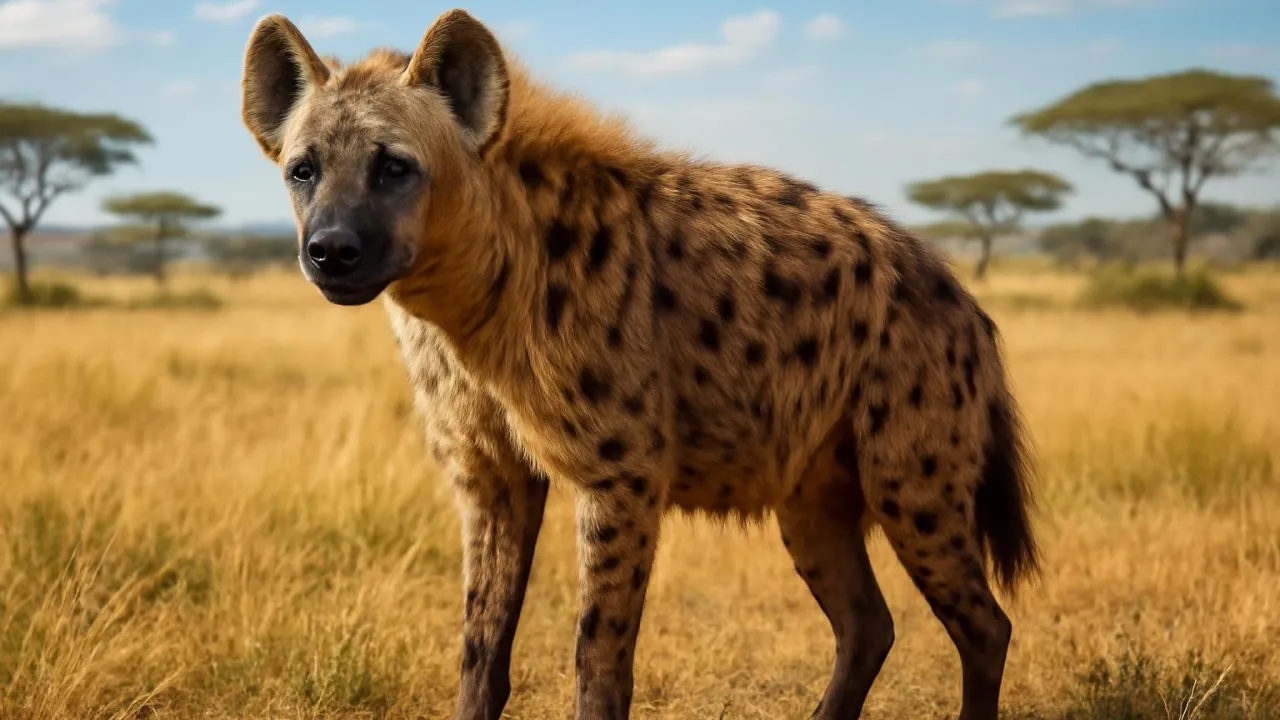
A spotted hyena’s bite can crush bones harder than a lion’s bite!
✨ Word Sparks (Grade 2 Glossary)
Tap 🔊 to hear
savanna
A grassy land with few trees
jaws
The mouth parts that bite and chew
communicate
To share thoughts or feelings with others
🪝
Have you heard why hyenas laugh like people sometimes?
1
Talking with Laughs
Spotted hyenas make a laughing sound to talk with friends and warn others nearby. Their laugh can show excitement or fear, helping the clan stay safe.
2
Where They Live
They live in African grasslands and where they find plenty of food and water. These open areas help them spot prey and avoid danger.
3
Strong Jaws and Spots
Their are very strong and can crush bones to get marrow inside, a tasty treat. Their spotted fur helps them hide in tall grass while hunting or resting.
Spotted hyenas can digest skin, bone, and even hooves thanks to their powerful stomach acids!
✨ Word Sparks (Grade 3 Glossary)
Tap 🔊 to hear
camouflage
Colors or patterns that help hide animals
scavenger
An animal that eats leftover food or dead animals
hierarchy
A system where some animals are leaders
🪝
Why do spotted hyenas use their famous laughing sounds in the wild?
1
Laughing to Communicate
Spotted hyenas produce unique laughing sounds to communicate with their clan members effectively. This vocalization helps warn others about danger or food nearby. Their laugh varies in pitch depending on the message they want to send. It is an important adaptation for social living.
2
Adapted for Survival
Their strong jaws can crush bones to access nutritious marrow inside, a key survival trait. Spots on their fur provide in the tall grasses, helping them avoid predators and sneak up on prey. These adaptations improve their hunting and scavenging success in the savanna ecosystem.
3
Social Structure and Behavior
Hyenas live in large clans with complex social hierarchies led by females. Cooperation during hunts and sharing food strengthens the clan’s survival chances. They use scent marking and body postures to communicate dominance and submission within the group.
4
Habitat and Range
Spotted hyenas inhabit savannas, woodlands, and grasslands across sub-Saharan Africa. Their wide geographic range shows their adaptability to different environments. They are both hunters and , playing a vital role in the ecosystem by cleaning up carrion and controlling prey populations.
Spotted hyenas’ bite force can reach 1,100 pounds per square inch, stronger than most big cats!
✨ Word Sparks (Grade 4 Glossary)
Tap 🔊 to hear
symbiosis
A close relationship between different animals
carrion
Dead animals that some animals eat
dominance
Being the leader or strongest in a group
🪝
How do spotted hyenas’ laughs and strong jaws shape their role in African ecosystems?
1
Communication and Social Life
Spotted hyenas use their distinctive laughter to communicate complex social messages within their clans, which helps maintain order and cooperation. Their social hierarchy is female-dominated, influencing clan dynamics and survival strategies. These vocal signals can indicate excitement, fear, or warnings about threats or food sources.
2
Powerful Jaws and Feeding Habits
Their incredibly strong jaws allow spotted hyenas to crush bones that many predators cannot, enabling them to access marrow rich in nutrients. This ability helps them survive during food shortages by scavenging carcasses left by other animals. Their role as both hunters and scavengers makes them important in controlling prey populations and cleaning the environment.
3
Ecosystem Impact and Symbiosis
By consuming and hunting, spotted hyenas help maintain a balance in the food web, preventing disease spread from rotting meat. They sometimes compete with lions but also indirectly benefit other species by leaving remains for smaller scavengers. Their presence supports biodiversity and ecosystem health across African savannas.
4
Geographic Range and Adaptability
Spotted hyenas are found throughout sub-Saharan Africa, thriving in diverse habitats such as savannas, woodlands, and semi-deserts. Their adaptability to different environments demonstrates evolutionary success. Human activity and habitat loss pose challenges, but hyenas continue to survive due to their versatile diet and social behaviors.
Spotted hyenas’ matriarchal clans are among the most socially complex carnivore groups studied by scientists!
✨ Word Sparks (Grade 5 Glossary)
Tap 🔊 to hear
matriarchal
Led by females in a family or group
carnivore
An animal that eats meat
fragmentation
Breaking habitats into smaller pieces
🪝
What makes the spotted hyena’s social system and physiology uniquely adapted for survival in Africa?
1
Taxonomy and Scientific Classification
The spotted hyena, scientifically named Crocuta crocuta, belongs to the Hyaenidae family, which includes four species of hyenas. Unlike other , spotted hyenas have evolved complex social structures similar to primates. Their classification highlights their unique evolutionary path among carnivorous mammals in Africa’s ecosystems.
2
Physiological Adaptations and Mechanics
Spotted hyenas possess one of the strongest bite forces among mammals, reaching approximately 1,100 pounds per square inch, which allows them to crush bones efficiently. Their digestive system can process tough materials like skin, bone, and hooves, extracting maximum nutrients. Their muscular build and endurance enable them to run long distances during hunts or scavenging.
3
Social Structure and Behavioral Ecology
Hyena clans are , with females dominating males in size, strength, and social rank, a rare trait among . Complex vocalizations, including their famous laughter, facilitate communication and coordination within the clan. Cooperative hunting and communal care of young enhance their survival in competitive environments.
4
Conservation Status and Human Impact
Although spotted hyenas are widespread, habitat and human-wildlife conflict threaten some populations. They are often misunderstood and persecuted due to myths and negative portrayals. Conservation efforts focus on education and habitat protection to maintain stable populations and ecological roles.
5
Quantitative Comparisons and Ecological Role
Adult spotted hyenas weigh between 90 to 190 pounds (40 to 86 kilograms) and can run speeds up to 37 miles per hour (60 kilometers per hour). Their ability to consume entire carcasses, including bones, positions them as vital scavengers that recycle nutrients. Their ecological role supports biodiversity and helps control prey populations across vast African landscapes.