🇺🇸 U.S. HISTORY
🏛️ Hunkpapa Lakota Chief & Spiritual Leader • c. 1831–1890
VA History & Social Science SOL K.1, 1.2, 2.4, VS.1–VS.10, USI & USII
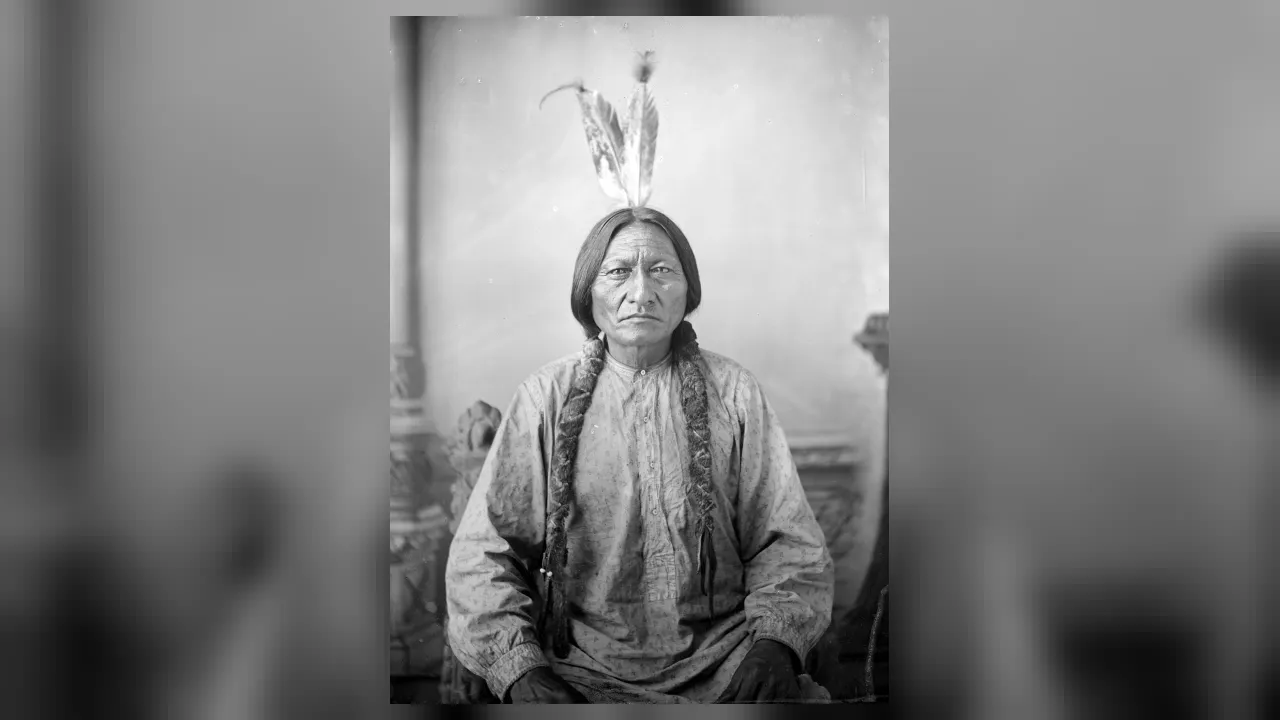
Sitting Bull
Steadfast Lakota Leader of the Great Plains
Grade 2 • Developing • 125 words
⏳ Era / Statehoodc. 1831–1890 • 19th-Century Great Plains & Lakota Era
🗺️ Region / CapitalGrand River, South Dakota, Montana & Standing Rock
📜 Key MilestoneUnited Plains nations in 1876 to defend treaty homelands and the Black Hills
⚡ Historical SparkHonored among the Lakota for unmatched generosity, courage, and devotion to future generations
🤯 Mind-Blowing Fact • Grade 1
As a boy, Sitting Bull loved music and nature so much that he composed songs about birds and animals on the Great Plains!
✨ Word Sparks (Grade 1 Glossary)
Tap 🔊 to hear
Plains
Wide flat grasslands stretching across middle America
generous
Happy to share food and gifts freely
chief
A trusted leader of a Native tribe
🪝
Why was a careful, patient boy first nicknamed Slow before earning the brave name Sitting Bull?
1
Thinking Before Acting
On the wide grassy Great lived a Lakota boy. He looked carefully before every step, so family called him Slow! Yet he rode horses with great skill.
2
Sharing With Everyone
At fourteen, he showed great bravery and earned his father's proud name: Sitting Bull. Whenever he hunted buffalo, he shared food first with elders and widows.
3
Protecting His Homeland
Sitting Bull became a wise . He united tribes to protect their grassy homeland and sacred pine hills for their children.
1. Why did Sitting Bull's family call him 'Slow' when he was a young boy?
2. Who received food first whenever Sitting Bull returned from a hunt?
🤯 Mind-Blowing Fact • Grade 2
Sitting Bull recorded his life stories through detailed drawings called pictographs, many of which are preserved today at the Smithsonian Institution!
✨ Word Sparks (Grade 2 Glossary)
Tap 🔊 to hear
prairie
Rolling grassland with very few tall trees
sacred
Deeply respected and special in spiritual life
pictograph
A drawing that tells a real story
🪝
How did Sitting Bull bring thousands of Lakota and Cheyenne families together into one united council?
1
Growing Up on the Open Prairie
Imagine endless waves of grass rippling under a giant blue sky in South Dakota! Born around 1831 into the Hunkpapa Lakota band, Tatanka Iyotake—Sitting Bull—learned early that Lakota leaders led by example, courage, and kindness. Even as a teenager, he gave away horses to families who had none.
2
Defending the Black Hills
In 1868, a U.S. treaty promised that the pine-covered Black Hills would belong to the Lakota forever. When gold seekers rushed into those hills anyway in 1874, Sitting Bull invited Lakota, Northern Cheyenne, and Arapaho bands to unite in Montana.
3
Thinking of the Children
After defending their camp at Little Bighorn in 1876 and sheltering his people in Canada for four years, Sitting Bull returned to care for Lakota families and urged leaders to plan wisely for their children's future.
1. Which pine-covered hills had been promised to the Lakota forever in an 1868 treaty?
2. How did Sitting Bull visually record key moments from his life?
🤯 Mind-Blowing Fact • Grade 3
While visiting big eastern cities with Buffalo Bill's tour in 1885, Sitting Bull was shocked to see poor children begging in the cold and handed out stacks of silver coins from his own pay!
✨ Word Sparks (Grade 3 Glossary)
Tap 🔊 to hear
fortitude
Quiet strength during hard or painful times
prospector
Someone searching hills and streams for gold
sanctuary
A safe place sheltered from harm
🪝
Why did Sitting Bull give away nearly every coin he earned during his famous tour of eastern cities?
1
Four Lakota Virtues
Listen to hoofbeats thundering across the northern plains near the Grand River in present-day South Dakota! Born around 1831, Tatanka Iyotake earned the name Sitting Bull—picturing a powerful, unmovable buffalo bull guarding his herd—at age fourteen. Lakota culture honored four core virtues: bravery, , generosity, and wisdom. Sitting Bull practiced all four, becoming both a respected headman and a spiritual leader.
2
Uniting the Plains Nations in 1876
Although the 1868 Treaty of Fort Laramie guaranteed the Great Sioux Reservation—including the sacred Black Hills—discovery of gold in 1874 brought thousands of onto treaty land. In 1876, Sitting Bull's moral authority united seven Lakota council fires alongside Northern Cheyenne and Arapaho allies along Montana's Greasy Grass River (Little Bighorn), where warriors led by Crazy Horse and Gall defended their village.
3
Sanctuary in Canada and Tour With Buffalo Bill
To protect families from further conflict, Sitting Bull guided his band north into Saskatchewan, Canada, until dwindling buffalo herds forced their return in 1881. In 1885, he toured four months with Buffalo Bill Cody's Wild West exhibition—riding silently in parades and giving away his earnings to hungry street children he saw in big cities!
4
Put Our Minds Together
Settling in a log cabin along the Grand River at Standing Rock, Sitting Bull famously advised: 'Let us put our minds together and see what life we can make for our children.'
1. What does the Lakota name Tatanka Iyotake (Sitting Bull) picture?
2. What did Sitting Bull do with much of the money he earned from signing autographs and riding in Buffalo Bill's 1885 tour?
🤯 Mind-Blowing Fact • Grade 4
During his four years in Canada (1877–1881), Sitting Bull and Mounted Police Inspector James Walsh respected each other's honesty so deeply that peace held without a single clash!
✨ Word Sparks (Grade 4 Glossary)
Tap 🔊 to hear
unceded
Land never signed away in any treaty
bison
Large shaggy American buffalo of the Plains
agency
A reservation headquarters managing federal supplies
🪝
How did Sitting Bull become the very first supreme council chief chosen across all seven bands of the Lakota Nation?
1
Rising Through Wisdom and Generosity
Picture an enormous circle of nearly two thousand tipis stretching for three miles along a winding Montana river valley in June 1876. At the center of this historic gathering stands Tatanka Iyotake—Sitting Bull—of the Hunkpapa Lakota. Born near the Grand River in present-day South Dakota around 1831, he had earned early distinction in the Strong Heart warrior society, composed songs honoring nature and Lakota traditions, and cared tirelessly for orphans and elders.
2
Treaty Rights and the Black Hills Crisis
As railroads and forts crossed traditional hunting grounds in the 1860s, Lakota bands stood split between reservation settlement and independent prairie life. In roughly 1868, non-treaty Lakota bands took the unprecedented step of naming Sitting Bull head chief of the entire Lakota nation. Although the 1868 Treaty of Fort Laramie recognized Paha Sapa—the Black Hills—as permanent, Lakota land, an 1874 expedition confirmed gold deposits there, triggering an unlawful rush of miners and a federal order demanding all Lakota report to agencies in midwinter 1876.
3
Greasy Grass and Canadian Diplomacy
Summoning Lakota, Northern Cheyenne, and Arapaho families together for mutual defense, Sitting Bull offered prayers for his people's safety before the June 25, 1876, Battle of the Little Bighorn—known to the Lakota as Greasy Grass—where war leaders Crazy Horse and Gall repelled Lieutenant Colonel George Armstrong Custer's Seventh Cavalry while Sitting Bull protected women and children. Leading thousands north across the Medicine Line into Saskatchewan in 1877, he formed a mutually respectful friendship with North-West Mounted Police Inspector James Morrow Walsh.
4
Advocate at Standing Rock
Returning peacefully in 1881 when northern vanished, Sitting Bull lived at Standing Rock , sent his own children to learn reading so future Lakota leaders could examine treaties firsthand, and urged unity for coming generations until his death in December 1890.
1. Why did Sitting Bull encourage Lakota children at Standing Rock in the 1880s to learn to read and write?
2. By what name do the Lakota know the Little Bighorn River in Montana?
🤯 Mind-Blowing Fact • Grade 5
During the 1885 tour, Sitting Bull admired sharpshooter Annie Oakley's skill and kindness so much that he symbolically adopted her into his family and gave her the Lakota name 'Watanya Cicilla'—'Little Sure Shot'!
✨ Word Sparks (Grade 5 Glossary)
Tap 🔊 to hear
autonomous
Self-governing without outside control
consensus
General agreement reached together in council
steppe
Vast dry grassland plains without forests
🪝
How did Sitting Bull unite decentralized Plains bands into a formidable diplomatic and defensive coalition during a pivotal era of westward expansion?
1
Hunkpapa Foundations and the Lakota Leadership Ideal
Gaze across the rolling shortgrass of the Grand River basin in South Dakota, where millions of North American bison once sustained the nomadic economy, architecture, and spiritual calendar of the Oceti Sakowin (Seven Council Fires). Born circa 1831 into the Hunkpapa division of the Lakota, young Hunkesni ('Slow') earned his father's honored name, Tatanka Iyotake (Sitting Bull), at age fourteen. Rising within the Midnight Strong Heart society and serving as a Wichasha Wakan (holy man), he exemplified the four cardinal Lakota virtues—canté tinza (bravery), wowacintanka (fortitude), wacantognaka (generosity), and woksape (wisdom)—redistributing captured horses and bison meat to elders and fatherless households.
2
Unprecedented Confederation and the 1868 Fort Laramie Treaty
Traditionally, Lakota governance operated through tiyospaye (extended-kin bands) guided by rather than centralized hierarchy. Around 1868, facing encroaching military posts along the Bozeman and Powder River trails, non-agency Hunkpapa, Oglala, Miniconjou, Sans Arc, and Blackfeet Lakota leaders elevated Sitting Bull to unprecedented status as supreme council chief of the unceded hunting bands. Although Red Cloud's diplomacy secured the Treaty of Fort Laramie (1868)—pledging the Great Sioux Reservation, including Paha Sapa (the Black Hills), for 'the absolute and undisturbed use and occupation' of the Lakota—Sitting Bull declined to sign reservation stipulations, maintaining sovereign hunting rights guaranteed under Article 11.
3
The 1876 Black Hills Crisis and Greasy Grass
After gold was publicized in the Black Hills in 1874 and negotiations to purchase Paha Sapa collapsed, federal authorities issued an impossible January 1876 midwinter deadline requiring all hunting bands to report to reservation agencies. That spring, Sitting Bull's spiritual and political prestige drew roughly 7,000 to 8,000 Lakota, Northern Cheyenne, and Arapaho citizens into a unified encampment along Montana's Little Bighorn River (Pezhi Slola Wakpa, 'Greasy Grass'). Too senior in civil responsibility to lead front-line charges on June 25, 1876, Sitting Bull rallied camp defenses ensuring noncombatants' safety while war leaders Crazy Horse and Gall defeated Lieutenant Colonel George A. Custer's command.
4
Canadian Refuge and Cultural Observation
Refusing unconditional surrender, Sitting Bull guided approximately 4,000 followers across the forty-ninth parallel into Cypress Hills, Saskatchewan, in May 1877, maintaining peaceful order alongside North-West Mounted Police Inspector James Walsh for four years until near-extinction of northern bison herds compelled his return to Fort Buford in July 1881—among the very last independent Plains leaders to lay down arms.
5
Statesman at Standing Rock and Enduring Counsel
Settled at Standing Rock after two years at Fort Randall and a brief 1885 season in Buffalo Bill Cody's Wild West—where he befriended sharpshooter Annie Oakley, calling her 'Watanya Cicilla' ('Little Sure Shot'), and distributed earnings to impoverished urban children—Sitting Bull testified sharply before congressional land commissions against breaking up reservation lands until his tragic death during an arrest attempt in December 1890. His counsel endures across generations: 'Let us put our minds together and see what life we can make for our children.'