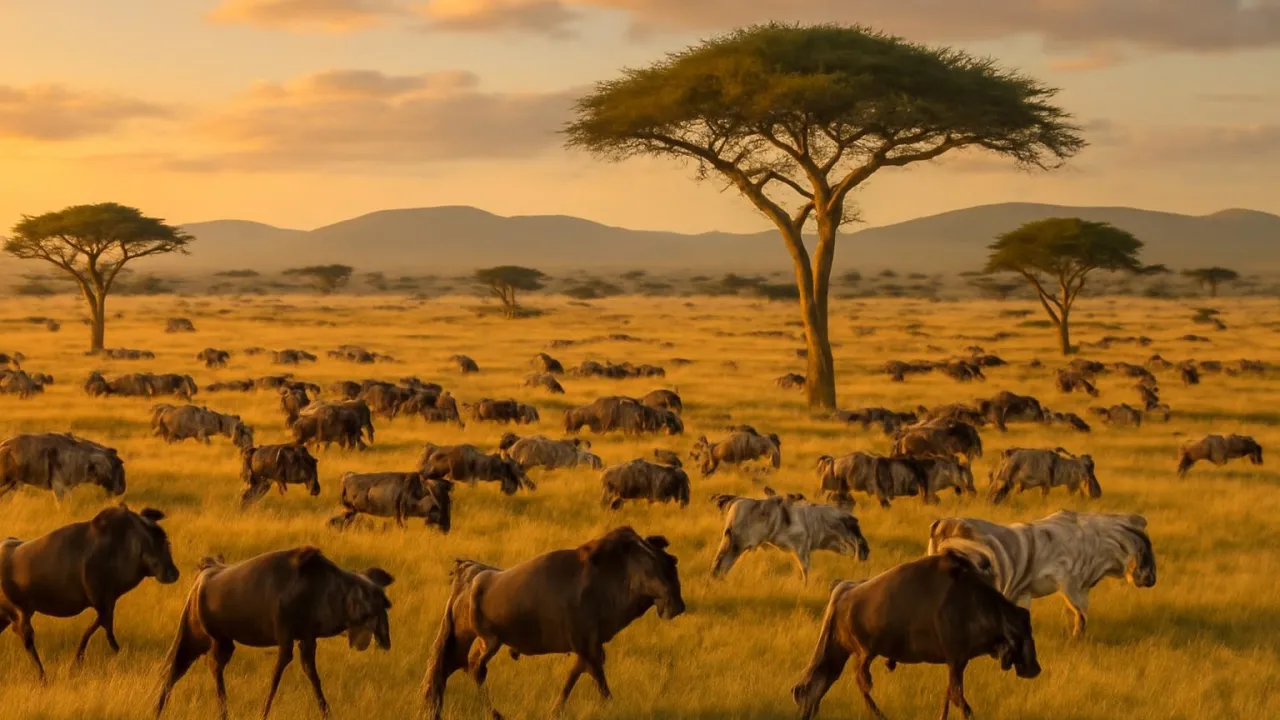
The Serengeti’s animal migration is so big it can be seen from space!
✨ Word Sparks (Grade 2 Glossary)
Tap 🔊 to hear
savanna
A grassy place with few trees
predator
An animal that hunts others
acacia
A tree with flat, wide branches
🪝
What if you could see thousands of animals moving together across endless grass?
1
A Sea of Grass
The Serengeti is a huge, flat land in Africa. Tall yellow grass sways in the breeze, and trees pop up here and there. This open space gives animals room to roam and hide.
2
Animal Parade
Wildebeest, zebras, and gazelles travel together in massive herds. They move to find fresh grass and water, and lions sometimes follow. The ground shakes when so many animals run.
3
A Special Journey
Every year, millions of animals migrate across the plains. People from all over the world come to watch this amazing event. The Serengeti is famous for its wild beauty.
Some wildebeest travel over 1,000 miles during their migration across the plains!
✨ Word Sparks (Grade 3 Glossary)
Tap 🔊 to hear
ecosystem
All living things in one place
herbivore
An animal that eats only plants
predator
An animal that hunts for food
🪝
Imagine standing on soft grass as a million hooves drum the earth—what would you see and hear?
1
Endless Grasslands
The Serengeti Plains stretch for miles, covered in golden grass and dotted with acacia trees. This tropical savanna is home to many species, each adapted to the open landscape. The land formed over millions of years, shaped by wind, water, and animal activity. Wide, flat spaces make it easy for herds to travel and to spot prey.
2
The Great Migration
Every year, more than a million wildebeest, zebras, and gazelles migrate across the Serengeti. This journey is called the Great Migration, and it is the largest land animal movement on Earth. Animals travel in huge herds, searching for fresh grass and water as seasons change. like lions and crocodiles follow, hoping to catch a meal.
3
A Web of Life
The Serengeti’s is complex, with each animal playing a special role. eat grass, which keeps the plains healthy and prevents overgrowth. Carnivores, called , control the number of plant-eating animals. Even tiny termites help by breaking down dead plants and making soil richer.
4
People and Protection
The Serengeti is protected as a national park and a UNESCO World Heritage Site. Scientists study its unique wildlife, and many people visit to see the migration. Park rangers work hard to stop poaching and keep the balance of nature. The Serengeti inspires stories, art, and conservation efforts all over the world.
The Serengeti’s migration covers a circular route of nearly 1,200 miles each year!
✨ Word Sparks (Grade 4 Glossary)
Tap 🔊 to hear
erosion
Wearing away of land by wind or water
biodiversity
Many different living things in one place
ecotourism
Travel to see and help nature
🪝
What if you could watch the sunrise over endless grasslands, with herds of animals stretching as far as you can see?
1
A Landscape Shaped by Time
The Serengeti Plains formed over millions of years through the slow processes of and volcanic activity. Ancient volcanoes left behind rich, fertile soil that supports the vast grasslands and scattered acacia trees. Seasonal rains and dry periods create a cycle that shapes the ecosystem’s balance. This unique environment allows many species to thrive in harmony.
2
The Mechanics of Migration
The Great Migration is one of nature’s most impressive events, involving over two million animals. Wildebeest, zebras, and gazelles travel in synchronized herds, guided by rainfall patterns and the search for fresh grazing. Their movement is crucial for the plains, as it prevents overgrazing and helps spread seeds across the land. Predators like lions, cheetahs, and crocodiles depend on this migration for survival.
3
A Living Web of Connections
Every animal and plant in the Serengeti plays a vital role in its ecosystem. Herbivores keep the grass short, while predators maintain a healthy balance among species. Even decomposers, like termites and dung beetles, recycle nutrients into the soil, supporting new plant growth. This interconnected web of life makes the Serengeti a model for studying .
4
Global Importance and Conservation
The Serengeti is not only a national park but also a UNESCO World Heritage Site, recognized for its natural wonders. Scientists and conservationists work to protect its wildlife from threats like poaching and habitat loss. brings visitors from all over the world, supporting local communities and raising awareness about conservation. The Serengeti’s story inspires people everywhere to value and protect wild places.
1. How does the migration help the Serengeti ecosystem?
2. Why is the Serengeti a World Heritage Site?
🤯 Mind-Blowing Fact • Grade 5
The Serengeti supports over 2 million migrating animals and more than 500 bird species each year.
✨ Word Sparks (Grade 5 Glossary)
Tap 🔊 to hear
savanna
A grassy plain with few trees
interdependence
When living things need each other to survive
conservation
Protecting nature and wildlife
🪝
What if you could map the Serengeti from above and trace the ancient paths of millions of migrating animals?
1
Geological Origins and Ecosystem Formation
The Serengeti Plains, located in northern Tanzania, were shaped over millions of years by volcanic eruptions, tectonic shifts, and erosion. Ash from ancient volcanoes, like the Ngorongoro Crater, enriched the soil, enabling the growth of dense grasses and scattered acacia woodlands. The region’s flat topography and seasonal rainfall patterns fostered the evolution of a classic tropical ecosystem. This environment supports one of the world’s most diverse and resilient wildlife communities.
2
The Science Behind the Great Migration
Every year, over 1.5 million wildebeest, 300,000 zebras, and thousands of gazelles participate in the Great Migration, a circular journey covering nearly 1,200 miles. This migration is driven by the search for water and nutrient-rich grasses, which sprout after seasonal rains. The synchronized movement of these herds is a spectacular example of animal behavior shaped by environmental cues, such as rainfall patterns and grass growth. Predators, including lions, hyenas, and crocodiles, rely on this migration for sustenance and population control.
3
Ecological Interdependence and Biodiversity
The Serengeti’s ecosystem is a living laboratory of , where each species plays a critical ecological role. Herbivores regulate grass height, preventing bush encroachment and wildfires, while predators maintain healthy prey populations. Decomposers, such as termites and dung beetles, recycle organic matter, enriching the soil and supporting plant growth. This complex web of interactions sustains extraordinary biodiversity, with over 500 bird species and 70 large mammal species recorded.
4
Cultural Significance and Global Impact
The Serengeti is not only a natural wonder but also a place of deep cultural importance for local Maasai communities, who have coexisted with wildlife for centuries. As a UNESCO World Heritage Site and a globally recognized symbol of wild Africa, the Serengeti attracts researchers, conservationists, and ecotourists from around the world. Revenue from ecotourism supports both efforts and local economies, but balancing human needs with wildlife protection remains a complex challenge.
5
Conservation Challenges and Future Prospects
Despite its protected status, the Serengeti faces threats from poaching, climate change, and human expansion, which can disrupt migration routes and ecosystem balance. Ongoing scientific research and international cooperation are essential for monitoring wildlife populations and developing sustainable strategies. Innovative projects, such as community-based conservation and anti-poaching patrols, help safeguard the Serengeti’s future. The continued survival of this remarkable landscape depends on global awareness, responsible tourism, and respect for both nature and culture.