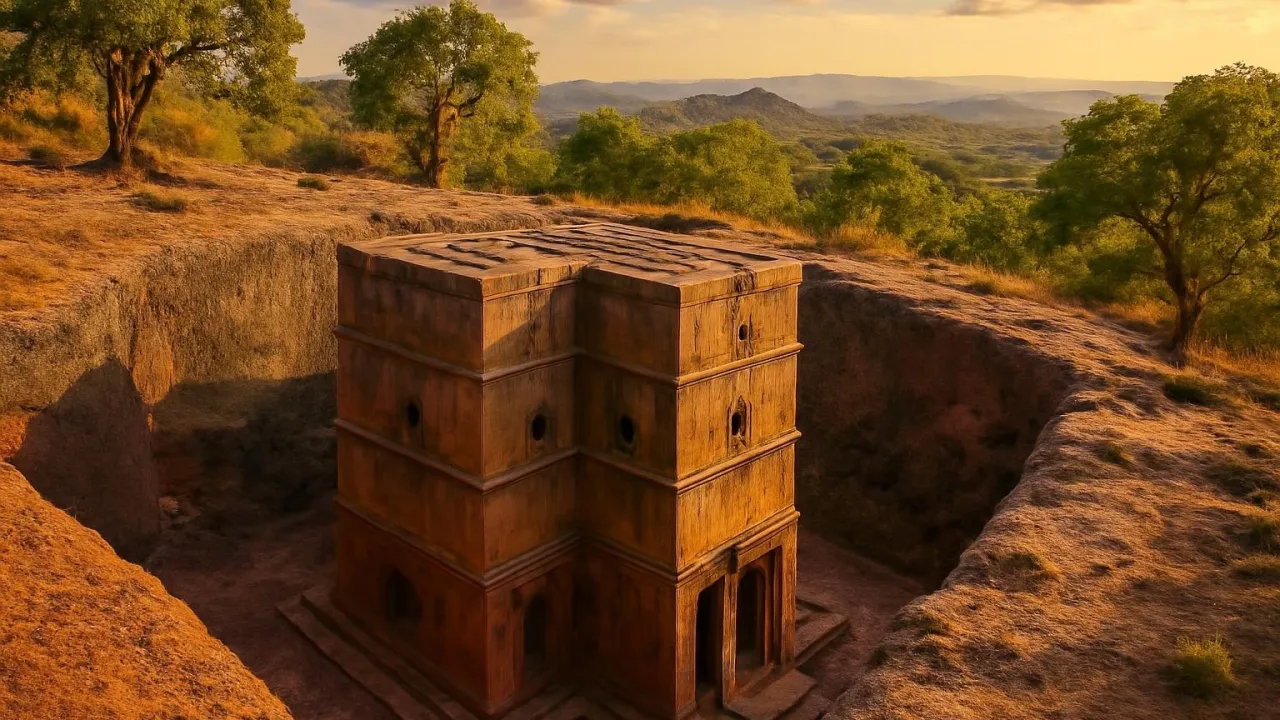
Builders carved the churches down into the ground, not up!
✨ Word Sparks (Grade 2 Glossary)
Tap 🔊 to hear
hewn
Cut or shaped by hand tools
puzzle
Pieces that fit together
window
A glass opening for light
🪝
Have you ever seen a building carved from stone?
1
Hidden Stone Churches
In Lalibela, people carved huge churches from rock using simple tools. The churches are deep in the ground, so you cannot see them from far away. They look like giant stone from above, with roofs at the same level as the earth. Long ago, builders worked together for many years to finish each church.
2
Going Inside
Visitors walk down long stairs to enter the churches, which are cool and quiet inside. The walls are smooth and shaped by hand, showing marks from old tools. Small let in bright sunlight, making patterns on the stone floors. Sometimes, you can hear singing echo through the stone halls.
3
A Place for Celebration
People gather here to sing, pray, and celebrate special days with their families. The churches are important for many people in Ethiopia, and some families visit every year. Many believe these churches were made to look like Jerusalem, a very holy city. These stone churches have lasted for hundreds of years and are still used today.
The Church of Saint George looks like a giant stone cross from above!
✨ Word Sparks (Grade 3 Glossary)
Tap 🔊 to hear
volcanic
Made from cooled lava rock
arches
Curved shapes that hold up buildings
erosion
Wearing away by wind or water
🪝
Can you imagine a whole church carved deep into the earth?
1
Carved from Solid Rock
The churches of Lalibela were carved directly into rock, not built above ground. Each church was shaped by hand using simple tools like hammers and chisels. From above, the roofs look level with the ground, hiding the rooms below. Builders carved doors, windows, and even columns from one giant stone, making each church a true monument.
2
Entering a Hidden World
Visitors descend steep stone steps to reach the church entrances, passing through narrow trenches. Inside, the air is cool and carries soft echoes that make singing sound magical. The walls and ceilings show careful patterns and , all carved by hand. Bright sunlight streams through small windows high above, casting shapes on the stone floors.
3
A Place of Worship and Wonder
People gather here for prayer, music, and special festivals that fill the churches with life. The churches are important to Ethiopian Orthodox Christians and are used for worship all year. Many believe the churches were made to look like Jerusalem, a holy city far away. These stone monuments have lasted for hundreds of years and still amaze visitors today.
4
How Did They Build Them?
Builders used hammers and chisels to carve down into the rock, working slowly over many years. They created and columns that hold up the roofs and shape the rooms inside. The tuff stone is soft enough to shape but strong enough to last through centuries. These engineering skills helped protect the churches from , earthquakes, and even invaders.
1. What tools did builders use to carve the churches?
2. Why do the churches last so long?
🤯 Mind-Blowing Fact • Grade 4
Builders carved entire rooms, columns, and arches from one single piece of rock!
✨ Word Sparks (Grade 4 Glossary)
Tap 🔊 to hear
tuff
A soft rock made from volcanic ash
pilgrimage
A special journey to a holy place
conservation
Protecting something so it lasts longer
🪝
What secrets might you find inside a church carved from a single mountain?
1
A City of Stone Below the Surface
In the town of Lalibela, master builders carved eleven extraordinary churches straight into volcanic , creating a sunken city of stone. Each church was carefully planned, with roofs at ground level and intricate passageways connecting them below. From above, some churches look like geometric puzzles, especially the famous cross-shaped Church of Saint George. Visitors today descend steep, worn steps to enter these ancient spaces.
2
Engineering Marvels of the Zagwe Dynasty
Constructed in the late 12th and early 13th centuries, the churches were built during the rule of King Lalibela. Craftsmen used simple iron tools to chisel out doors, windows, and arches, all from one solid mass of rock. The volcanic stone was soft enough to carve but sturdy enough to support high ceilings and columns. These engineering feats protected the churches from erosion, earthquakes, and invaders for centuries.
3
A Spiritual and Cultural Center
The churches remain a sacred place for Ethiopian Orthodox Christians, who gather for worship and colorful festivals. Many believe the churches were designed to resemble Jerusalem, making Lalibela a site for those unable to travel far. Inside, the cool, echoing halls are decorated with ancient paintings and carved crosses. The churches are still active, filled with prayers, music, and candlelight.
4
Preserving a World Heritage
The Rock-Hewn Churches of Lalibela are recognized as a UNESCO World Heritage Site, celebrated for their unique architecture and cultural importance. Conservationists work to protect the churches from rain and erosion, using both traditional and modern methods. Tourists from around the world visit to marvel at the engineering and artistry. The churches continue to inspire awe, connecting the past and present in stone.
1. Why did King Lalibela want the churches to look like Jerusalem?
2. What helps protect the churches from harm today?
🤯 Mind-Blowing Fact • Grade 5
The Church of Saint George (Bete Giyorgis) is carved in the shape of a perfect Greek cross and stands over 40 feet (12 meters) tall, all from a single block of volcanic rock.
✨ Word Sparks (Grade 5 Glossary)
Tap 🔊 to hear
monolithic
Made from one single large stone
vault
A high, arched ceiling in a building
acoustics
How sound travels in a space
🪝
Imagine chiseling an entire cathedral from a single mountain—how did ancient engineers achieve this?
1
A Subterranean Wonder of Medieval Ethiopia
Hidden within the rugged highlands of northern Ethiopia, the Rock-Hewn Churches of Lalibela form an extraordinary complex of eleven sanctuaries. Unlike traditional buildings constructed from the ground up, these churches were meticulously carved downward into volcanic tuff during the late 12th and early 13th centuries under the Zagwe Dynasty. From ground level, only the roofs are visible, while the interiors extend deep below, connected by a labyrinth of tunnels and trenches.
2
Architectural Genius in Stone
The construction process began with marking the church outline on the rock’s surface, then excavating around it to isolate a single block. Craftsmen used iron chisels and hammers to carve out doors, windows, arches, and intricate columns—all from the same stone mass. The volcanic tuff’s unique properties, being both soft enough to shape and strong enough to support heavy loads, enabled the creation of soaring and detailed reliefs. Some churches, like Bete Medhane Alem, measure over 100 feet in length and feature 72 stone pillars.
3
Engineering Against Time and Nature
The churches’ sunken design offers significant protection from environmental threats, such as wind erosion and seismic activity. The thick rock walls provide natural insulation, keeping interiors cool and echo-free, which enhances the for chanting and prayer. Ingenious drainage channels carved into the stone divert rainwater away, preserving the delicate structures for centuries. These engineering solutions reveal a sophisticated understanding of both geology and architecture.
4
A Center of Faith, Pilgrimage, and Heritage
Lalibela remains a vibrant spiritual center for Ethiopian Orthodox Christians, who celebrate major religious festivals within these ancient halls. The churches are believed to symbolize a 'New Jerusalem,' offering a sacred destination for pilgrims unable to reach the Holy Land. Intricate crosses, faded frescoes, and centuries-old manuscripts fill the interiors, reflecting a deep artistic and spiritual heritage. The site’s continuous use for worship has helped preserve traditional practices and community identity.
5
Global Recognition and Modern Preservation
Designated a UNESCO World Heritage Site in 1978, the Rock-Hewn Churches of Lalibela are now studied by archaeologists, architects, and engineers worldwide. Ongoing conservation efforts address threats like water damage and structural cracking, combining ancient repair techniques with modern science. Tourism brings global attention and resources, but also creates challenges for preservation. These remarkable stone churches stand as enduring symbols of human creativity, resilience, and faith.