Some Rhododendron species can live for over 100 years in the wild!
✨ Word Sparks (Grade 2 Glossary)
Tap 🔊 to hear
cluster
A group of things close together
acidic
Soil that is good for some plants to grow
shrub
A plant bigger than a bush with many branches
🪝
Have you ever seen a bush covered with bright, colorful flowers?
1
Colorful Flowers
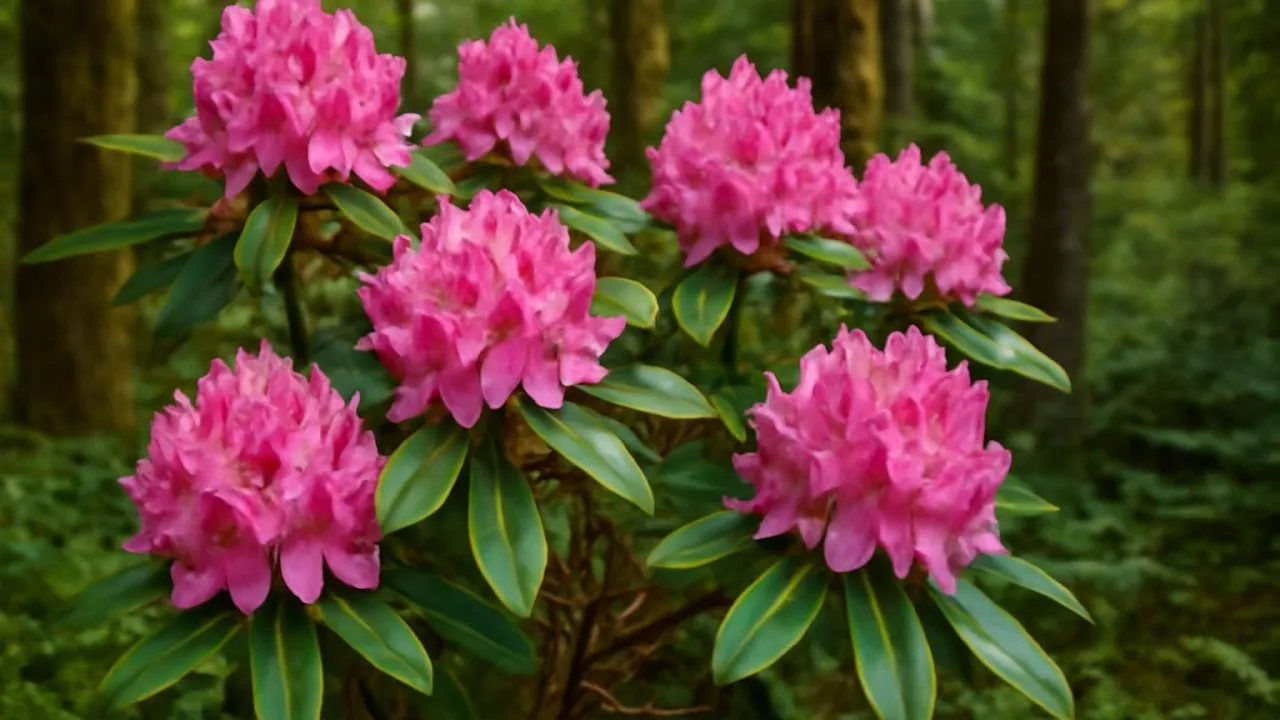
Rhododendron flowers bloom in many colors like pink, white, and purple. They grow in that attract bees and butterflies. These flowers help the plant make seeds for new plants.
2
Where They Grow
Rhododendrons grow in cool forests with plenty of shade and moist soil. They prefer soil that helps them take in nutrients. These plants are found in Asia, Europe, and North America.
3
Plant Features
Rhododendrons can be small bushes or tall that grow up to 20 feet. Their leaves are thick and stay green all year long. This helps them survive cold winters and dry summers.
Rhododendrons use both bright colors and chemical defenses to survive in nature!
✨ Word Sparks (Grade 3 Glossary)
Tap 🔊 to hear
pollination
When insects help flowers make seeds
adaptation
A change that helps plants survive better
camouflage
Colors or shapes that help hide plants or animals
🪝
Did you know Rhododendrons use bright flowers to attract helpful insects?
1
Bright Flowers and Pollination
Rhododendrons produce bright flowers that attract pollinators like bees and butterflies. helps the plant make seeds for new Rhododendrons. The flowers grow in clusters, making them easy for insects to find. This is a smart for survival.
2
Habitat and Growth
These plants thrive in temperate forests with cool, moist conditions and acidic soil. Their thick leaves help reduce water loss and protect against cold weather. Rhododendrons can grow as shrubs or small trees, sometimes reaching 20 feet tall. Their roots absorb nutrients well in rich forest soils.
3
Camouflage and Protection
The green leaves help Rhododendrons blend into forest backgrounds to avoid predators. Some species produce toxins that protect them from animals that might eat their leaves. This chemical defense helps the plant survive in the wild. Their tough leaves also resist damage from harsh weather.
4
Life Cycle and Adaptation
Rhododendrons bloom in spring or early summer, depending on the species. After , their flowers develop seed pods that release seeds into the soil. These seeds grow into new plants, continuing the life cycle. This cycle helps Rhododendrons adapt to changing forest environments.
2. What helps Rhododendrons protect themselves from animals?
🤯 Mind-Blowing Fact • Grade 4
Rhododendrons support forest food webs by feeding many pollinators and other animals!
✨ Word Sparks (Grade 4 Glossary)
Tap 🔊 to hear
symbiosis
When two living things help each other
biodiversity
Many different plants and animals living together
herbivore
An animal that eats plants
🪝
How do Rhododendrons fit into forest ecosystems and help other living things?
1
Ecosystem Role and Pollination
Rhododendrons play a key role in forest ecosystems by providing nectar to pollinators like bees and butterflies, which helps maintain . Their bright flowers bloom in spring, supporting food webs by feeding insects that other animals eat. This symbiotic relationship benefits both the plants and pollinators. Without Rhododendrons, many insects would struggle to find food.
2
Geographic Distribution and Habitat
These plants are native to temperate forests across Asia, Europe, and North America, thriving in acidic, moist soils under forest canopies. Their preference for partial shade allows them to grow beneath taller trees, where they avoid harsh sunlight. Human activities like deforestation can threaten their habitats and reduce their populations. Conservation efforts help protect these important flowering shrubs.
3
Physical Adaptations and Survival
Rhododendrons have thick, leathery leaves that reduce water loss and protect against cold temperatures, allowing survival in diverse climates. Their clustered flowers attract pollinators efficiently, increasing reproduction success. Some species produce toxins to deter , which helps maintain healthy plant populations. These adaptations demonstrate how Rhododendrons have evolved to survive in competitive forest environments.
4
Human Impact and Uses
People cultivate Rhododendrons for their beautiful flowers in gardens and parks worldwide, contributing to horticulture and tourism. However, habitat loss and climate change threaten wild populations, making conservation important. Some species are used in traditional medicine, showing cultural significance. Understanding their ecological roles helps humans protect and appreciate these vibrant plants.
Rhododendrons form partnerships with fungi to get nutrients in poor soils!
✨ Word Sparks (Grade 5 Glossary)
Tap 🔊 to hear
mycorrhizal
Fungi that help plant roots get nutrients
grayanotoxin
A natural poison some Rhododendrons make
taxonomy
How scientists group living things by traits
🪝
What makes Rhododendrons unique in plant taxonomy and forest ecology?
1
Taxonomy and Botanical Classification
Rhododendron belongs to the Ericaceae family and includes over 1,000 species worldwide. These species vary widely in size, flower color, and habitat preferences. Botanically, Rhododendrons are evergreen or deciduous shrubs and small trees. Their classification helps scientists understand their evolutionary relationships and ecological roles.
2
Physiological Mechanics and Adaptations
Rhododendrons possess thick, leathery leaves with a waxy coating that reduces transpiration and water loss. Their root systems are adapted to acidic, nutrient-poor soils, often forming symbiotic relationships with fungi to enhance nutrient uptake. Flower clusters contain nectar that attracts specific pollinators, ensuring effective pollination. Additionally, some species produce that deter herbivory.
3
Conservation and Botanical History
Many Rhododendron species face threats from habitat destruction and climate change, prompting conservation efforts globally. Historically, Rhododendrons have been cultivated for ornamental purposes since the 18th century, influencing horticulture worldwide. Botanical gardens and seed banks work to preserve genetic diversity. Understanding their ecological importance aids in developing conservation strategies.
4
Ecological Roles and Quantitative Comparisons
Rhododendrons contribute significantly to forest ecosystems by supporting pollinator populations and stabilizing soil with their root networks. Some species can grow up to 20 feet tall and live over 100 years. Their flowers bloom at temperatures ranging from 50 to 75 degrees Fahrenheit, depending on species. These quantitative traits highlight their adaptability and ecological significance.
5
Human Uses and Cultural Significance
Beyond their ecological role, Rhododendrons are culturally important in many regions, symbolizing beauty and resilience. They are used in traditional medicines and as ornamental plants in gardens worldwide. Their vibrant flowers attract tourists and gardeners alike, contributing economically to local communities. Research continues on their potential medicinal properties and environmental benefits.