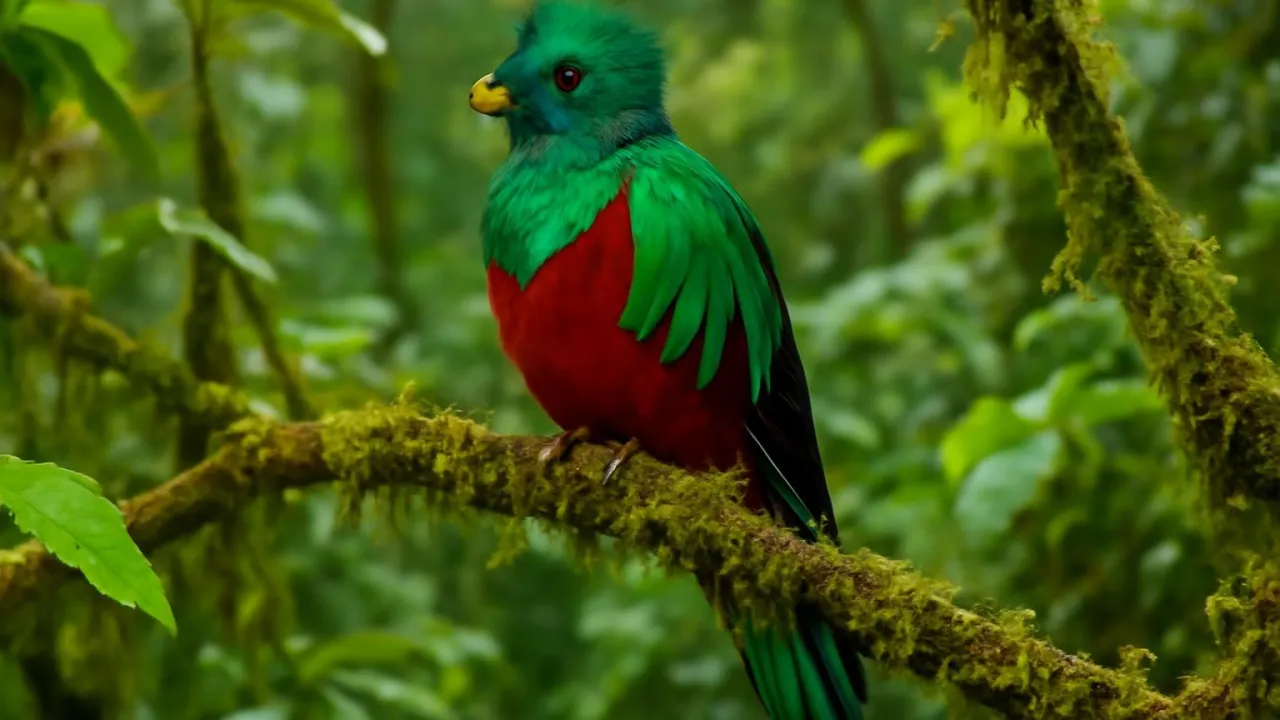
The quetzal’s long tail feathers can grow up to twice its body length.
✨ Word Sparks (Grade 2 Glossary)
Tap 🔊 to hear
iridescent
Shiny colors that change in the light
cloud forest
A wet forest high in the mountains
seed
A small part of a plant that grows new plants
🪝
Have you ever seen a bird with feathers that shine like jewels in the forest?
1
Amazing Feathers
The resplendent quetzal has bright green feathers that shimmer in the sunlight. Its belly is a bright red color. The male has very long tail feathers that trail behind when it flies.
2
Home in the Clouds
Quetzals live in where it is cool and wet all year. They build their nests inside holes in tall trees. These forests are full of tall trees and thick plants.
3
Tasty Food
Quetzals eat many kinds of fruit and insects. They catch small animals with their sharp beaks. Eating fruit helps spread in the forest to grow new plants.
1. What helps quetzals spread seeds in the forest?
2. Where do quetzals live?
🤯 Mind-Blowing Fact • Grade 3
The quetzal’s tail feathers can be over 3 feet long, longer than many birds’ bodies.
✨ Word Sparks (Grade 3 Glossary)
Tap 🔊 to hear
camouflage
Colors that help animals hide in nature
predator
An animal that hunts other animals
adaptation
A body change that helps survival
🪝
Did you know the resplendent quetzal uses its bright feathers to hide and attract mates?
1
Shining Feathers
The quetzal’s iridescent feathers help it blend into the green forest leaves. These feathers shine bright green and blue when sunlight hits them. Males have long tail feathers used to attract female quetzals. This colorful display is important for mating.
2
Cloud Forest Home
Quetzals live in cloud forests that are cool and full of mist. These forests provide many fruits and insects for quetzals to eat. The dense trees also protect quetzals from . Their nests are hidden inside tree holes to keep eggs safe.
3
Eating and Pollination
Quetzals eat fruits that give them nutrients and energy. They also catch insects and small animals for protein. When they eat fruit, they help spread seeds, which helps plants grow. This seed dispersal is a key part of the forest’s pollination and growth.
4
Survival Adaptations
Their strong beaks help quetzals catch slippery insects and fruit. Their feet can grip tree branches tightly to stay safe. The long tail feathers help balance during flight. These help quetzals survive in their forest home.
Quetzals help keep cloud forests healthy by spreading seeds and controlling insect populations.
✨ Word Sparks (Grade 4 Glossary)
Tap 🔊 to hear
symbiosis
A close helpful relationship between living things
food web
How animals and plants eat and help each other
deforestation
Cutting down many trees in forests
🪝
How does the resplendent quetzal’s glowing feathers affect its role in the forest ecosystem?
1
Feathers and Forest Life
The quetzal’s iridescent feathers reflect sunlight, which helps it blend into leafy canopies and avoid predators. This camouflage allows it to live safely among the tall trees of Central America’s cloud forests. Its bright colors also play a role in attracting mates during breeding season, ensuring the species’ survival.
2
Ecosystem Connections
Quetzals feed mainly on wild fruits, which they eat and then disperse seeds through droppings. This seed dispersal supports forest regeneration and maintains plant diversity. They also eat insects and small animals, placing them as both seed dispersers and insect predators in the .
3
Human Impact and Conservation
threatens quetzal habitats by reducing cloud forest areas, which impacts their food supply and nesting sites. Conservation efforts focus on protecting these forests and educating people about the quetzal’s importance. In some cultures, the quetzal is a symbol of freedom and natural beauty, inspiring protection.
4
Geographic Range
The resplendent quetzal is found from southern Mexico through Guatemala, Honduras, and Costa Rica to western Panama. It prefers elevations between 3,300 and 7,200 feet where cloud forests thrive. This range overlaps with many protected national parks and reserves.
Male quetzals’ tail feathers can grow over three feet long, longer than their entire body length.
✨ Word Sparks (Grade 5 Glossary)
Tap 🔊 to hear
frugivore
An animal that mostly eats fruit
heterodactyl
A foot with toes arranged for gripping branches
mutualism
A helpful relationship where both living things benefit
🪝
What makes the resplendent quetzal a vital and dazzling species in Central America’s cloud forests?
1
Scientific Classification and Appearance
The resplendent quetzal, Pharomachrus mocinno, belongs to the family Trogonidae, known for their brilliant plumage. Adult males display iridescent green feathers and elongated tail streamers that can exceed three feet in length. Females are less colorful but share the same habitat and diet. This species is considered a symbol of freedom and beauty in Mesoamerican cultures.
2
Physiological Adaptations and Flight
Quetzals have strong, curved beaks adapted to pluck fruit and catch insects efficiently. Their feet are , allowing a strong grip on branches in dense forest canopies. The long tail feathers, while visually striking, also aid in maneuvering through thick vegetation during slow, agile flight. Their metabolic rate supports sustained activity in cool, humid environments.
3
Ecological Role and Seed Dispersal
As , quetzals play a critical role in seed dispersal, consuming fruits from various tree species and excreting viable seeds across the forest floor. This mutualistic relationship enhances forest regeneration and biodiversity. Additionally, by feeding on insects, quetzals help regulate insect populations, contributing to ecosystem balance.
4
Conservation Status and Threats
Although currently listed as Near Threatened, habitat loss due to deforestation and climate change poses serious risks to quetzal populations. Conservation programs focus on protecting cloud forest habitats and promoting sustainable land use. Community education and ecotourism initiatives have increased awareness and support for quetzal preservation.
5
Comparative Facts and Habitat Range
Resplendent quetzals measure approximately 14 to 20 inches in length, excluding tail feathers, and weigh about 5 to 7 ounces. They inhabit cloud forests from southern Mexico to western Panama, typically between 3,300 and 7,200 feet elevation. Their tail feathers can reach over 36 inches, longer than their body length, making them one of the most visually striking birds in the Americas.