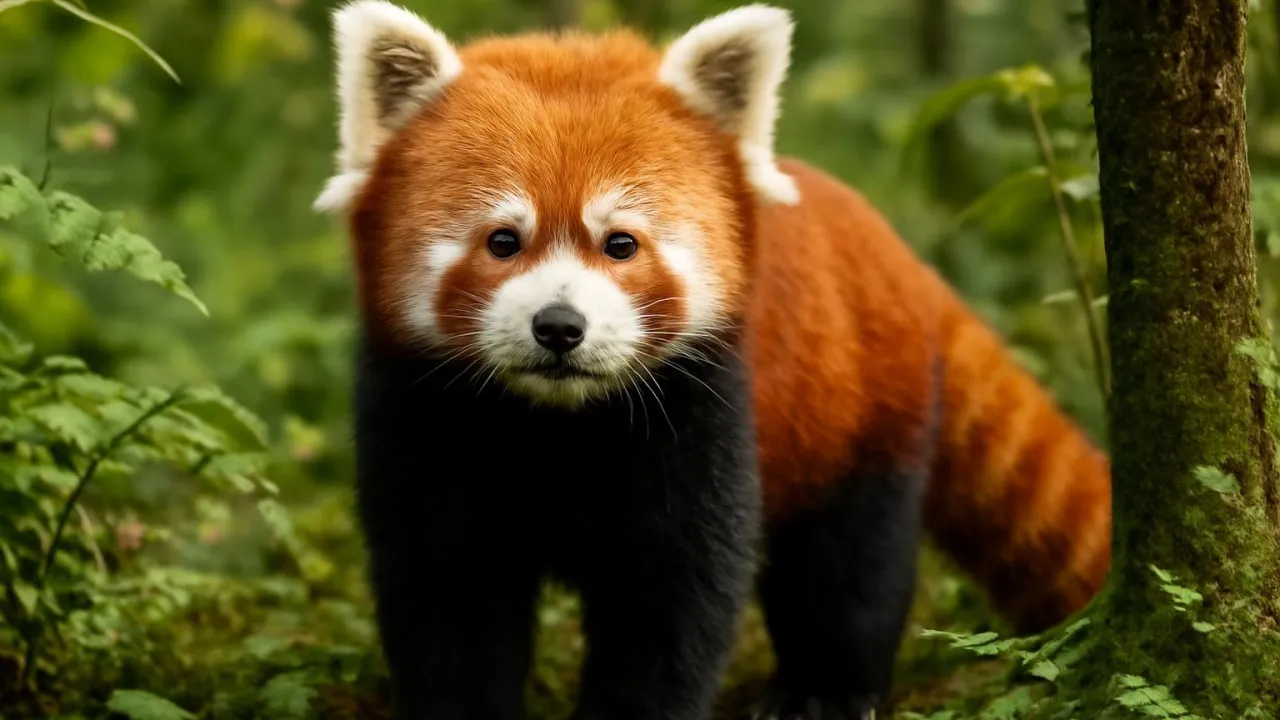
Red pandas use their thick tails like warm blankets during cold mountain nights.
✨ Word Sparks (Grade 2 Glossary)
Tap 🔊 to hear
predator
An animal that hunts other animals for food
claws
Sharp nails animals use to grab or climb
balance
To stay steady and not fall down
🪝
Have you ever seen a red panda climbing high in the trees?
1
Bright Colors and Mask
The red panda has bright red fur and a white face mask. Its bushy tail helps it when climbing. It uses its sharp to hold onto tree branches.
2
Home in the Forest
Red pandas live in cool forests in the Himalayas and China. They spend most of their time in trees and come down only to find food. The forests give them shade and safety from .
3
Eating Bamboo and More
Red pandas mainly eat bamboo leaves and shoots, but they also eat fruits, eggs, and insects. Their strong jaws help them chew tough bamboo stalks. They are mostly active at night and dusk.
Red pandas can rotate their ankles to climb down trees headfirst like squirrels.
✨ Word Sparks (Grade 3 Glossary)
Tap 🔊 to hear
camouflage
Colors or patterns that help hide animals
adaptation
A body part that helps animals survive
nutrients
Food parts that help animals grow strong
🪝
Why does the red panda’s fur help it hide in the forest?
1
Camouflage and Fur
The red panda’s reddish fur blends well with the orange leaves in autumn. This helps it hide from predators like snow leopards. Its thick fur also keeps it warm in cold mountain forests. The white markings on its face look like a mask.
2
Tree Climbing and Adaptations
Red pandas have sharp, curved claws that help them climb trees easily. Their flexible ankles allow them to climb down headfirst. These help them escape danger and find food high in the trees. Their long, bushy tail helps with balance.
3
Diet and Nutrients
Though red pandas mainly eat bamboo, they also eat fruits, eggs, and insects for extra . Bamboo is hard to digest, so red pandas have strong jaws to chew it well. They spend many hours eating to get enough energy. This diet helps them survive in their forest home.
4
Life Cycle and Habitat
Red pandas live in the cool forests of the Himalayas and southwestern China. They build nests in tree hollows or thick branches. Mothers care for their babies until they can climb and eat bamboo. These forests provide shelter and food for their whole life.
2. Why do red pandas eat fruits and eggs besides bamboo?
🤯 Mind-Blowing Fact • Grade 4
Red pandas help forests grow by spreading seeds from the fruits they eat.
✨ Word Sparks (Grade 4 Glossary)
Tap 🔊 to hear
ecosystem
A community of animals and plants living together
conservation
Protecting animals and nature from harm
deforestation
Cutting down many trees in forests
🪝
How does the red panda’s role in its ecosystem help forests stay healthy?
1
Camouflage and Survival
The red panda’s reddish fur provides excellent camouflage among autumn leaves and mossy trees, helping it avoid predators like snow leopards and martens. This protective coloring is a vital adaptation that increases its chances of survival in dense forests. Its thick fur also insulates it against cold mountain temperatures, allowing it to thrive in high elevations.
2
Ecosystem Role and Food Web
Red pandas play an important role in their by helping control bamboo growth through their feeding habits. They also disperse seeds from the fruits they eat, aiding forest regeneration. As prey for larger predators, they are part of a balanced food web that keeps forest ecosystems healthy and diverse.
3
Habitat and Geographic Range
Red pandas inhabit cool temperate forests in the Eastern Himalayas and southwestern China, including Nepal, Bhutan, and Myanmar. These forests provide dense bamboo thickets and plenty of trees for climbing and nesting. Habitat loss from threatens their survival, making efforts critical.
4
Human Impact and Conservation
Humans impact red pandas by cutting down forests for farming and development, reducing their living space. programs work to protect habitats and raise awareness about red pandas’ endangered status. Protected areas and breeding programs help maintain stable populations and preserve biodiversity.
Red pandas have a false thumb that acts like a finger to grip bamboo tightly.
✨ Word Sparks (Grade 5 Glossary)
Tap 🔊 to hear
arboreal
Living in trees most of the time
metabolic rate
How fast an animal uses energy
endangered
At risk of disappearing forever
🪝
What unique traits allow the red panda to survive in high mountain forests?
1
Scientific Classification and Evolution
The red panda, scientifically named Ailurus fulgens, belongs to its own family Ailuridae, distinct from giant pandas and raccoons. It evolved about 8 to 10 million years ago, adapting to temperate forests in the Himalayas. Its unique evolutionary path reflects specialized traits for life and bamboo diet. This lineage highlights its important role in mammal biodiversity.
2
Physiological Adaptations and Mechanics
Red pandas have a false thumb, an extended wrist bone, which helps them grasp bamboo and climb trees efficiently. Their dense fur insulates against cold, while their sharp, semi-retractable claws provide grip on slippery branches. Their flexible ankles enable them to descend trees headfirst, a rare ability among mammals. These adaptations allow survival in rugged mountain terrain.
3
Diet, Energy, and Behavior
Primarily herbivorous, red pandas consume mainly bamboo leaves and shoots, supplemented by fruits, eggs, and insects to meet nutritional needs. They have a low and spend up to 13 hours daily feeding to extract sufficient energy. Their nocturnal and crepuscular activity patterns reduce competition and predation risks. This careful energy management supports their survival in harsh environments.
4
Conservation Status and Human History
Classified as by the IUCN, red panda populations have declined due to habitat loss, fragmentation, and poaching. Conservation efforts include habitat protection, anti-poaching patrols, and captive breeding programs. Historically, red pandas have cultural significance in Himalayan communities, appearing in folklore and art. Protecting them helps preserve both nature and culture.
5
Quantitative Comparisons and Habitat Conditions
Red pandas measure about 50 centimeters in body length with tails around 30 centimeters, weighing 3 to 6 kilograms. They inhabit elevations between 1,800 and 4,000 meters where temperatures range from -10 to 25 degrees Celsius. Their climbing speed can reach up to 20 feet per minute, showcasing impressive agility. These physical traits enable them to thrive in steep, forested mountain habitats.