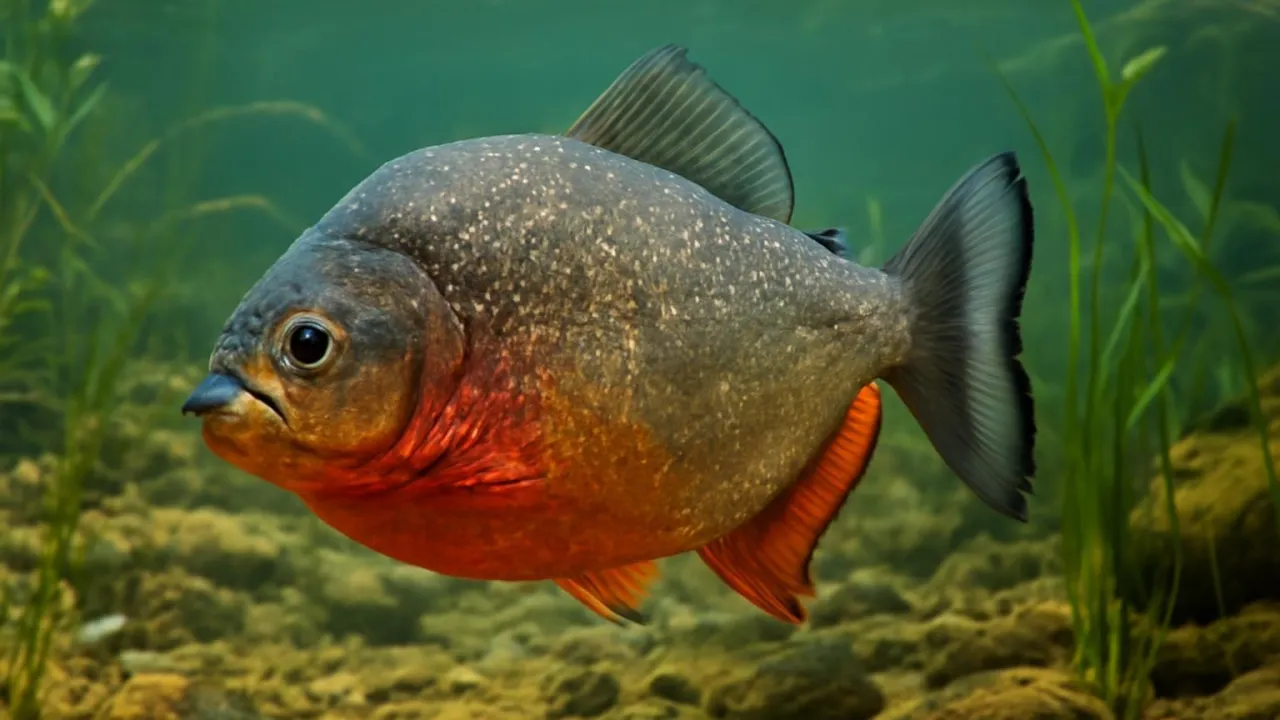
Red-bellied piranhas can bite with a force over 30 times stronger than a human bite!
✨ Word Sparks (Grade 2 Glossary)
Tap 🔊 to hear
habitat
The place where an animal lives and grows
sharp
Having a thin edge that can cut well
bite
To use teeth to cut or grab food
🪝
Have you ever seen a fish with a shiny red belly swim fast?
1
Colorful Body
The red-bellied piranha has a shiny silver body and a bright red belly. It swims quickly in warm rivers where it lives. Its red belly helps it stand out in the water.
2
Strong Teeth and Bite
This fish has very teeth and a strong . It uses its teeth to catch and eat other fish and plants. Its bite is powerful enough to break food into pieces.
3
River Habitat
Red-bellied piranhas live in slow-moving rivers in South America. They like water that is warm and full of plants. Many animals share this river home.
2. What kind of water do red-bellied piranhas like?
🤯 Mind-Blowing Fact • Grade 3
Red-bellied piranhas can bite with a force of up to 320 newtons, stronger than many other fish!
✨ Word Sparks (Grade 3 Glossary)
Tap 🔊 to hear
camouflage
Colors that help animals hide in their homes
predator
An animal that hunts other animals for food
adaptation
A special body part or behavior that helps survival
🪝
Did you know the red-bellied piranha uses its sharp teeth to survive in rivers?
1
Bright Color and Camouflage
The red-bellied piranha has a shiny silver body that helps it blend into river water. Its bright red belly may warn to stay away. This color acts as a form of and protection.
2
Powerful Teeth for Feeding
This fish has sharp, triangular teeth that fit tightly together like scissors. These teeth help it bite through tough skin and plants. The piranha’s strong bite is an important for catching food.
3
River Habitat and Behavior
Red-bellied piranhas live in freshwater rivers of South America. They often swim in groups called schools to protect themselves from . These fish feed on smaller fish, insects, and plants for nutrients.
4
Survival and Adaptation
The piranha’s sharp teeth and schooling behavior help it survive in a river full of . Its bright red belly signals danger to other animals. These are key for its survival in the wild.
Red-bellied piranhas can bite with a force that is over 30 times stronger than a human’s bite strength!
✨ Word Sparks (Grade 4 Glossary)
Tap 🔊 to hear
ecosystem
All plants and animals living together in one place
biodiversity
Many different kinds of living things in one place
conservation
Protecting nature and animals from harm
🪝
How does the red-bellied piranha’s sharp bite affect its river ecosystem?
1
Role in the River Food Web
The red-bellied piranha plays an important role in its river by controlling fish populations. Its sharp teeth allow it to feed on smaller fish and insects, which helps balance the food web. When piranhas hunt, they prevent any one species from becoming too many, supporting healthy in their habitat.
2
Adaptations for Survival
This fish’s bright red belly signals danger to predators, while its sharp teeth enable it to tear through tough prey quickly. Its schooling behavior offers safety in numbers, reducing the chance of being eaten by larger animals. These adaptations work together to help the piranha survive in competitive river habitats.
3
Geographic Distribution and Habitat
Red-bellied piranhas are native to the Amazon, Orinoco, and Paraguay river basins in South America. They prefer slow-moving, warm freshwater with dense vegetation and plenty of hiding spots. Human activities like pollution and dam building can affect their habitats, sometimes reducing their populations and changing the balance.
4
Human Impact and Conservation
While red-bellied piranhas are not endangered, habitat loss threatens their numbers in some areas. They are sometimes caught for aquariums or local fishing, which can affect populations. efforts focus on protecting river to maintain healthy piranha populations and overall for future generations.
1. What does the piranha help control in the river?
2. Why do piranhas swim in schools?
🤯 Mind-Blowing Fact • Grade 5
The red-bellied piranha’s bite force can reach over 320 newtons, making it one of the strongest freshwater fish bites known!
✨ Word Sparks (Grade 5 Glossary)
Tap 🔊 to hear
serrated
Having a jagged, saw-like edge for cutting
omnivore
An animal that eats both plants and animals
predator
An animal that hunts other animals for food
🪝
What makes the red-bellied piranha’s bite one of the strongest among freshwater fish?
1
Scientific Classification and Description
The red-bellied piranha, scientifically named Pygocentrus nattereri, belongs to the Characidae family. This species is known for its distinctive bright red belly and sharp, teeth. It inhabits freshwater rivers primarily in the Amazon, Orinoco, and Paraguay basins of South America. Its unique coloration helps it communicate and warn .
2
Physiological Mechanics of the Bite
Its jaw muscles generate a bite force exceeding 320 newtons, allowing it to crush prey efficiently. The teeth are triangular and tightly interlock, functioning like scissors to shear flesh and plant material. This powerful bite is crucial for feeding and defense against . The piranha’s jaw structure is specially adapted for rapid, strong bites.
3
Ecological Role and Conservation Status
Red-bellied piranhas serve as mid-level , regulating fish populations and contributing to ecosystem balance. Although not currently endangered, habitat degradation from pollution and dam construction threatens local populations. Conservation efforts emphasize maintaining healthy river ecosystems to support these fish. Protecting their habitat helps preserve biodiversity.
4
Botanical and Zoological Surprises
Interestingly, the red-bellied piranha’s diet includes both animal prey and plant matter, making it an . This dietary flexibility helps it adapt to seasonal changes in food availability. Such omnivorous behavior is less common among predatory fish and is a key survival adaptation. It allows the piranha to thrive in diverse environments.
5
Quantitative Comparisons and Adaptations
Adult red-bellied piranhas grow up to 30 centimeters in length and weigh around 1.5 kilograms. Their bite force is over 30 times stronger than that of an average human. They thrive in water temperatures ranging from 22 to 28 degrees Celsius, demonstrating remarkable adaptation to tropical freshwater habitats. Their schooling behavior also aids survival.