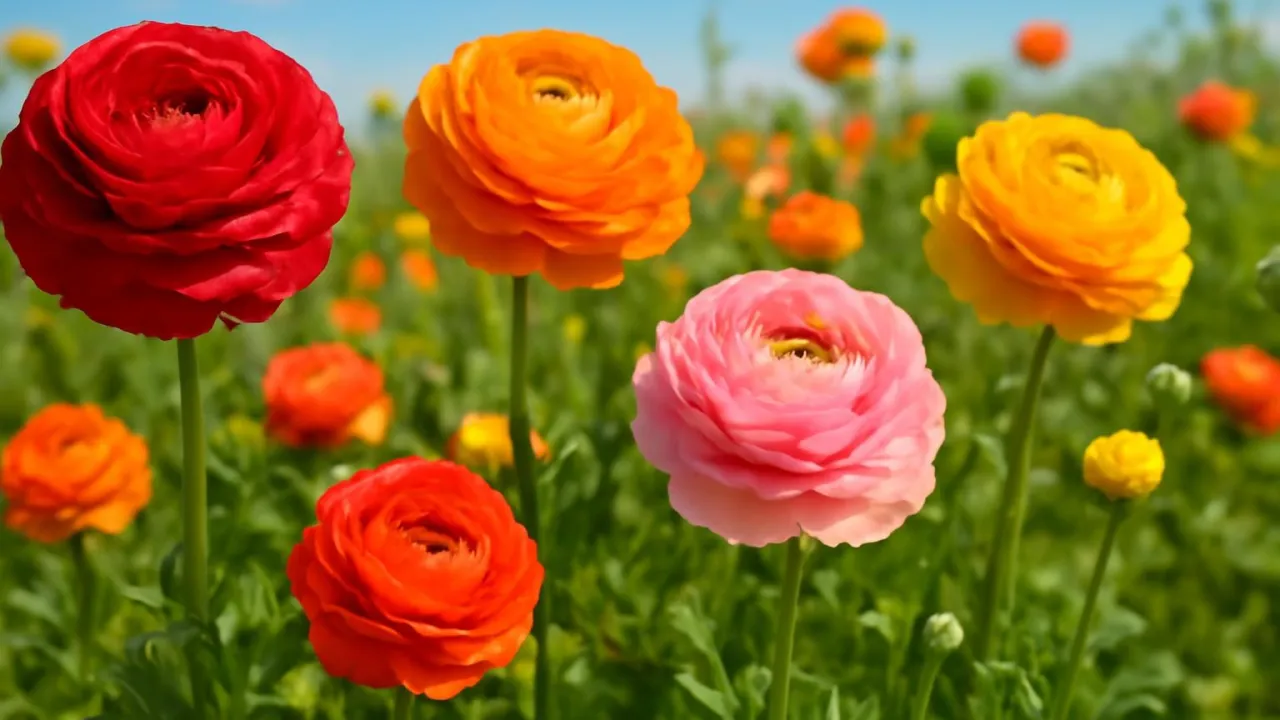
Ranunculus petals can be so thin you can almost see through them!
✨ Word Sparks (Grade 2 Glossary)
Tap 🔊 to hear
tuber
A thick part of a plant that stores food
nectar
The sweet juice inside flowers
bud
A flower before it opens
🪝
Did you know some flowers look like colorful pom-poms?
1
Petals That Pop
Ranunculus flowers have so many petals that they look fluffy and round. The petals can be pink, orange, yellow, white, or red. Each petal is soft and thin, and they overlap each other. These flowers are often used in pretty bouquets.
2
Where Ranunculus Lives
Ranunculus likes to grow in sunny gardens or grassy meadows. It needs moist soil and lots of sunlight to bloom well. The flower grows from a small , which is like a bulb. In spring, the plant sprouts and soon shows its bright blooms.
3
A Flower’s Life
The ranunculus starts as a green shoot and grows taller each day. It makes a , and then the petals slowly open. Bees and butterflies visit the flowers to drink sweet . When the flower is finished blooming, it makes seeds for new plants.
Ranunculus is a botanical cousin of wild buttercups you might see in grassy fields!
✨ Word Sparks (Grade 3 Glossary)
Tap 🔊 to hear
tuber
A plant part that stores food underground
pollinate
To spread pollen so plants make seeds
adaptation
A change that helps a plant or animal survive
🪝
Imagine a flower with petals stacked like a fancy cake—can you guess what it is?
1
Layers of Color
Ranunculus flowers are famous for their layers of silky petals. These petals come in bright colors like pink, gold, orange, red, and white. Each flower can have over one hundred petals arranged in neat circles. The overlapping petals help protect the delicate center from wind and rain.
2
Where Do They Grow?
Ranunculus plants grow best in sunny fields and gardens with moist, well-drained soil. They are native to the Mediterranean but are now grown in many places around the world. The plant grows from a , which stores nutrients for the flower. In spring, shoots appear and soon burst into colorful blooms.
3
Life Cycle Surprises
The ranunculus starts as a small underground. It grows green leaves and then forms a bud that slowly opens into a flower. Bees and butterflies visit to collect nectar and help the plant. After blooming, the flower forms seeds that can grow into new plants.
4
A Special Kind of Flower
Ranunculus is part of the buttercup family, which includes many wildflowers. Even though people call it a flower, scientists know it as a species with unique . Its bright colors attract pollinators, while its many petals help it survive in windy places. Gardeners love ranunculus for its beauty and long-lasting blooms.
A single ranunculus flower can have more petals than some roses!
✨ Word Sparks (Grade 4 Glossary)
Tap 🔊 to hear
reproductive center
Part of the flower that makes seeds
nectar
Sweet liquid that pollinators love to drink
ecosystem
A community of living things and their home
🪝
How can a flower with so many delicate petals survive wind and rain?
1
A Petal Powerhouse
Ranunculus flowers are admired for their dense, layered petals that look almost like tissue paper. These petals come in a dazzling range of colors, including pink, orange, yellow, red, and white. The overlapping arrangement acts as a shield, protecting the flower’s from harsh weather and curious insects. This clever structure helps the plant survive in the unpredictable climates of meadows and gardens.
2
From Tuber to Bloom
Ranunculus begins its life as a small, claw-shaped tuber buried in moist, well-drained soil. When spring arrives, the tuber uses stored nutrients to send up shoots and leaves. Soon, tight buds appear and slowly unfurl into multi-petaled blooms that attract pollinators like bees and butterflies. Each flower’s successful pollination leads to the production of seeds, ensuring the next generation of ranunculus plants.
3
Ecosystem Roles and Relationships
Ranunculus plays an important part in its by providing for pollinators and acting as a food source for some insects. Its bright colors and sweet nectar attract bees, butterflies, and even beetles, which help spread pollen between flowers. In return, these pollinators help the ranunculus reproduce by moving pollen from one flower to another. The plant’s seeds may also be eaten by birds or carried to new places, spreading the species further.
4
Where in the World?
Native to the Mediterranean region, ranunculus has spread to gardens and wild meadows across North America, Europe, and Asia. Gardeners value the flower for its long-lasting blooms and ability to thrive in sunny, well-watered spots. However, ranunculus can sometimes escape gardens and become weedy in some areas, affecting local plant communities. Careful gardening and seed management help keep ranunculus a welcome guest in most environments.
1. What helps ranunculus flowers survive harsh weather?
2. Why do bees and butterflies visit ranunculus flowers?
🤯 Mind-Blowing Fact • Grade 5
Ranunculus petals follow the Fibonacci sequence, a mathematical pattern found in pinecones and seashells!
✨ Word Sparks (Grade 5 Glossary)
Tap 🔊 to hear
Fibonacci sequence
A special number pattern seen in nature
tuber
A thick, underground plant part storing food
pollinator
An animal that moves pollen between flowers
🪝
What makes ranunculus flowers a scientific marvel among spring blooms?
1
A Botanical Masterpiece
Ranunculus asiaticus, commonly known as Persian buttercup, is celebrated for its extraordinary petal arrangement and vibrant hues. Belonging to the Ranunculaceae family, ranunculus shares its lineage with wild buttercups and even some toxic species. Each blossom can display over 100 petals, arranged in concentric whorls that create a striking, almost geometric appearance. These flowers are especially prized in horticulture for their wide color palette, including rare shades like peach and deep burgundy. The ranunculus is not only beautiful but also demonstrates fascinating evolutionary adaptations for survival.
2
The Science of Petal Layers
The ranunculus’s multi-layered petals serve both aesthetic and practical purposes within its native Mediterranean and cultivated habitats. The dense petal layers help shield the reproductive organs from rain, wind, and temperature swings, increasing the flower’s reproductive success. Botanists have found that the spiral arrangement of petals follows a mathematical pattern called the , which maximizes both protection and sunlight exposure. While each flower stands 8–24 inches (20–60 cm) tall, the petals themselves are only fractions of a millimeter thick, making them delicate yet remarkably resilient. This structure also deters some herbivores, who find the mass of petals difficult to chew.
3
Growth, Pollination, and Seed Dispersal
Ranunculus begins life as a , storing starches and nutrients underground to survive dry summers. In early spring, the tuber sends up shoots, which quickly develop into lush green leaves and tightly packed buds. As the flower opens, it produces nectar that attracts bees, butterflies, and beetles, all of which play a role in pollination. Successful pollination results in clusters of small seeds, which may be carried away by wind, water, or birds. The plant’s ability to produce numerous seeds each season helps it spread rapidly in both wild and cultivated settings.
4
Ecological and Human Impact
Ranunculus plays a vital role in supporting populations, especially early in the growing season when few other flowers are blooming. However, some wild ranunculus species are mildly toxic to grazing animals, containing compounds that can irritate skin or cause digestive upset. In gardens, ranunculus is valued for its long vase life and is a favorite among florists for spring arrangements. Its rapid growth and seed production mean it can sometimes become invasive, outcompeting native plants if not managed responsibly. Conservation efforts focus on protecting wild relatives and ensuring cultivated varieties do not harm local ecosystems.
5
A Flower of Numbers and Wonders
A single ranunculus flower can weigh less than an ounce, yet it can contain up to 150 petals—far more than most roses or tulips. The plant thrives in temperatures between 55°F and 75°F (13°C–24°C), requiring at least six hours of sunlight daily and consistent moisture. While native to the Mediterranean, ranunculus is now grown on every continent except Antarctica, demonstrating its adaptability and global appeal. Recent studies have shown that ranunculus petal pigments can reflect ultraviolet light, making them even more attractive to . This remarkable flower continues to inspire botanists, gardeners, and artists alike with its beauty and complexity.