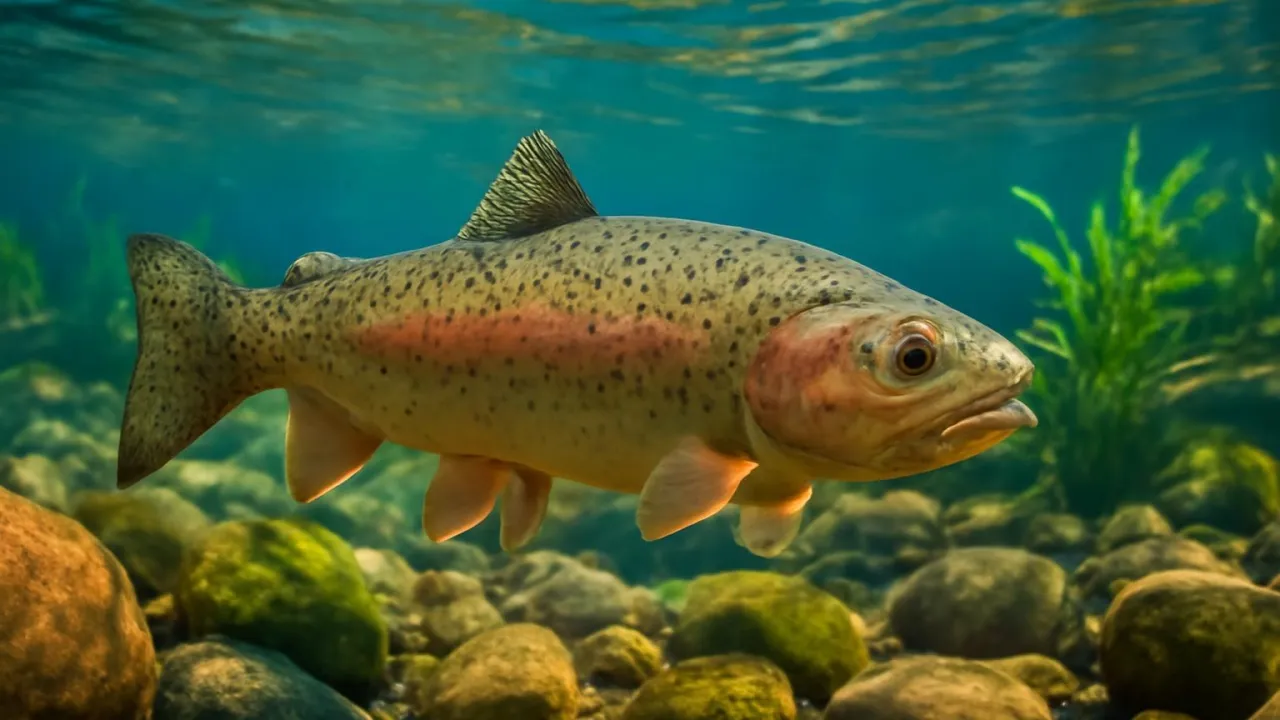
Rainbow trout can see colors even in murky water to find food easily!
✨ Word Sparks (Grade 2 Glossary)
Tap 🔊 to hear
camouflage
Colors that help animals hide
predator
An animal that hunts other animals
crustaceans
Small water animals with hard shells
🪝
Have you ever seen a fish that shines like a rainbow?
1
Colorful Scales
Rainbow trout have shiny scales that reflect many colors in sunlight. Their bright colors help them blend into water and rocks. This keeps them safe from .
2
Home in Cold Water
They live in cold freshwater rivers and lakes where the water is clean. These fish swim quickly in streams and hide under rocks. Cold water gives them the oxygen they need to breathe.
3
Food and Growth
Rainbow trout eat insects, small fish, and to grow strong. They catch their food by swimming fast and snapping it up. Healthy water helps them find plenty of food.
Rainbow trout can see colors clearly even in murky water to spot food and danger!
✨ Word Sparks (Grade 3 Glossary)
Tap 🔊 to hear
camouflage
Colors that help animals hide from others
predators
Animals that hunt other animals to eat
spawning
When fish lay eggs to make babies
🪝
Did you know rainbow trout use their colors to hide and hunt in rivers?
1
Colorful Camouflage
Rainbow trout have shimmering scales that create colorful patterns called . This helps them blend into rocks and plants in their freshwater habitat. Camouflage is important because it protects them from . Their colors can change slightly depending on the water and light.
2
Cold Freshwater Homes
These fish live mostly in cold rivers and lakes where the water is clean and oxygen-rich. They swim upstream to find food and avoid danger. The cold water slows their metabolism, helping them survive longer. Their streamlined bodies help them swim fast against currents.
3
Eating and Growing
Rainbow trout are carnivores that eat insects, small fish, and crustaceans for nutrients. They use sharp teeth to catch prey quickly. Eating well helps them grow strong and healthy. They rely on clean water to find food easily and breathe well.
4
Life Cycle and Spawning
Rainbow trout lay eggs in gravel nests called redds in streams during spring. The eggs hatch into tiny fry that grow into adult fish. is important to keep their population healthy. The young fish learn to find food and hide from .
Rainbow trout can see a wide range of colors underwater, even in cloudy rivers!
✨ Word Sparks (Grade 4 Glossary)
Tap 🔊 to hear
ecosystem
A community of plants and animals living together
adaptation
A body feature that helps survival
migration
Moving to a new place to live or breed
🪝
How do rainbow trout’s colors and habits help them survive in cold rivers?
1
Camouflage and Protection
Rainbow trout’s shimmering scales reflect light, creating camouflage that helps them avoid predators in clear water. Their colors blend with river rocks and plants, making it hard for enemies to spot them. This protective coloration is a key survival . When threatened, they quickly dart into hiding places among stones.
2
Role in the Ecosystem
Rainbow trout are important in freshwater food webs as both predators and prey. They control insect populations by feeding on larvae and small fish, while larger animals like bears and birds hunt them. This balance helps keep river healthy and diverse. Human fishing impacts trout populations, so conservation is vital.
3
Cold Water Habitat Needs
These fish require cold, oxygen-rich water to breathe and thrive, often found in mountain streams and lakes. Pollution or warming water can harm their habitat and reduce survival rates. They migrate upstream during spawning season to lay eggs in gravel nests called redds. This ensures their young develop safely.
4
Adaptations for Survival
Rainbow trout have streamlined bodies and strong muscles that allow them to swim against strong currents. Their keen eyesight helps them spot food and predators even in murky water. Their ability to see a wide range of colors aids in hunting and avoiding danger. These make them skilled survivors in challenging environments.
2. What happens when water gets too warm for rainbow trout?
🤯 Mind-Blowing Fact • Grade 5
Rainbow trout’s eyes can see colors underwater better than many other fish species!
✨ Word Sparks (Grade 5 Glossary)
Tap 🔊 to hear
iridescent
Shiny colors that change with light
alevin
A baby fish that still has a yolk sac
ecosystem
A community of living things and their environment
🪝
How do rainbow trout’s biology and environment shape their colorful, fast-swimming lives?
1
Scientific Classification and Distribution
Rainbow trout, scientifically named Oncorhynchus mykiss, belong to the salmon family, Salmonidae. They are native to cold freshwater rivers and lakes in North America but have been introduced worldwide for sport fishing. Their wide geographic distribution includes Pacific coastal streams and inland waters. This species adapts well to various freshwater , making it ecologically significant.
2
Physiological Adaptations
Rainbow trout possess a streamlined body and powerful muscles that enable rapid swimming against strong currents. Their scales reflect light to produce colors that serve as camouflage and communication. Their eyes have specialized cones allowing them to detect a broad spectrum of colors, even in turbid water. This advanced vision aids in prey detection and predator avoidance.
3
Life Cycle and Reproduction
During spawning, rainbow trout migrate upstream to lay eggs in gravel nests called redds, ensuring oxygen-rich water for embryo development. Eggs hatch into , which absorb yolk sacs before becoming fry. Growth rates depend on water temperature and food availability. This reproductive strategy supports population resilience and genetic diversity.
4
Ecological Role and Human Impact
Rainbow trout are mid-level predators controlling aquatic insect and small fish populations, which maintains balance. They serve as prey for larger animals such as bears, birds, and humans. Overfishing, habitat degradation, and water pollution threaten their populations. Conservation efforts include habitat restoration and regulated fishing to sustain healthy stocks.
5
Quantitative Comparisons and Conservation
Adult rainbow trout can reach lengths of up to 30 inches (76 cm) and weigh around 8 pounds (3.6 kg). They thrive in water temperatures between 50 and 60 degrees Fahrenheit (10 to 16 degrees Celsius). Their swimming speed can reach up to 5 miles per hour (8 kilometers per hour) during feeding or escape. Conservation programs track population data to ensure sustainable fisheries worldwide.