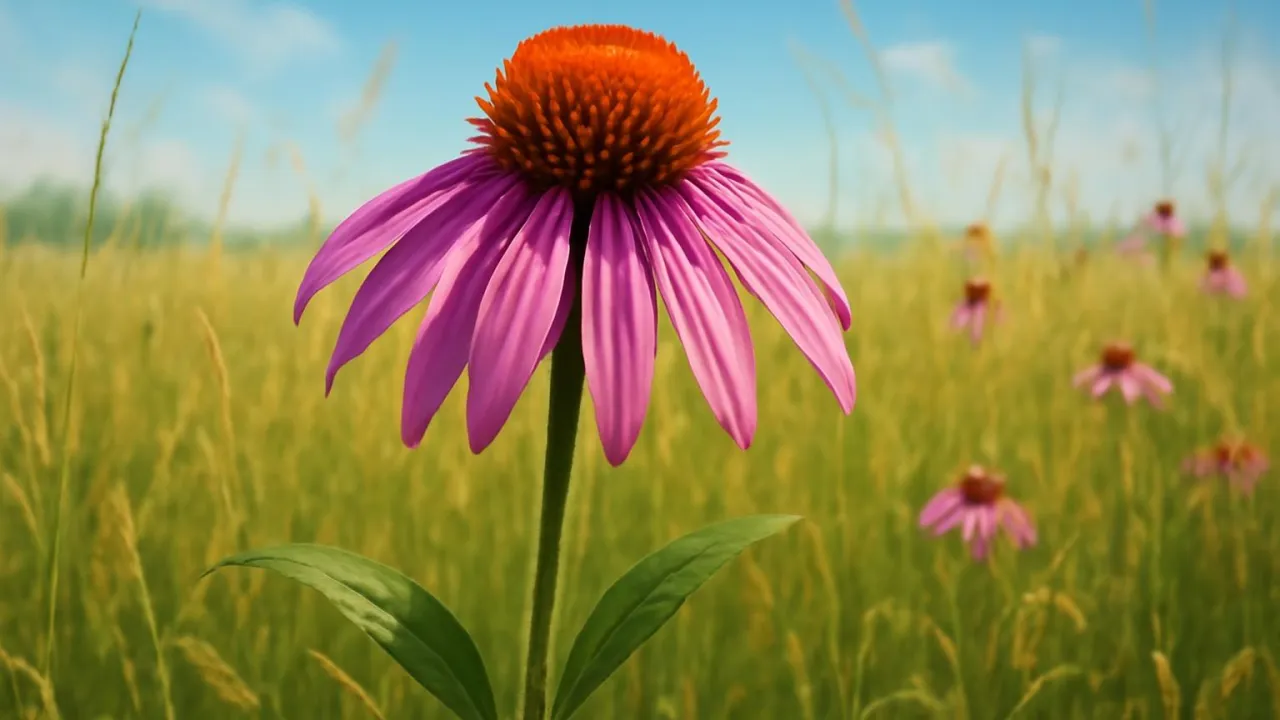
Purple coneflowers bloom for many months, feeding bees all summer long!
✨ Word Sparks (Grade 2 Glossary)
Tap 🔊 to hear
nectar
Sweet juice flowers make for bees
pollination
Bees help flowers make seeds by moving pollen
habitat
The place where plants or animals live
🪝
Have you ever seen a flower that helps bees make honey?
1
Colorful Purple Petals
The purple coneflower has bright purple petals that attract many bees and butterflies. It grows in sunny fields and gardens. Its petals surround a spiky orange center that looks like a cone.
2
Where It Grows
Purple coneflowers grow in eastern and central parts of North America. They like full sun and dry, well-drained soil. These flowers bloom from early summer to fall, giving food to many insects.
3
How It Helps Bees
The flower makes sweet that bees collect to make honey. Bees also carry pollen from one flower to another, helping new flowers grow. This process is called .
Purple coneflowers’ spiky centers protect seeds while helping pollination happen!
✨ Word Sparks (Grade 3 Glossary)
Tap 🔊 to hear
adaptation
A change that helps plants or animals survive
pollinator
An animal that helps flowers make seeds
ecosystem
All plants and animals living together
🪝
Did you know purple coneflowers use their shape to protect themselves?
1
Bright Colors Attract Pollinators
Purple coneflowers have bright purple petals that attract bees and butterflies for pollination. Their colorful petals help insects find the nectar easily. This is an important for the flower’s survival.
2
Cone-Shaped Center Protects Seeds
The spiky orange cone in the center protects the flower’s seeds from predators. This structure also helps spread pollen when bees land on it. The cone shape is a clever for defense.
3
Growing in Prairies and Gardens
Purple coneflowers grow in prairies and gardens where they receive full sun. They need well-drained soil to get nutrients and water. Their strong stems help them stand tall against wind and rain.
4
Role in the Ecosystem
These flowers provide nectar to many , helping the food web in their habitat. Pollinators like bees carry pollen between flowers, which helps plants reproduce. Purple coneflowers are important for healthy .
1. How does the cone-shaped center help the flower?
2. Why do pollinators visit purple coneflowers?
🤯 Mind-Blowing Fact • Grade 4
Purple coneflowers support ecosystems by feeding pollinators and helping plants reproduce!
✨ Word Sparks (Grade 4 Glossary)
Tap 🔊 to hear
symbiosis
A helpful relationship between living things
fertilization
When pollen helps plants make seeds
habitat
The natural home of a plant or animal
🪝
How do purple coneflowers help other living things in their environment?
1
Bright Petals Attract Many Insects
Purple coneflowers use their bright purple petals to attract pollinators such as bees and butterflies, which are essential for the flower’s reproduction. When pollinators visit, they carry pollen from one flower to another, causing . This cause-and-effect relationship helps the plants produce seeds and spread.
2
Strong Stems and Cone Shape
The flower’s tall, sturdy stems allow it to grow in windy prairies without breaking, while its spiky cone center protects seeds from predators. These physical adaptations increase the flower’s chances of survival and reproduction in its native across eastern and central North America.
3
Role in Food Webs and Human Use
Purple coneflowers provide nectar to many pollinators, which in turn support birds and other animals higher in the food web. Humans also use purple coneflowers for herbal medicine, especially to boost the immune system. This symbiotic relationship benefits both people and wildlife.
4
Geographic Distribution and Habitat
Purple coneflowers naturally grow in open fields, prairies, and gardens throughout eastern and central North America. They prefer full sun and well-drained soil, which helps them thrive in these ecosystems. Changes in land use can affect their populations and the animals that depend on them.
1. What happens when pollinators visit purple coneflowers?
2. How do humans use purple coneflowers?
🤯 Mind-Blowing Fact • Grade 5
Purple coneflowers produce nectar that supports pollinators traveling miles to find food!
✨ Word Sparks (Grade 5 Glossary)
Tap 🔊 to hear
herbaceous
A plant with soft, green stems
pollination
Transfer of pollen to help plants make seeds
biodiversity
Many different kinds of plants and animals
🪝
What scientific secrets make purple coneflowers vital to ecosystems and medicine?
1
Scientific Classification and Description
Purple coneflowers belong to the genus Echinacea and species purpurea in the Asteraceae family, which includes daisies and sunflowers. They are perennials native to eastern and central North America. Their distinctive purple petals and spiny central cones give them their common name and help identify the species clearly.
2
Physiological Adaptations and Pollination
The flower’s cone-shaped center contains numerous tiny florets that produce nectar and pollen, attracting a wide variety of pollinators including bees, butterflies, and hummingbirds. This specialized structure maximizes efficiency by providing easy access and protection for reproductive parts, ensuring successful fertilization.
3
Ecological Role and Conservation Status
Purple coneflowers play a crucial role in prairie ecosystems by supporting pollinator populations and contributing to . Although not currently endangered, habitat loss due to agriculture and urban development threatens some populations, making conservation efforts important for maintaining ecological balance and protecting pollinators.
4
Medicinal Uses and Botanical History
Historically, Native American tribes used purple coneflowers to treat infections and boost immune health. Modern herbal medicine continues to study Echinacea extracts for potential benefits in reducing cold symptoms and inflammation, highlighting the plant’s enduring medical significance and cultural value.
5
Quantitative Comparisons and Growth
Purple coneflowers typically grow between 2 and 5 feet tall, with flower heads measuring about 3 to 4 inches in diameter. They thrive in temperatures ranging from 60 to 85 degrees Fahrenheit and prefer well-drained soils with moderate moisture. Their nectar production supports pollinators that travel several miles daily, making them vital to ecosystem health. These flowers bloom for about two to three months, providing long-lasting food sources.