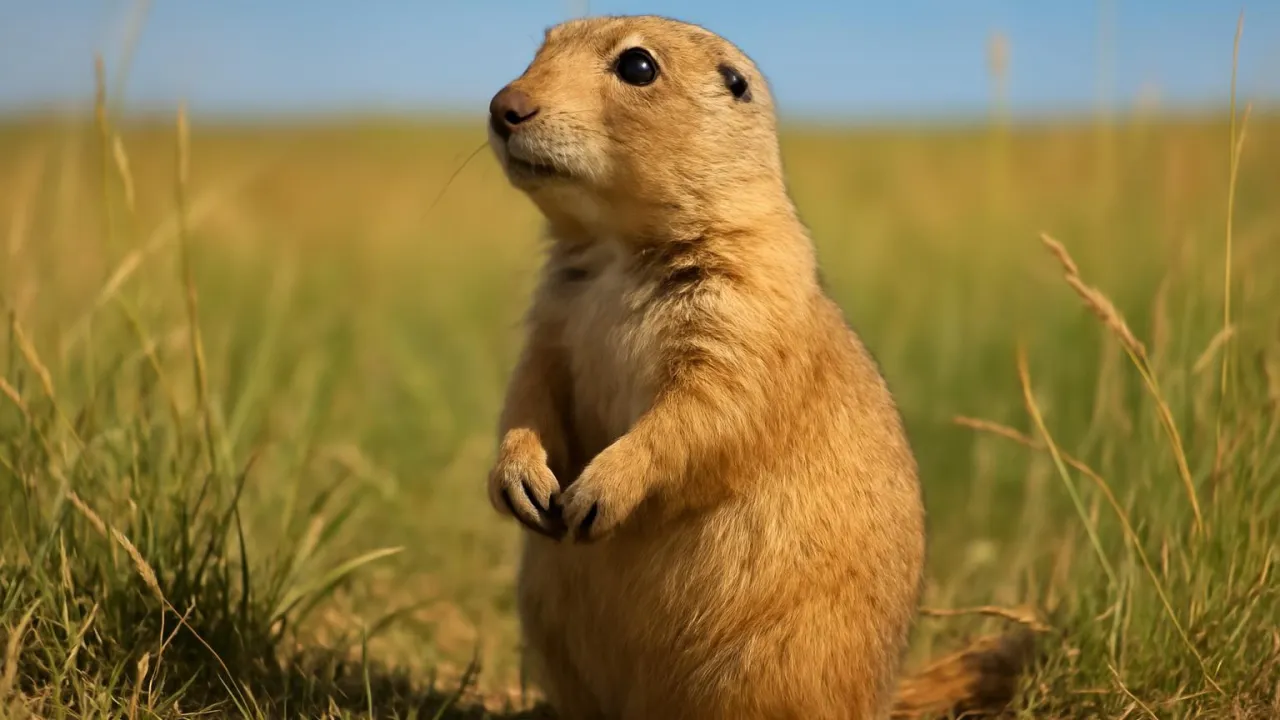
Prairie dogs have special whistles that tell exactly what kind of predator is coming!
✨ Word Sparks (Grade 2 Glossary)
Tap 🔊 to hear
colony
A big group of animals living together
predator
An animal that hunts other animals
burrow
A tunnel or hole dug for shelter
🪝
Have you ever heard a prairie dog’s whistle alarm?
1
Life in the Grasslands
Prairie dogs live in large groups called colonies on grassy plains. They dig tunnels underground to stay safe from . Their homes, called , have many rooms for sleeping and storing food.
2
Growing Up Underground
Baby prairie dogs are born in the and stay hidden for weeks. They grow quickly and learn to dig and whistle by watching adults. These skills help them survive in their open grassland home.
3
Whistle Warnings
Prairie dogs use different whistles to warn about specific dangers like hawks or coyotes. Their sharp calls help the whole stay alert and safe from nearby.
Prairie dogs’ whistles can describe a predator’s size, shape, and speed in detail!
✨ Word Sparks (Grade 3 Glossary)
Tap 🔊 to hear
camouflage
Colors that help animals hide from others
ecosystem
A place where plants and animals live together
predator
An animal that hunts other animals for food
🪝
Did you know prairie dogs use whistles to communicate detailed warnings?
1
Prairie Dog Communities
Prairie dogs live in large colonies that can cover many acres of grassland. These social animals build complex burrows underground to protect themselves from . Their burrows have many chambers used for nesting and hiding.
2
Adaptations for Survival
Their sharp claws help prairie dogs dig tunnels quickly, while their keen eyesight spots danger early. They use coloring to blend into the dry grassland environment and avoid like hawks and coyotes.
3
Whistles and Communication
Prairie dogs have a sophisticated whistle system that alerts their colony to specific . Different whistles describe the size, shape, and speed of approaching threats, helping others prepare to hide or escape.
4
Role in the Ecosystem
Prairie dogs help the grassland by aerating soil with their digging and providing food for . Their burrows create habitats for other animals, showing how their survival benefits many species.
Prairie dogs’ whistles can trigger complex group behaviors that protect entire colonies from predators.
✨ Word Sparks (Grade 4 Glossary)
Tap 🔊 to hear
symbiosis
When two species help each other live
nutrient
Food or minerals plants and animals need
colony
A large group of animals living together
🪝
How do prairie dogs’ whistles shape life on the grasslands?
1
Social Structure and Habitat
Prairie dogs live in large colonies that form complex social networks essential for survival on the grasslands. Their burrows, which can extend over many meters, provide shelter from harsh weather and predators. These underground homes include chambers for sleeping, storing food, and raising young. The tunnels also help regulate temperature inside the burrows during hot summers and cold winters.
2
Communication and Survival
The prairie dog’s whistle alarm system is highly advanced, allowing individuals to convey detailed information about predator type, size, and approach speed. This communication causes immediate reactions, such as hiding or mobbing, which increases the ’s overall safety and survival chances. The ability to warn others quickly helps reduce attacks from hawks, coyotes, and snakes.
3
Ecosystem Roles and Interactions
Prairie dogs play a vital role in their ecosystem by aerating soil through digging, which promotes plant growth and cycling. Their burrows also create habitats for other species like burrowing owls and snakes, demonstrating symbiotic relationships within the grassland food web. By grazing on grasses, prairie dogs influence plant diversity and help maintain the balance of the prairie ecosystem.
4
Geographic Distribution and Human Impact
Prairie dogs are native to North American prairies, ranging from Canada to Mexico, but habitat loss due to agriculture and urban development threatens their populations. Conservation efforts focus on protecting colonies and educating people about their ecological importance. Disease outbreaks like sylvatic plague also pose serious risks to prairie dog communities.
1. What does the prairie dog’s whistle tell the colony?
2. How do prairie dogs help other animals?
🤯 Mind-Blowing Fact • Grade 5
Prairie dog whistles communicate predator details so precisely they are studied as one of the most complex animal languages.
✨ Word Sparks (Grade 5 Glossary)
Tap 🔊 to hear
keystone species
An animal that helps many others survive
vocalization
Sounds animals make to talk or warn
habitat fragmentation
When homes for animals get broken into pieces
🪝
What makes prairie dogs’ communication one of nature’s most complex animal languages?
1
Scientific Classification and Habitat
Prairie dogs belong to the genus Cynomys within the squirrel family Sciuridae, native to North American grasslands. They inhabit prairies from southern Canada through the central United States into northern Mexico, thriving in open, flat landscapes with short grasses. These environments provide the grasses and plants they eat daily.
2
Physiological Adaptations and Behavior
Their strong forelimbs and sharp claws enable efficient excavation of extensive burrow systems that can span hundreds of square meters. Prairie dogs have acute vision and hearing to detect predators early, and their social behavior includes grooming and complex that maintain colony cohesion. Their burrows also regulate temperature to protect them from harsh weather.
3
Communication Complexity and Conservation
Research shows prairie dog encode detailed information about predator species, size, and speed, constituting one of the most sophisticated animal communication systems. Conservation concerns arise due to and disease, prompting efforts to protect colonies and preserve biodiversity. Sylvatic plague outbreaks have significantly reduced some prairie dog populations.
4
Ecological Impact and Interactions
Prairie dogs significantly influence grassland ecosystems by aerating soil, enhancing nutrient cycling, and shaping plant communities through selective grazing. Their burrows provide shelter for over 150 species, including burrowing owls and black-footed ferrets, highlighting their status. Protecting prairie dogs helps maintain the health of many grassland species.
5
Quantitative Comparisons and Environmental Challenges
An average prairie dog colony can cover up to 100 acres, with individuals weighing 1.5 to 3 pounds and measuring up to 16 inches long. They whistle at frequencies between 2 and 4 kilohertz, and face threats from habitat loss, plague outbreaks, and climate change affecting grassland temperatures and vegetation. Their survival depends on ongoing conservation efforts.