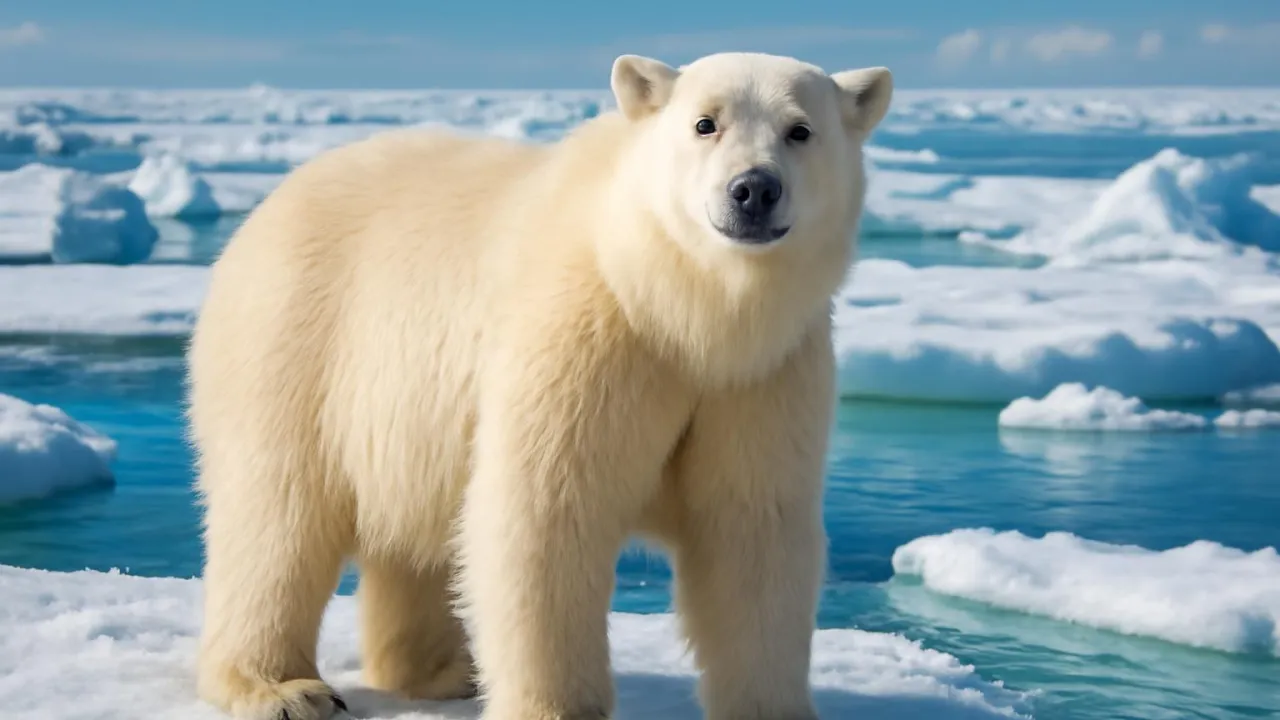
Polar bears can swim nonstop for over 60 miles in freezing water!
✨ Word Sparks (Grade 2 Glossary)
Tap 🔊 to hear
Arctic
The very cold place at Earth's top
paddle
To move through water with hands or feet
prey
An animal that is hunted for food
🪝
How do polar bears stay warm while swimming in icy Arctic water?
1
Living in the Cold
Polar bears live in the where it is very cold and snowy. They have thick fur and fat that keep them warm. Their white fur helps them blend into the snow and ice. They spend much time on sea ice hunting for food.
2
Swimming and Hunting
Polar bears are strong swimmers and use their large paws to through water. They can swim many miles to find seals, their main food. When hunting, they wait quietly near holes in the ice to catch seals. Their sharp teeth help them eat their .
3
Special Features
Polar bears have black skin under their fur to absorb heat from the sun. Their fur is hollow, which traps warm air. Their big paws spread their weight on ice so they do not fall through. These features help polar bears survive in the cold .
Polar bears’ paws can be over 12 inches wide to spread their weight on thin ice!
✨ Word Sparks (Grade 3 Glossary)
Tap 🔊 to hear
camouflage
Colors or patterns that help hide animals
insulation
Something that keeps heat inside
ecosystem
A community of living things and their home
🪝
Why are polar bears’ paws so important for their Arctic survival?
1
Adapted for the Arctic
Polar bears live on sea ice where they hunt seals for food. Their thick fur and a layer of fat provide against freezing temperatures. The white fur also acts as , helping them blend into the snowy environment. This adaptation protects them from predators and helps them sneak up on prey.
2
Powerful Swimmers
Polar bears use their large, wide paws to paddle through icy water. These paws help them swim long distances while hunting or moving between ice floes. Their sharp claws provide grip on slippery ice surfaces. This combination of features allows polar bears to be excellent swimmers and hunters.
3
Hunting and Diet
Polar bears mainly feed on seals, which they catch by waiting near breathing holes in the ice. This hunting method depends on patience and stealth. Their strong sense of smell helps them detect prey from far away. Eating seal fat gives them the nutrients and energy needed to survive the cold Arctic winters.
4
Survival Challenges
Climate change causes sea ice to melt, making hunting harder for polar bears. Less ice means fewer places to find seals and rest. Polar bears must swim farther, which uses more energy. These challenges threaten their survival in the Arctic .
Polar bears can swim at speeds of up to 6 miles per hour when chasing prey in icy waters!
✨ Word Sparks (Grade 4 Glossary)
Tap 🔊 to hear
apex predator
Top animal that hunts others in food chains
habitat
The natural home of an animal or plant
conservation
Protecting animals and places from harm
🪝
How does the melting Arctic ice affect polar bears and the whole ecosystem?
1
Arctic Habitat and Adaptations
Polar bears live primarily on the Arctic sea ice, which serves as a platform for hunting seals and traveling long distances. Their thick fur and a substantial fat layer provide insulation against the freezing temperatures, while their black skin absorbs sunlight to retain heat. These adaptations are vital for survival in the harsh Arctic environment, where temperatures can drop below -40 degrees Fahrenheit.
2
Role in the Food Web
As , polar bears play a crucial role in the Arctic food web by controlling seal populations. They rely on sea ice to access their prey, and their hunting helps maintain balance in the ecosystem. The loss of sea ice disrupts this balance, potentially causing overpopulation of seals and affecting other species dependent on the same resources.
3
Impact of Climate Change
Rising global temperatures cause Arctic sea ice to melt earlier each year, reducing the polar bears’ hunting grounds. This forces bears to swim longer distances, which increases energy use and decreases hunting success. The shrinking ice also results in loss, threatening polar bear populations and altering the Arctic ecosystem’s dynamics.
4
Geographic Range and Conservation
Polar bears are found throughout the circumpolar Arctic regions, including parts of Canada, Russia, Greenland, and Norway. efforts focus on reducing greenhouse gas emissions and protecting critical . International agreements and wildlife protections aim to slow habitat loss and support polar bear survival amid changing climates.
1. What helps polar bears survive in very cold weather?
2. What effect does melting ice have on polar bears?
🤯 Mind-Blowing Fact • Grade 5
Polar bears can swim nonstop for over 60 miles, using their huge paws like paddles to glide through icy waters!
✨ Word Sparks (Grade 5 Glossary)
Tap 🔊 to hear
subcutaneous
Under the skin layer that stores fat
apex predator
Top animal that hunts others in food chains
insulation
Something that keeps heat inside
🪝
What unique biological traits allow polar bears to thrive in the Arctic’s extreme cold and changing environment?
1
Taxonomy and Scientific Classification
Polar bears belong to the family Ursidae and genus Ursus, scientifically named Ursus maritimus. They are closely related to brown bears but have evolved specialized traits for Arctic survival. Their classification reflects adaptations to marine hunting and cold climates, distinguishing them from other bear species worldwide.
2
Physiological Adaptations
Polar bears possess dense, hollow fur that traps air for , combined with a thick fat layer up to 4.5 inches thick. Their black skin absorbs solar radiation, aiding heat retention. Large, wide paws distribute weight to prevent breaking thin ice and provide propulsion during swimming, enabling them to cover distances exceeding 60 miles.
3
Ecological Role and Conservation Status
As , polar bears regulate seal populations, maintaining Arctic ecosystem balance. Climate change-induced sea ice loss threatens their hunting grounds, causing nutritional stress and population declines. Conservation efforts include international agreements like the Agreement on the Conservation of Polar Bears, habitat protection, and climate action to mitigate global warming impacts.
4
Historical and Botanical Context
Polar bears have been integral to Arctic Indigenous cultures for centuries, symbolizing strength and survival. Unlike many animals, they rely on sea ice rather than terrestrial vegetation, highlighting their unique ecological niche. Their evolutionary history traces back hundreds of thousands of years, adapting to fluctuating ice ages and environmental changes.
5
Quantitative Comparisons and Records
Adult male polar bears can weigh up to 1,500 pounds (680 kilograms) and stand 10 feet (3 meters) tall on hind legs. They swim at speeds up to 6 miles per hour (9.7 kilometers per hour) and can hold their breath for two minutes underwater. Their paws measure over 12 inches (30 centimeters) wide, aiding in ice navigation and swimming efficiency.