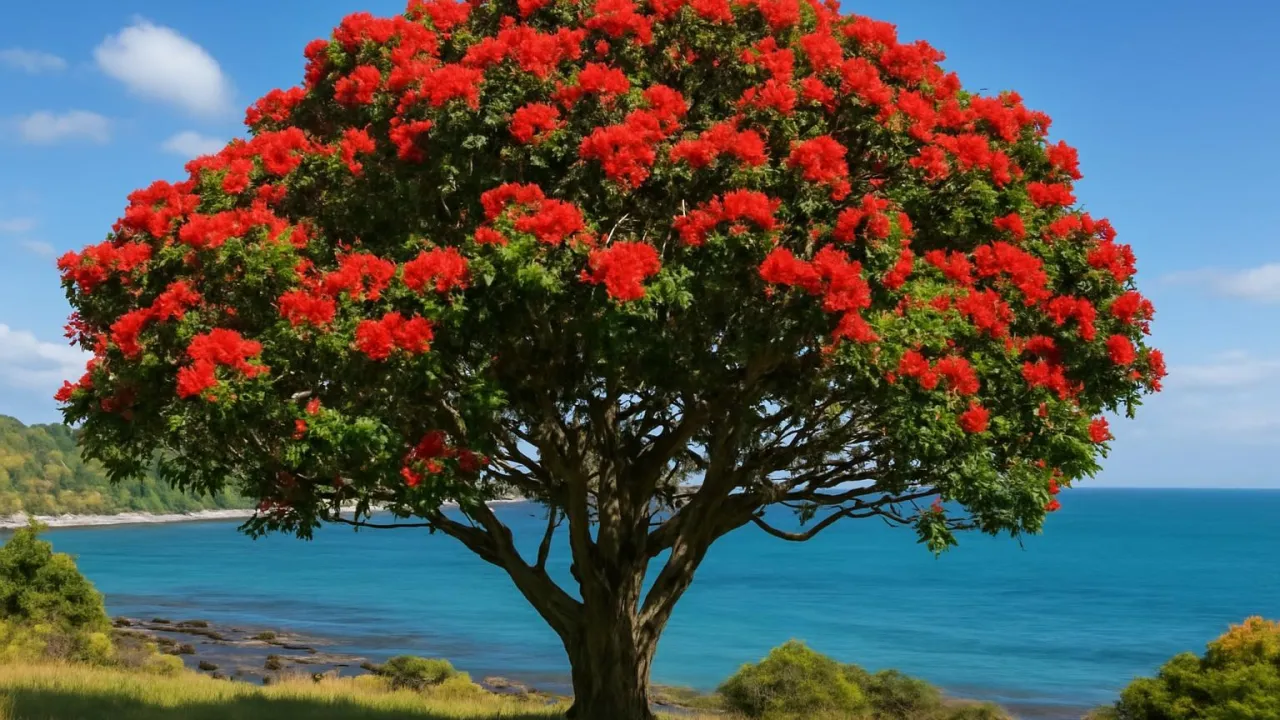
Pohutukawa trees are called the New Zealand Christmas tree because they bloom in December!
✨ Word Sparks (Grade 2 Glossary)
Tap 🔊 to hear
pollinate
Help flowers make seeds by moving pollen
coastline
Where the land meets the ocean or sea
bark
The tough outside covering of a tree
🪝
Have you ever seen a tree that blooms bright red flowers at Christmas?
1
Bright Flowers in Summer
The pohutukawa tree blooms bright red flowers in summer and near Christmas. These flowers attract many birds and insects that help the tree. The flowers look like tiny fireworks lighting up the green leaves.
2
Where Pohutukawa Lives
Pohutukawa trees grow mostly along New Zealand’s where the soil is sandy and well-drained. They prefer full sun and can survive salty winds from the ocean. These trees are important to protect the coastline from erosion.
3
Strong Leaves and Bark
The pohutukawa has thick, shiny green leaves that help it save water during dry times. Its is rough and helps protect it from strong coastal winds and storms. This tree can grow very tall, reaching up to 50 feet.
Pohutukawa trees can live for over 500 years and still bloom bright red flowers!
✨ Word Sparks (Grade 3 Glossary)
Tap 🔊 to hear
pollination
When pollen moves to help flowers make seeds
adaptation
A special trait that helps plants survive
erosion
When soil washes away by water or wind
🪝
Did you know the pohutukawa tree uses its bright flowers to survive harsh coastal winds?
1
Bright Red Flowers and Pollination
The pohutukawa produces bright red flowers that attract birds and insects for . Pollination helps the tree make seeds to grow new trees. The flowers bloom mostly in summer and around Christmas time. This bright color is an to stand out among green leaves.
2
Leaves and Bark Adaptations
Its thick, shiny leaves reduce water loss during dry coastal summers. The rough bark protects the tree from strong winds and salt spray. These help the pohutukawa survive in its coastal habitat. The tree can live for hundreds of years.
3
Ecosystem Role and Habitat
Pohutukawa trees grow along New Zealand’s coastlines where they prevent soil . Their roots hold the soil firmly, stopping it from washing away during storms. They also provide shelter and food for many birds and insects. This tree is an important part of the coastal ecosystem.
4
Life Cycle and Growth
After , the pohutukawa produces woody seed capsules that release seeds in spring. Young seedlings grow quickly in sunny spots near the coast. The tree can reach heights of 50 feet or more. Its long life cycle helps maintain coastal forests.
1. How do pohutukawa flowers help the tree survive?
2. What role does the pohutukawa play in its ecosystem?
🤯 Mind-Blowing Fact • Grade 4
Pohutukawa trees help prevent coastal erosion by holding soil with their strong roots.
✨ Word Sparks (Grade 4 Glossary)
Tap 🔊 to hear
pollination
How pollen moves to help plants make seeds
erosion
When wind or water washes soil away
biodiversity
Many different kinds of plants and animals
🪝
How does the pohutukawa tree protect New Zealand’s coastlines and support wildlife?
1
Bright Flowers and Pollination
The pohutukawa’s bright red flowers bloom mainly in summer and around Christmas, attracting birds and insects that pollinate the tree. This process allows the tree to produce seeds, ensuring its survival and reproduction. The vivid color of the flowers is an adaptation that helps them stand out in dense coastal forests. This mutual relationship benefits both the tree and the pollinators.
2
Adaptations to Coastal Environment
The tree’s thick, waxy leaves reduce water loss during dry summers, while its rough bark protects it from strong coastal winds and salt spray. These adaptations enable the pohutukawa to thrive in harsh seaside conditions where few other trees can survive. Its extensive root system stabilizes sandy soil, preventing caused by storms and tides. This ecological role is vital for maintaining healthy coastal habitats.
3
Ecosystem Role and Human Impact
Pohutukawa trees provide food and shelter for native birds and insects, supporting in coastal ecosystems. They also play a crucial role in protecting shorelines from , which benefits human communities living nearby. However, urban development and invasive species threaten pohutukawa populations in some areas. Conservation efforts focus on planting and protecting these trees to preserve their ecological and cultural importance.
4
Geographic Distribution and Growth
Native to New Zealand’s North Island and coastal regions, pohutukawa trees can grow up to 50 feet tall. They prefer sunny, well-drained soils near the ocean and can tolerate salty winds. Their life cycle includes flowering in summer, seed production in spring, and slow growth over many decades. This long lifespan contributes to the stability of coastal forests and ecosystems.
Pohutukawa trees can live over 500 years and withstand coastal winds over 60 miles per hour!
✨ Word Sparks (Grade 5 Glossary)
Tap 🔊 to hear
keystone species
A species that helps keep an ecosystem healthy
transpiration
How plants lose water through their leaves
pollination
When pollen moves to help plants make seeds
🪝
What makes the pohutukawa tree a vital species for New Zealand’s coastal ecosystems and cultural heritage?
1
Scientific Classification and Taxonomy
The pohutukawa tree, scientifically named Metrosideros excelsa, belongs to the Myrtaceae family, which includes many flowering plants. It is native to New Zealand’s coastal regions, especially the North Island, where it plays a key ecological role. This species is closely related to other Metrosideros species found throughout the Pacific Islands. Its classification helps scientists understand its evolutionary history and relationships with other plants.
2
Physiological Adaptations and Mechanics
Pohutukawa trees have thick, waxy leaves that reduce and conserve water in dry, salty coastal environments. Their rough, fibrous bark protects against salt spray and strong winds common near the ocean. The tree’s extensive root system anchors it firmly in sandy soils, preventing erosion during storms and high tides. Bright red flowers contain numerous stamens that attract native birds, facilitating effective .
3
Ecological Role and Conservation Status
As a , pohutukawa trees stabilize coastal ecosystems by preventing soil erosion and providing habitat for native birds and insects. Urbanization and invasive species have reduced their natural populations, prompting conservation efforts including replanting and habitat restoration. These trees also hold cultural significance for the Maori people, symbolizing strength and renewal. Protecting pohutukawa is essential for maintaining biodiversity and cultural heritage.
4
Botanical History and Cultural Importance
Historically, Maori people used pohutukawa wood for carving and its bark for medicinal purposes. The tree’s spectacular red blooms at Christmas have earned it the nickname 'New Zealand Christmas tree.' This cultural association increases public interest in preserving the species. Botanical studies have documented its growth patterns and responses to environmental changes, informing conservation strategies.
5
Quantitative Comparisons and Growth Data
Pohutukawa trees can grow up to 50 feet (15 meters) tall and live for over 500 years. Their flowers bloom from November to January, coinciding with New Zealand’s summer and Christmas season. The tree’s root system can extend several meters underground, anchoring it against winds exceeding 60 miles per hour (97 kilometers per hour). These impressive features highlight the pohutukawa’s resilience and ecological importance.