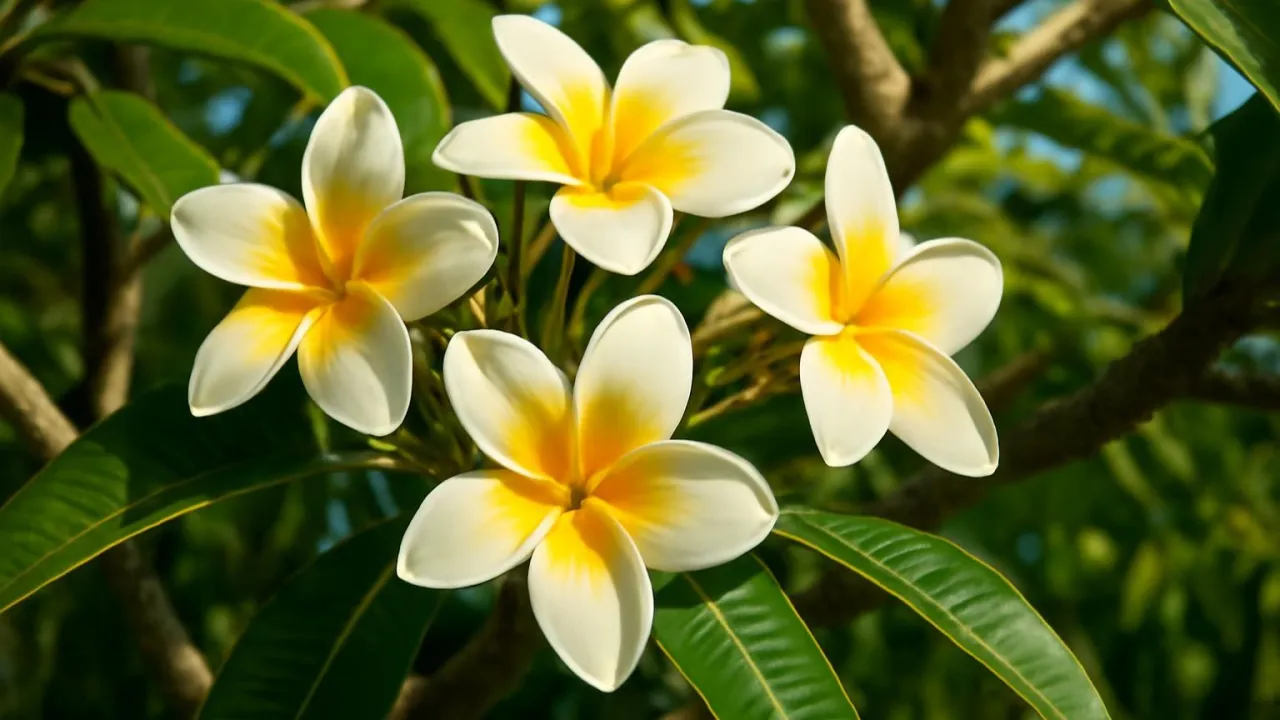
Plumeria’s sweet scent is strongest at night to attract special pollinators.
✨ Word Sparks (Grade 2 Glossary)
Tap 🔊 to hear
pollinators
Animals that help flowers make seeds by moving pollen
fragrance
A sweet smell flowers give off
petals
The soft, colorful parts of a flower
🪝
Have you ever smelled a flower that smells like candy at night?
1
Colors and Petals
Plumeria flowers come in white, pink, yellow, and sometimes red colors. Their are smooth and soft to touch. These flowers grow on trees that can be tall or short.
2
Sweet Night Fragrance
The flowers give off a sweet smell mostly at night. This smell helps attract like moths and bees. Pollinators help the flowers make seeds to grow new plants.
3
Warm Homes for Plumeria
Plumeria trees grow best in warm places with lots of sun. They need moderate water but not too much. People often plant them in gardens or near homes.
2. What do pollinators like moths do for plumeria flowers?
🤯 Mind-Blowing Fact • Grade 3
Plumeria flowers’ scent is specially adapted to attract night pollinators like moths.
✨ Word Sparks (Grade 3 Glossary)
Tap 🔊 to hear
pollination
The process of moving pollen to make seeds
adaptation
A change that helps plants or animals survive
nectar
Sweet juice flowers make to attract insects
🪝
Did you know plumeria flowers use their sweet scent to survive at night?
1
Bright Colors and Soft Petals
Plumeria flowers display bright colors like white, pink, and yellow to attract pollinators. Their smooth petals help protect the flower’s delicate parts. These colors help the flowers stand out in tropical forests. This helps them survive among many plants.
2
Nighttime Fragrance and Pollination
Plumeria flowers produce a strong fragrance mostly at night to attract moths. These pollinators carry pollen from flower to flower, aiding reproduction. This process is called and is vital for seed production. The flower’s scent is an to attract specific nighttime pollinators.
3
Tropical Habitat and Growth
Plumeria trees thrive in warm tropical climates with plenty of sunlight. They grow best in well-drained soil with moderate water supply. Their thick branches store water to survive dry periods. These help plumeria trees live in challenging tropical environments.
4
Survival and Ecosystem Role
Plumeria flowers provide to pollinators like bees and moths, supporting local ecosystems. Their bright colors and scent help them avoid predators by attracting helpful insects. The trees also add beauty to gardens and help prevent soil erosion. They play an important role in tropical food webs.
1. Why do plumeria flowers produce a strong scent at night?
2. How do plumeria trees survive dry periods?
🤯 Mind-Blowing Fact • Grade 4
Plumeria’s nighttime fragrance directly causes moth pollination, ensuring its survival.
✨ Word Sparks (Grade 4 Glossary)
Tap 🔊 to hear
pollinators
Animals that move pollen to help plants make seeds
ecosystem
A community of plants and animals living together
conservation
Protecting plants and animals from harm
🪝
How does plumeria’s sweet scent affect its role in tropical ecosystems?
1
Adaptations for Survival
Plumeria flowers have evolved bright colors and a strong nighttime fragrance to attract specific like moths and bees. This adaptation increases their chances of successful pollination and seed production. Their thick branches store water, allowing them to survive dry tropical seasons. These combined traits help plumeria thrive in warm, sunny environments.
2
Ecosystem Roles and Food Webs
Plumeria flowers provide nectar that supports essential to tropical food webs. By attracting moths and bees, they help maintain biodiversity and balance. These pollinators, in turn, serve as food for birds and other animals. Plumeria trees also stabilize soil, reducing erosion and benefiting nearby plants.
3
Geographic Distribution and Human Impact
Native to tropical America and the Caribbean, plumeria has been widely planted in tropical and subtropical regions worldwide due to its beauty and fragrance. Human cultivation has expanded its range beyond native habitats. However, habitat loss and climate change threaten wild populations, making efforts important.
4
Cause and Effect of Fragrance
The strong sweet fragrance emitted at night causes moths to visit plumeria flowers, which results in effective pollination. Without this scent, might not find the flowers easily, reducing seed production. This cause-and-effect relationship shows how plumeria’s scent directly supports its reproduction and survival.
1. What role do plumeria flowers play in tropical food webs?
2. Why is plumeria’s nighttime fragrance important?
🤯 Mind-Blowing Fact • Grade 5
Plumeria’s scent molecules peak at night, perfectly timed to attract moth pollinators for reproduction.
✨ Word Sparks (Grade 5 Glossary)
Tap 🔊 to hear
volatile organic compounds
Molecules that make flowers smell strong
nocturnal
Active at night, like moths
succulent
Plants that store water in thick parts
🪝
What scientific secrets help plumeria flowers survive and spread in tropical climates?
1
Taxonomy and Scientific Classification
Plumeria belongs to the Apocynaceae family, consisting of about 7 to 8 species native to tropical America and the Caribbean. These flowering trees are classified under the genus Plumeria, known for their fragrant and colorful blooms. Their botanical classification helps scientists understand their evolutionary relationships and ecological roles. The genus name honors Charles Plumier, a French botanist who first described the plant.
2
Physiology and Fragrance Mechanism
Plumeria flowers produce that create a strong sweet fragrance, especially at night, to attract pollinators like moths. Their petals contain specialized glands that release these scent molecules efficiently. The thick, branches store water, allowing the tree to endure droughts common in tropical dry forests. This physiological adaptation supports survival during varying seasonal conditions.
3
Ecological Role and Conservation
Plumeria plays a vital role in tropical ecosystems by supporting pollinators such as moths and bees, which contribute to biodiversity and pollination networks. Human cultivation for ornamental purposes has expanded its geographic range, but wild populations face threats from habitat destruction and climate change. Conservation efforts focus on protecting natural habitats and promoting sustainable cultivation practices.
4
Botanical History and Cultural Importance
Historically, plumeria flowers have been used in traditional medicine and cultural ceremonies across tropical regions. Their fragrant blossoms are symbolic in many cultures, representing beauty and grace. The plant’s history intertwines with human migration and horticultural trade, spreading its presence worldwide. Understanding this history enriches appreciation for plumeria’s ecological and cultural significance.
5
Quantitative Comparisons and Growth
Plumeria trees typically grow between 6 to 25 feet tall (1.8 to 7.6 meters) and can live for several decades. Their flowers emit scent molecules most strongly between dusk and midnight, maximizing pollinator visits. Compared to other tropical flowers, plumeria’s fragrance intensity is notably higher, enhancing reproductive success. The tree’s drought tolerance allows it to survive in temperatures ranging from 50°F to 95°F (10°C to 35°C).