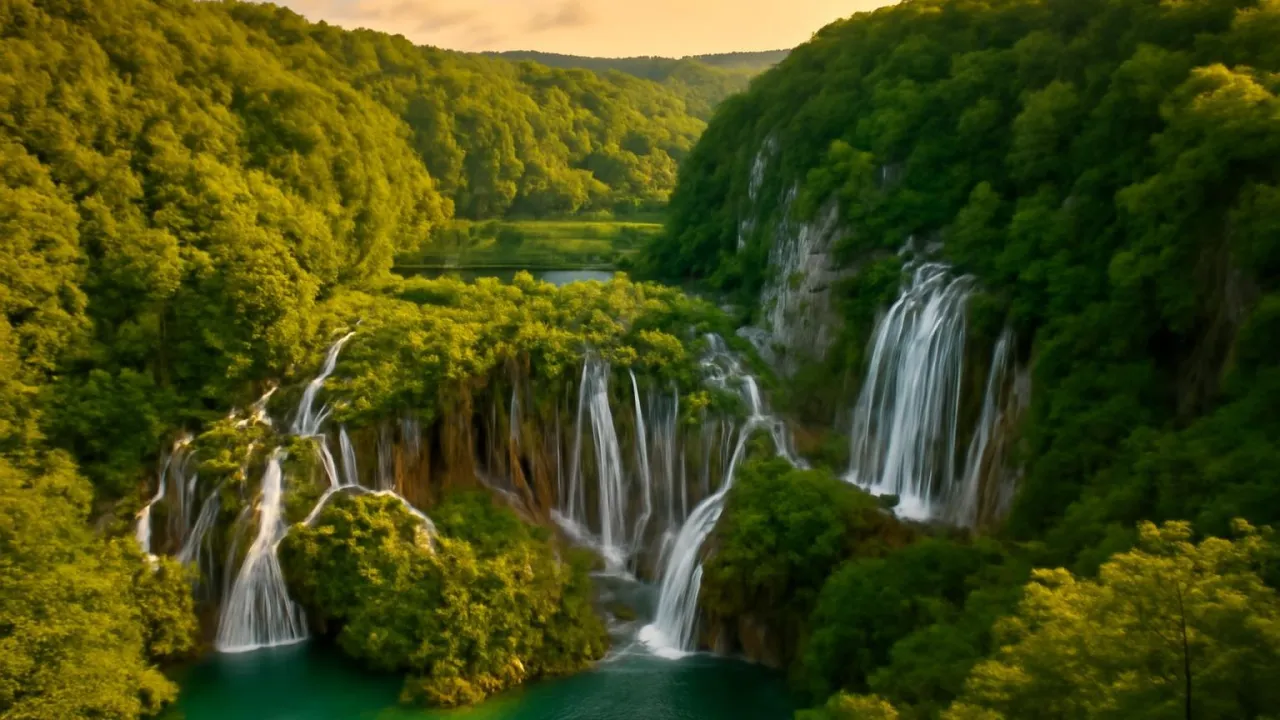
Plitvice’s lakes and waterfalls are always changing their shape!
✨ Word Sparks (Grade 2 Glossary)
Tap 🔊 to hear
cliff
A high, steep rock edge
mist
Tiny water drops in the air
adventure
A fun, exciting trip
🪝
What if you could walk above sparkling blue water?
1
Nature’s Water Show
At Plitvice, water tumbles down rocky and splashes into bright blue lakes. The sound is loud and exciting, and you can see rainbows in the . Fish and ducks swim under the falling water.
2
A Place Full of Life
Trees, moss, and flowers grow near the waterfalls, making everything green and fresh. Wooden paths let people walk safely above the water, so they can see everything up close. Many visitors take pictures and watch the water move.
3
Always Changing
The waterfalls at Plitvice are always changing because water shapes the rocks every day. Sometimes new waterfalls appear, and old ones get bigger or smaller. That makes each visit a new .
Plitvice’s travertine dams grow up to 1 centimeter every year!
✨ Word Sparks (Grade 3 Glossary)
Tap 🔊 to hear
erosion
When water or wind wears away rock
limestone
A soft, pale rock made by nature
habitat
A home for plants and animals
🪝
Have you ever wondered how water can carve stone into amazing shapes?
1
A Symphony of Water
At Plitvice Lakes, waterfalls crash and tumble, filling the air with a constant, musical vibration. The lakes shine with turquoise and green colors, created by sunlight and special minerals in the water. Fish dart through the clear pools, while birds sing from the treetops. The sound and sights make it feel like a magical land.
2
How the Waterfalls Form
The waterfalls are made by water wearing away soft , a process called . Over thousands of years, the water builds up natural dams called travertine, which create new lakes and falls. This means the landscape is always changing, with new paths for water to travel. Plitvice’s waterfalls are living examples of how nature shapes the earth.
3
Walking Above the Water
Visitors can walk on wooden boardwalks built above the lakes and streams. These paths let people see the waterfalls up close without harming the delicate plants and rocks. The park protects many rare animals, like otters and special birds, that live in this unique . Every season brings new colors and sounds to explore.
4
A World Treasure
Plitvice Lakes is a UNESCO World Heritage site, meaning it is protected for everyone to enjoy. People come from all over the world to see its beauty and learn about its geology. The waterfalls and lakes are important for science, too, because they show how water and stone work together. Plitvice is a place where nature’s wonders never stop growing.
Plitvice’s lakes and waterfalls are made by living bacteria and minerals working together!
✨ Word Sparks (Grade 4 Glossary)
Tap 🔊 to hear
deposition
When minerals build up to form rocks
travertine
A rock made by water and bacteria
barrier
Something that blocks or stops movement
🪝
What if you could watch new waterfalls form right before your eyes?
1
Nature’s Living Waterfall Laboratory
Plitvice Lakes National Park is famous for its ever-changing waterfalls, where water constantly carves and builds the landscape. As streams tumble over limestone, they create a musical vibration that echoes through the lush forest. Sunlight reflects off the turquoise lakes, making the entire park shimmer with color. Every visit feels different because the water is always shaping new paths and pools.
2
The Science Behind the Falls
The waterfalls form through a process called , where minerals in the water build up . These barriers act like natural dams, causing water to spill over and create new falls. Erosion also plays a role, as the force of the water slowly wears away the limestone beneath. Over thousands of years, this balance of building and breaking down has created Plitvice’s unique terraced lakes.
3
Protecting a Unique Habitat
Wooden boardwalks and careful park rules help protect the fragile plants and animals that live here. The park is home to rare species like the European brown bear, lynx, and many types of orchids. Scientists study Plitvice to understand how water, rock, and life interact in such a dynamic environment. The park’s changing waterfalls provide clues about Earth’s natural processes.
4
A Global Wonder
Plitvice Lakes became a UNESCO World Heritage site in 1979, recognizing its importance to people everywhere. Tourists from around the world visit to see the waterfalls, hike the trails, and learn about the park’s geology. The lakes and falls inspire artists, scientists, and nature lovers alike. Plitvice’s living landscape shows how Earth’s wonders are always in motion.
Plitvice’s lakes and waterfalls are built by living bacteria and minerals, growing up to 1 centimeter each year!
✨ Word Sparks (Grade 5 Glossary)
Tap 🔊 to hear
karst
A landscape shaped by water dissolving rock
hydrology
The science of water’s movement and cycles
stewardship
Caring for and protecting something important
🪝
Imagine standing on a boardwalk as water sculpts new waterfalls beneath your feet—how does this natural engineering work?
1
A Dynamic Landscape in Motion
Plitvice Lakes Waterfalls, nestled in Croatia’s Dinaric Alps, present a breathtaking display of nature’s engineering at work. The park’s 16 terraced lakes are connected by a network of over 90 waterfalls, each constantly shifting due to the interplay of geology, chemistry, and biology. As water flows from lake to lake, it carries dissolved calcium carbonate, which reacts with moss, algae, and bacteria to form travertine. This process creates natural dams that redirect water and build new waterfalls, making Plitvice a living example of dynamic landscape evolution.
2
Geological and Chemical Marvels
The region’s topography, composed mainly of porous limestone, allows water to seep, dissolve, and redeposit minerals throughout the park. The deposition of travertine occurs at a measurable rate—up to 1 centimeter per year—due to the combined action of mineral-rich water and photosynthetic bacteria. Erosion and deposition work together: while water erodes limestone and carves channels, new travertine barriers form, creating an ever-changing mosaic of lakes and falls. This unique system provides scientists with real-time insight into geological and hydrological processes.
3
Biodiversity and Ecological Importance
Plitvice’s constantly changing environment supports a remarkable diversity of life, including over 1,400 plant species and rare animals such as the European brown bear and the elusive lynx. The lakes and wetlands act as vital habitats for amphibians, fish, and countless bird species. The park’s boardwalks, designed to minimize human impact, allow visitors to experience these ecosystems up close without disturbing delicate habitats. Researchers monitor the area to study how species adapt to the shifting landscape and water chemistry.
4
Cultural and Global Significance
Designated a UNESCO World Heritage site in 1979, Plitvice Lakes is recognized for its outstanding natural beauty and scientific value. The park attracts more than a million visitors annually, inspiring artists, photographers, and scientists from around the globe. Its dynamic waterfalls and crystal-clear lakes are featured in environmental studies, travel literature, and educational documentaries. Plitvice stands as a living classroom, demonstrating the interconnectedness of water, rock, life, and time.
5
Preservation and Future Challenges
Despite its protected status, Plitvice faces challenges from climate change, increasing tourism, and pollution, all of which threaten its delicate balance. Park managers employ strict conservation measures, such as limiting visitor numbers and monitoring water quality, to protect the fragile travertine formations and rare species. Ongoing research focuses on understanding how global warming and human activity might alter the park’s and biodiversity. Plitvice’s story reminds us that even the world’s most beautiful places require careful to endure for future generations.