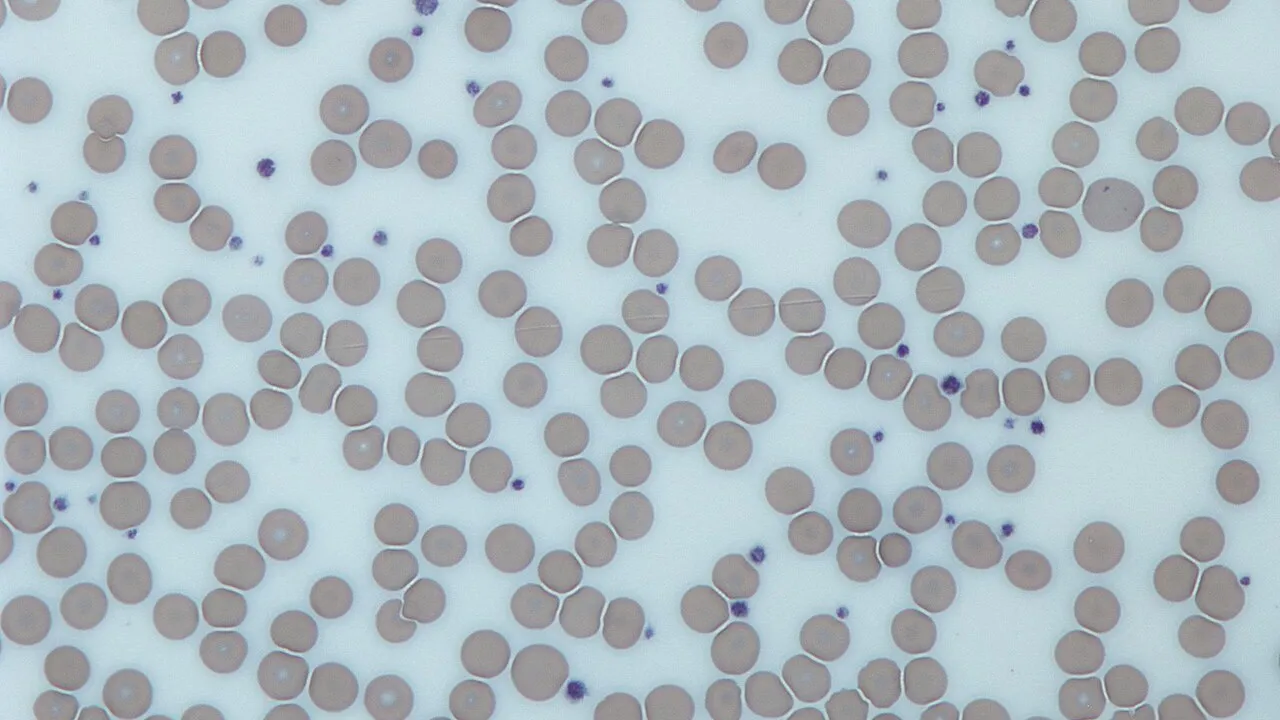
1. What do platelets do when you get a small scrape on your skin?
2. Why shouldn't you pick at a healing scab?
🤯 Mind-Blowing Fact • Grade 2
Just one giant parent cell in your bone marrow can pinch off up to 3,000 fresh platelets before retiring!
✨ Word Sparks (Grade 2 Glossary)
Tap 🔊 to hear
Fragment
A small piece broken off something bigger
Tentacle
A long, flexible arm used for grabbing
Fibrin
Tough protein threads that weave a blood seal
🪝
Why are your body's best leak-fixers actually tiny pieces of giant cells?
1
Pinched Off from Giants
Surprise—platelets are not even whole cells! Deep inside your bone marrow live giant cells that pinch off thousands of tiny bits, like tearing confetti from a big sheet of paper. Those little pieces float out into your blood as smooth, round platelets.
2
From Smooth Plates to Spiky Stars
As long as blood vessels stay smooth inside, platelets drift peacefully past. The instant a vessel cracks, rough fibers peek out. Platelets spot the damage, sprout long sticky , and pile onto the spot.
3
Spinning a Safety Net
Next, platelets send chemical signals that weave tough protein threads called across the pile. This net traps passing cells to build a sturdy seal while your vessel heals.
1. How are new platelets made inside your bone marrow?
2. How do platelets change shape when they find a broken blood vessel?
🤯 Mind-Blowing Fact • Grade 3
Individual platelets only live for about eight to ten days, so your body manufactures roughly 100 billion brand-new ones every day!
✨ Word Sparks (Grade 3 Glossary)
Tap 🔊 to hear
Thrombocyte
The medical word for a blood-clotting platelet
Collagen
Strong rope-like protein fibers inside vessel walls
Clot
A sturdy mesh plug that stops leaks
🪝
How do platelets patch a leaky pipe while blood is still rushing past at high speed?
1
Emergency Plumbers on Standby
Picture trying to patch a hole in a garden hose without turning off the faucet! That is the exact challenge your circulatory system faces whenever a capillary tears. Drifting through every drop of blood are hundreds of thousands of tiny disc-shaped cell fragments called platelets, or .
2
Step One: Grabbing Collagen
Healthy blood vessels are lined with slick cells so platelets glide right by without sticking. When an injury scratches that smooth lining, tough structural fibers called are exposed underneath. Passing platelets instantly latch onto the collagen like Velcro and transform into spiky, sticky spheres.
3
Step Two: Calling Reinforcements
Activated platelets squirt chemical messengers into the bloodstream to summon neighbors. Within seconds, thousands more platelets pile on, forming a soft temporary plug.
4
Step Three: The Fibrin Mesh
To make the patch watertight, blood proteins trigger a chain reaction that spins microscopic strands of fibrin over the plug, locking everything tight while tissue repairs itself.
1. Why don't platelets stick to the insides of healthy, uninjured blood vessels?
2. About how long does a single platelet patrol your bloodstream before being replaced?
🤯 Mind-Blowing Fact • Grade 4
Megakaryocytes—the giant bone marrow cells that bud off platelets—grow up to 15 times wider than ordinary blood cells!
✨ Word Sparks (Grade 4 Glossary)
Tap 🔊 to hear
Megakaryocyte
A giant bone marrow cell that makes platelets
Coagulation
The domino chain reaction that solidifies a clot
Fibrinogen
Dissolved liquid protein that transforms into fibrin threads
🪝
Why doesn't a single paper cut cause a runaway chain reaction that clots all the blood in your body?
1
Shards of Megakaryocytes
Deep inside your bone marrow sit colossal cells called , up to fifteen times wider than a red blood cell! Rather than squeezing into narrow vessels themselves, megakaryocytes extend long ribbon-like arms directly into marrow capillaries. Flowing blood gently shears those ribbons into thousands of tiny cytoplasmic packets—platelets—each pre-loaded with chemical granules and shape-shifting fibers despite having no nucleus.
2
Molecular Glue Under High Pressure
When a fast-flowing blood vessel tears, platelets need an anchor strong enough to resist being swept away. A specialized protein called von Willebrand factor unrolls in the rushing stream like a molecular lasso, tethering passing platelets to exposed collagen fibers in the vessel wall. Once anchored, platelets contract internal actin-myosin filaments—the same protein family your muscles use—and release chemical beacons that recruit more platelets into a tight plug.
3
The Coagulation Cascade and Safety Brakes
Next, over a dozen plasma proteins topple like dominoes in the cascade, converting dissolved into insoluble fibrin cables that reinforce the plug. Why doesn't the clot spread everywhere? Surrounding healthy vessel cells release natural brake signals, such as nitric oxide, keeping platelet sticking strictly confined to the injured spot!
4
Cleaning Up Afterward
Once new vessel cells bridge the gap days later, cleanup enzymes neatly snip the fibrin mesh apart, restoring smooth traffic flow.
1. How does von Willebrand factor help platelets during a blood vessel leak?
2. What stops a helpful blood clot from spreading into healthy blood vessels nearby?
🤯 Mind-Blowing Fact • Grade 5
Recent high-speed imaging discovered that many giant megakaryocytes travel from bone marrow to lung capillaries, using blood flow in the lungs to bud millions of platelets every hour!
✨ Word Sparks (Grade 5 Glossary)
Tap 🔊 to hear
Hemostasis
The body's multi-step process that stops vessel leaks
Endothelium
The ultra-smooth single-cell inner lining of vessels
Pseudopodia
Arm-like extensions pushed outward when cells change shape
🪝
How can an enucleated cell fragment only two micrometers wide orchestrate both wound sealing and tissue regeneration?
1
Anucleate Marvels of Hemostasis
Measuring just two to three micrometers across, platelets (thrombocytes) are dynamic cytoplasmic fragments crucial to —the physiological process that halts bleeding while keeping blood fluid inside intact vessels. Although platelets lack a cell nucleus and nuclear DNA, their parent megakaryocytes equip them before release with mitochondria for ATP energy, messenger RNA templates, dense tubular systems, and two classes of secretory granules packed with signaling molecules.
Whenever trauma breaches the vascular , underlying subendothelial collagen and tissue factor meet flowing blood. Shear stress uncoils plasma von Willebrand factor (vWF), which bridges collagen to glycoprotein Ib receptors on circulating platelets. Instantly, intracellular calcium surges reorganize the platelet's microtubule ring and actin cytoskeleton, morphing the smooth disc into a spiny sphere with . Activated platelets degranulate, secreting adenosine diphosphate (ADP) and synthesizing thromboxane A2—potent paracrine signals that activate neighboring platelets and switch on GPIIb/IIIa integrins so fibrinogen cross-links thousands of platelets into a primary hemostatic plug.
3
Secondary Hemostasis and Clot Retraction
Simultaneously, negatively charged phospholipids flip to the platelet's outer surface, creating a catalytic workbench where enzymatic clotting factors generate thrombin. Thrombin cleaves soluble fibrinogen into cross-linked fibrin polymers. Platelets then pull on those fibrin strands using contractile proteins, compacting the clot and drawing wound edges closer together!
4
Growth Factors and Surprising Lung Origins
Beyond plugging leaks, platelet alpha-granules release Platelet-Derived Growth Factor (PDGF), stimulating fibroblasts and smooth muscle cells to rebuild damaged vessels. Modern live-imaging studies even revealed that a significant share of megakaryocytes travel to lung capillaries, where breathing turbulence helps bud millions of platelets hourly.
5
Bizzozero's Microscopic Discovery
Italian physician Giulio Bizzozero first identified platelets in 1882 using high-resolution microscopy on living blood vessels, proving these tiny 'little plates'—not white blood cells—initiate blood clotting.