Piping Plover
Tiny Beach Bird with Mighty Survival Tricks
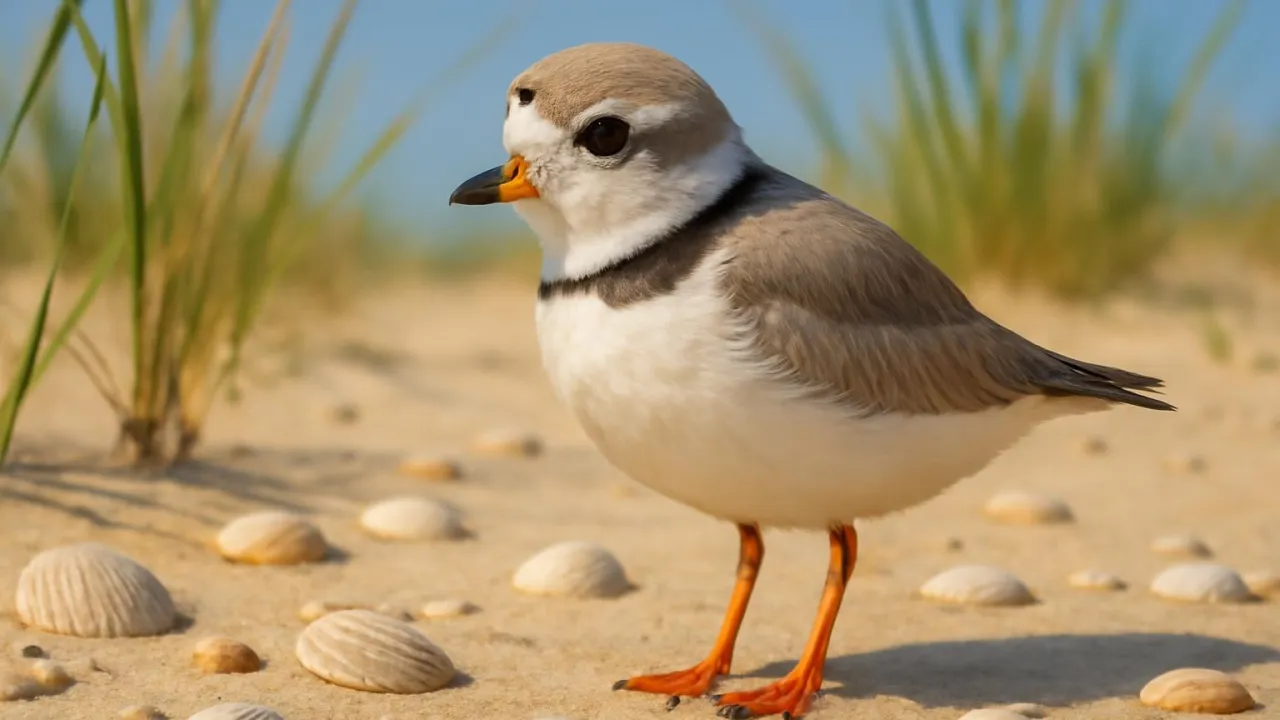
A piping plover’s call sounds like a tiny, clear whistle and can be heard over ocean waves!
1 Masters of Disguise
Piping plovers are small shorebirds with pale gray and white feathers that blend perfectly with sandy beaches, providing excellent camouflage from predators. When threatened, they crouch low or freeze, making it extremely difficult for foxes, gulls, or even people to spot them. This camouflage is a vital that increases their chances of survival in open, exposed habitats. Their round bodies and short bills are also well-suited for quick movement and .
2 Life Cycle on the Edge
Each spring, piping plovers return to their nesting grounds on Atlantic and Great Lakes beaches, where they scrape shallow nests in the sand above the high tide line. The eggs, speckled and sand-colored, are almost invisible, protecting them from predators and accidental trampling. Chicks hatch after about 25 days and are able to walk and feed themselves within hours, a rare trait among birds. This early mobility is essential for avoiding danger and finding food in a harsh environment.
3 Ecosystem Role and Diet
Piping plovers play a critical role in beach by eating insects, marine worms, and small crustaceans, helping control populations of these species. Their also stirs up sand, which can benefit other small beach animals. Because they feed at the water’s edge, they are sensitive to changes in tides and human activity. Their presence signals a healthy, undisturbed shoreline.
4 Conservation and Human Impact
Sadly, piping plover populations have declined due to habitat loss from beach development, pollution, and increased recreation. Conservationists use fencing, signs, and volunteer patrols to protect nesting sites during breeding season, reducing nest disturbance and predation. These efforts have helped stabilize some populations, but the species remains threatened and needs ongoing protection. The plover’s struggle highlights the importance of preserving natural habitats for all beach life.
1. Why do conservationists put up fences around plover nests?
2. What does the presence of piping plovers show about a beach?