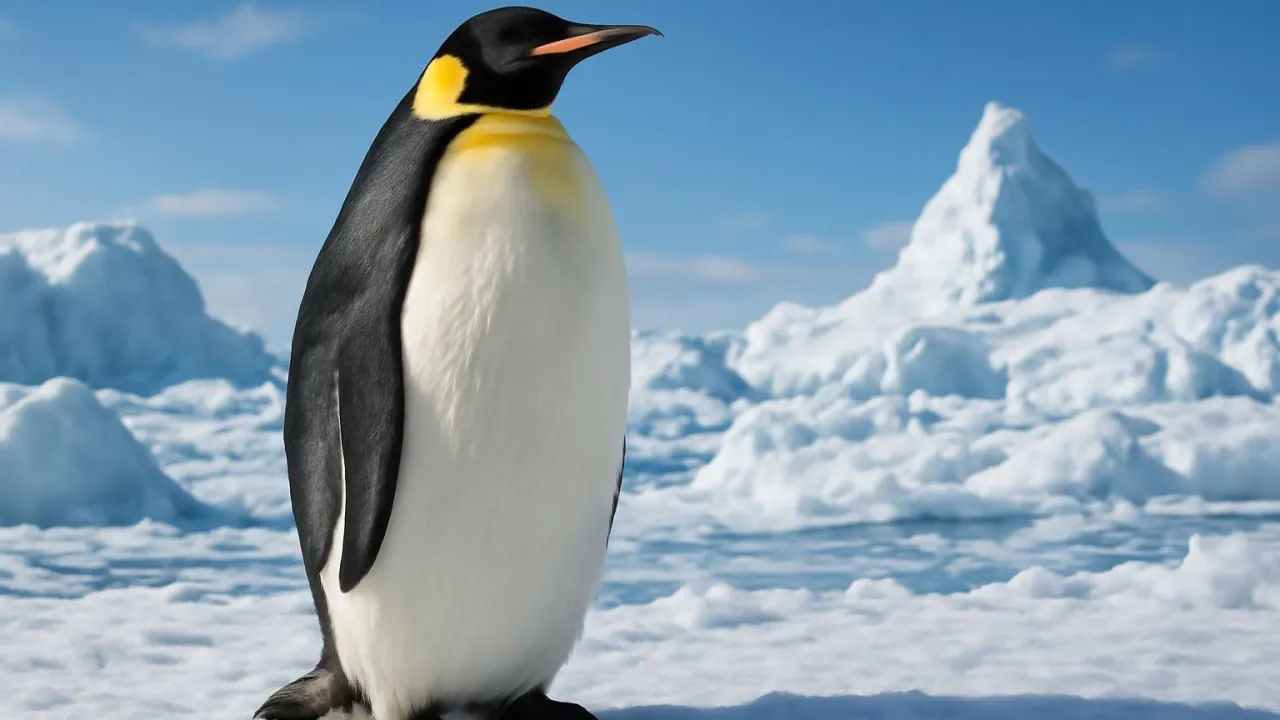
Emperor penguins can dive over 1,700 feet deep to find food in the ocean!
✨ Word Sparks (Grade 2 Glossary)
Tap 🔊 to hear
Antarctica
The icy continent at the bottom of Earth
huddle
To gather close together to stay warm
flippers
Flat wings that help penguins swim fast
🪝
How can a bird live in a place colder than your freezer?
1
Big Birds on Ice
Emperor penguins are the tallest penguins and live in . They have black backs and white fronts. Their bright yellow patches help them find each other. They walk on ice with strong feet and short legs.
2
Cold Weather Life
These birds survive freezing temperatures by huddling together in large groups. They take turns standing outside and inside the . The cold wind blows, but their thick feathers keep them warm. They also have a layer of fat under their skin.
3
Eating Underwater
Emperor penguins dive deep to catch fish, squid, and krill. They can hold their breath for about 20 minutes while swimming. Their wings act like to help them move fast in water. They swallow their food whole after catching it.
Emperor penguins can dive deeper than any other bird, reaching over 1,700 feet underwater!
✨ Word Sparks (Grade 3 Glossary)
Tap 🔊 to hear
camouflage
Colors that help animals hide in their home
blubber
Thick fat that keeps animals warm in cold
incubate
To keep eggs warm until baby animals hatch
🪝
What special tricks help emperor penguins survive the Antarctic cold?
1
Amazing Size and Colors
Emperor penguins are the largest penguin species, standing nearly four feet tall. Their black and white feathers provide in water and snow. Bright yellow patches near their necks help them recognize each other. This coloring is an adaptation to their icy environment.
2
Surviving Freezing Temperatures
To survive the harsh Antarctic cold, emperor penguins huddle tightly in groups. This behavior reduces heat loss by sharing body warmth. Their thick feathers and a layer of fat called protect them from freezing winds. These adaptations are crucial for their survival.
3
Diving Deep for Food
Emperor penguins are expert divers, reaching depths over 1,700 feet to find fish and squid. They can hold their breath for more than 20 minutes underwater. Their wings have evolved into flippers that help them swim swiftly. This hunting skill allows them to get enough nutrients to live.
4
Life Cycle and Parenting
During breeding season, males eggs on their feet under a skin fold. This keeps the eggs warm in freezing weather. Females travel far to hunt and return with food for chicks. This teamwork is vital for raising young in Antarctica’s extreme environment.
1. How do emperor penguins stay warm in cold weather?
2. What helps emperor penguins swim deep underwater?
🤯 Mind-Blowing Fact • Grade 4
Emperor penguins can huddle in groups of thousands to survive Antarctic winters!
✨ Word Sparks (Grade 4 Glossary)
Tap 🔊 to hear
insulate
To keep heat inside and cold outside
predator
An animal that hunts other animals for food
ecosystem
A community of living things and their home
🪝
How do emperor penguins play a key role in Antarctica’s icy ecosystem?
1
Physical Adaptations for Cold
Emperor penguins have dense feathers and a thick blubber layer that them against Antarctica’s freezing temperatures. Their black backs absorb heat from sunlight, while white fronts blend with ice to confuse . These adaptations help them conserve energy and survive harsh weather conditions. Their streamlined bodies also reduce heat loss while swimming.
2
Social Behavior and Survival
During winter, emperor penguins form large huddles to reduce heat loss and protect each other from fierce winds. This cooperative behavior increases their survival chances in the extreme cold. Their vocal calls help individuals recognize mates and chicks within the noisy colony. They also take turns moving from the cold outside to the warm center of the huddle.
3
Ecosystem Role and Food Web
Emperor penguins are important in the Antarctic food web, feeding mainly on fish, squid, and krill. They help control these populations and provide food for larger predators like seals and orcas. Their presence supports a balanced in one of Earth’s most remote regions. Changes in their numbers can affect many other species.
4
Geographic Range and Human Impact
Found only in Antarctica, emperor penguins breed on stable sea ice near the continent’s coast. Climate change threatens their habitat by reducing sea ice extent and altering food availability. Conservation efforts focus on monitoring populations and protecting critical breeding areas from human disturbance. Scientists study how warming affects their survival and reproduction.
1. Why do emperor penguins huddle in large groups?
2. What role do emperor penguins play in their ecosystem?
🤯 Mind-Blowing Fact • Grade 5
Emperor penguins can dive deeper and hold their breath longer than any other bird species!
✨ Word Sparks (Grade 5 Glossary)
Tap 🔊 to hear
subcutaneous
Under the skin layer that stores fat
brood pouch
Skin fold where penguins keep eggs warm
counter-current
Blood flow system that saves body heat
🪝
What fascinating scientific facts reveal how emperor penguins thrive in Antarctica’s extreme conditions?
1
Taxonomy and Scientific Classification
Emperor penguins belong to the family Spheniscidae and the genus Aptenodytes. Their scientific name, Aptenodytes forsteri, honors naturalist Johann Reinhold Forster. This species is the largest of all penguins and is uniquely adapted to Antarctic life. Understanding their taxonomy helps scientists study evolutionary relationships among birds.
2
Physiological Adaptations to Cold
These penguins have a dense layer of waterproof feathers and a thick fat layer called blubber that insulates against cold. Their circulatory system includes heat exchange in their flippers and legs to minimize heat loss. Additionally, they reduce metabolic rates during fasting periods to conserve energy. These physiological features allow survival in extreme cold.
3
Reproductive Behavior and Parenting
Breeding occurs during the Antarctic winter when males incubate eggs on their feet beneath a . Females forage at sea to gather food and return months later to feed chicks. This reproductive strategy ensures survival despite harsh environmental conditions and prolonged fasting. The timing and teamwork are critical for chick survival.
4
Ecological Role and Conservation Status
Emperor penguins are key predators in Antarctic marine ecosystems, feeding primarily on fish, squid, and krill. They are prey for leopard seals and orcas, making them integral to the food web. Climate change threatens their sea ice habitat, causing population shifts and prompting conservation monitoring under international agreements. Protecting their habitat is vital for ecosystem health.
5
Quantitative Comparisons and Records
Emperor penguins can dive to depths exceeding 1,700 feet (518 meters) and hold their breath for over 20 minutes. Adults weigh between 50 and 100 pounds (23 to 45 kilograms) and stand nearly four feet tall. Their huddling behavior can involve thousands of individuals, showcasing remarkable social cooperation. These records highlight their extraordinary adaptations.