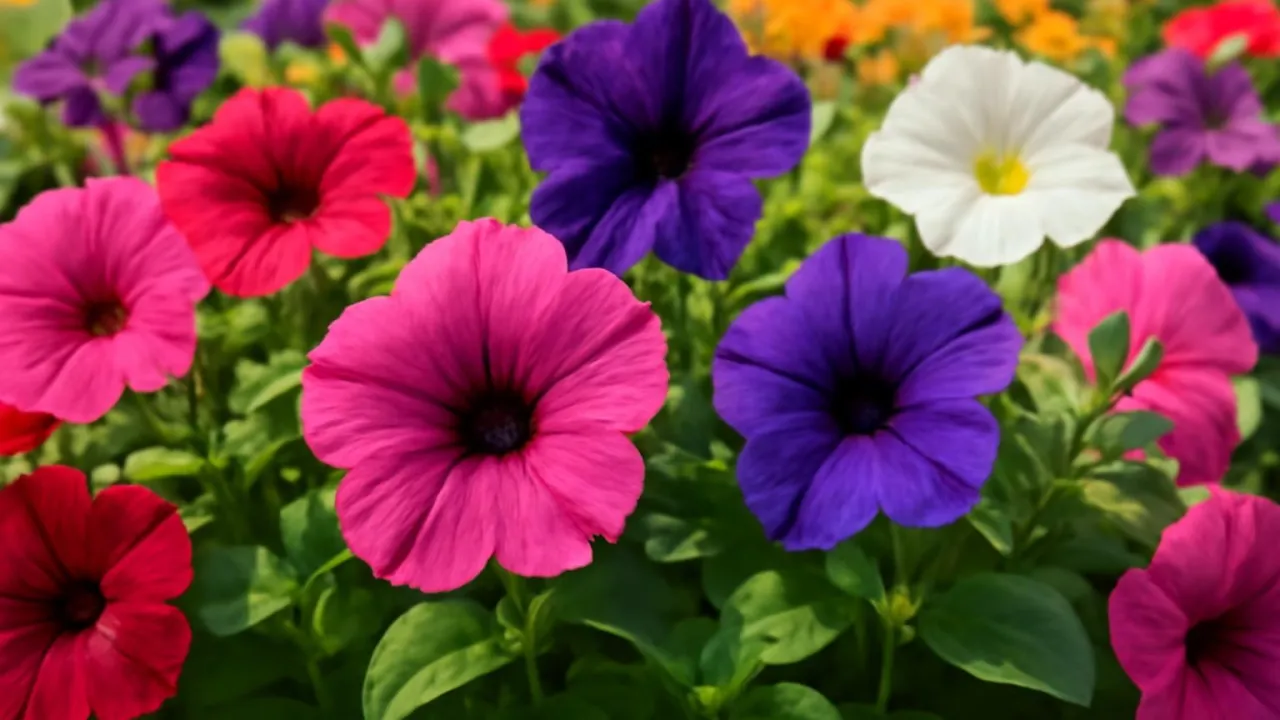
Petunias can bloom all summer if they get enough sun and water!
✨ Word Sparks (Grade 2 Glossary)
Tap 🔊 to hear
petal
The colorful part of a flower
nectar
Sweet juice inside flowers for bees
pollinator
An animal that helps flowers make seeds
🪝
Have you ever smelled a flower that bees love to visit?
1
Bright Colors and Shapes
Petunias have bright colors like pink, purple, and white. Their are soft and trumpet-shaped. These colors help attract bees and butterflies to visit. Bright petals make them easy to spot in gardens.
2
Where Petunias Live
Petunias usually grow in gardens or pots. They like full sun and need regular watering. They bloom best in warm weather during spring and summer. Many gardeners plant them to brighten outdoor spaces.
3
A Special Flower Feature
Petunias have a sweet scent that helps attract . Bees and butterflies come to gather . This helps the flowers make seeds for new plants. Their scent is a natural way to invite visitors.
Petunias use their scent and color to attract pollinators for reproduction.
✨ Word Sparks (Grade 3 Glossary)
Tap 🔊 to hear
pollination
When pollen moves to help make seeds
adaptation
A change that helps plants survive
nutrients
Food and minerals plants need to grow
🪝
Did you know petunias use their bright colors and scent to survive?
1
Colorful Petals and Camouflage
Petunias have brightly colored petals that attract pollinators like bees and butterflies. Their trumpet shape helps guide insects to nectar inside. This ensures and seed production. Bright colors also help petunias stand out in gardens.
2
Pollination and Survival
happens when bees carry pollen between flowers. Petunias produce sweet nectar to reward these pollinators. This process helps petunias reproduce and spread seeds. Without pollinators, petunias would struggle to survive.
3
Growing Conditions and Adaptations
Petunias grow best in sunny places with well-drained soil. They need water but cannot survive in waterlogged soil. Their roots absorb and water efficiently. These help petunias thrive in many garden environments.
4
Petunias in Ecosystems
Petunias provide food for pollinators and add beauty to gardens. They can attract predators that eat harmful insects. This helps keep the garden healthy. Petunias also help humans by brightening outdoor spaces.
Petunias help gardens by attracting pollinators and controlling pests naturally.
✨ Word Sparks (Grade 4 Glossary)
Tap 🔊 to hear
ecosystem
A community of plants and animals living together
pollinator
An animal that moves pollen between flowers
habitat
The natural home where a plant or animal lives
🪝
How do petunias play a key role in their garden ecosystems?
1
Bright Colors and Pollination
Petunias display bright, trumpet-shaped flowers that attract many , including bees and butterflies. The sweet scent of their blooms acts as a chemical signal to guide pollinators directly to the nectar. This cause-and-effect relationship ensures successful pollination and seed production. Without these adaptations, petunias would fail to reproduce effectively.
2
Habitat and Growth Requirements
Petunias thrive in sunny environments with well-drained soil, which prevents root rot caused by excess moisture. Regular watering supports their growth but overwatering can harm them. These plants are native to South America but have been widely cultivated globally in gardens and containers. Their adaptability allows them to flourish in many temperate regions.
3
Ecosystem Roles and Benefits
Petunias provide nectar that supports , contributing to biodiversity and food webs. They also attract predatory insects that control garden pests, creating a natural balance. Humans benefit from petunias by using them to beautify outdoor spaces and encourage healthy . Their presence can improve pollination rates for nearby plants.
4
Human Impact and Cultivation
Gardeners often select petunia varieties for their vibrant colors and long blooming periods, impacting local plant diversity. Some hybrids have been bred for disease resistance and drought tolerance, which helps reduce chemical use. However, improper disposal of garden waste can spread invasive varieties. Responsible cultivation maintains ecological balance and supports native species.
2. Why is well-drained soil important for petunias?
🤯 Mind-Blowing Fact • Grade 5
Petunias belong to the same family as tomatoes and tobacco, linking common garden plants scientifically.
✨ Word Sparks (Grade 5 Glossary)
Tap 🔊 to hear
taxonomy
The science of naming and classifying living things
photosynthesis
How plants use sunlight to make food
hybrid
A plant made by crossing two different kinds
🪝
What scientific secrets make petunias thrive and support ecosystems worldwide?
1
Scientific Classification and Origin
Petunia × atkinsiana belongs to the Solanaceae family, closely related to tobacco and tomatoes. This species originated from South America, primarily Argentina and Brazil. It has been cultivated worldwide due to its vibrant flowers and adaptability. Understanding its helps scientists breed improved varieties for gardens.
2
Physiological Mechanics of Growth
Petunias perform efficiently using broad green leaves that capture sunlight. Their trumpet-shaped flowers produce nectar glands that secrete sweet nectar to attract pollinators. Root systems absorb water and nutrients from well-drained soil, supporting rapid growth. These physiological features allow petunias to bloom profusely during temperate growing seasons.
3
Conservation and Botanical History
While petunias are widely cultivated, their wild relatives face habitat loss due to agriculture expansion. Botanical gardens preserve genetic diversity by maintaining seed banks and living collections. Historically, petunias were first hybridized in the 19th century to create colorful garden plants. Conservation efforts focus on protecting native habitats and promoting sustainable gardening.
4
Quantitative Comparisons and Adaptations
Petunias typically grow between 6 and 18 inches tall, with flowers measuring 2 to 3 inches wide. Their nectar contains sugars that attract pollinators traveling at speeds up to 15 miles per hour. These flowers can survive temperatures ranging from 50 to 85 degrees Fahrenheit. Their drought tolerance varies by cultivar, with some requiring less water.
5
Ecological and Human Impact
Petunias contribute to garden biodiversity by supporting pollinator populations essential for food crops. Selective breeding has enhanced traits like disease resistance and extended bloom periods, reducing pesticide use. However, non-native petunias can sometimes compete with local flora if not managed properly. Responsible cultivation balances aesthetic beauty with ecological health.