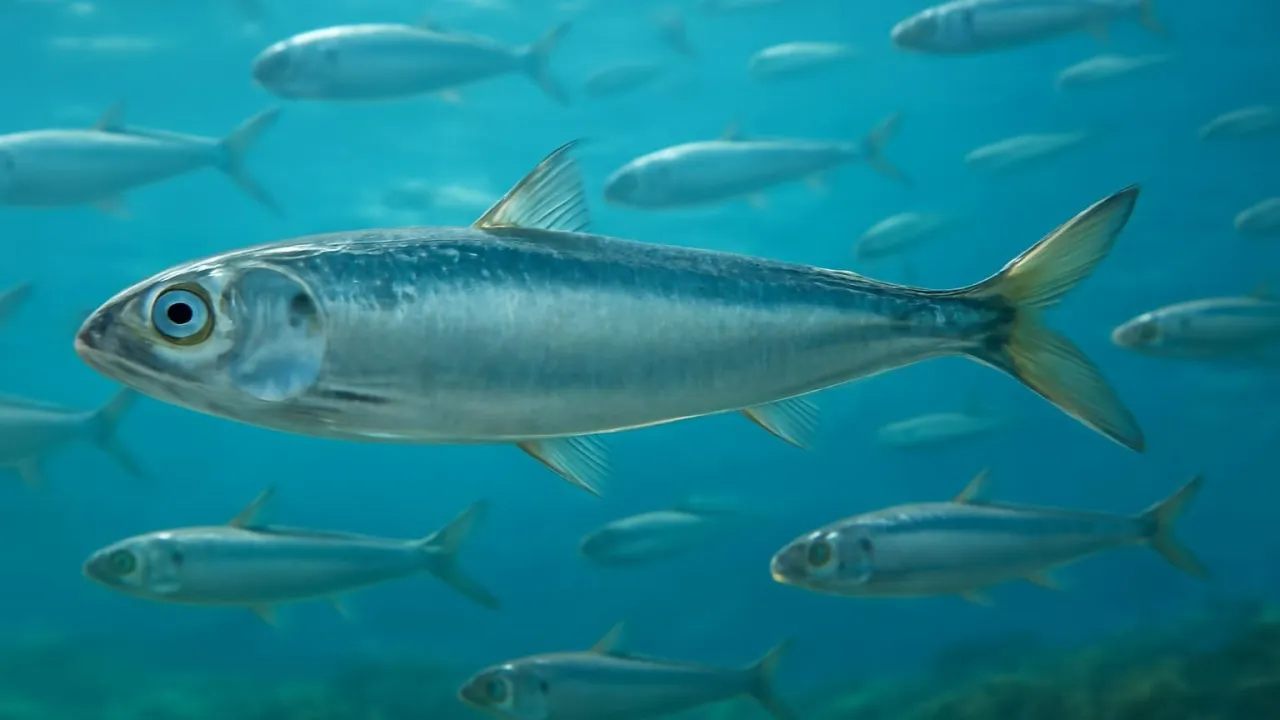
The huge schools of Peruvian Anchovetas are so big they can be seen from space satellites!
✨ Word Sparks (Grade 2 Glossary)
Tap 🔊 to hear
school
A large group of fish swimming together
nutrients
Food that helps plants and animals grow
predator
An animal that hunts other animals
🪝
Have you ever wondered how tiny fish can live in huge ocean groups?
1
Big Groups in the Ocean
Peruvian Anchovetas live in large that swim together in the ocean. These schools can stretch for miles and help protect the fish from . The fish are small and silver, making the school look like a shining cloud underwater.
2
Home in Cold Waters
They live near the coast of Peru where the ocean waters are cold and full of . These nutrients help plankton grow, which is the main food for the Anchovetas. Many other animals like seabirds and larger fish also live in this rich habitat.
3
Eating Tiny Plankton
Anchovetas eat tiny plankton by filtering them from the water with their mouths. They swim with their mouths open wide to catch as many plankton as possible. This feeding helps them grow fast and stay healthy in their ocean home.
Anchoveta schools can number in the billions, making them the largest fish biomass on Earth!
✨ Word Sparks (Grade 3 Glossary)
Tap 🔊 to hear
camouflage
Body colors that help hide from predators
upwelling
Ocean water rising to bring nutrients up
gill rakers
Parts in fish mouths that filter food
🪝
Did you know that Peruvian Anchovetas form the largest fish schools in the world?
1
Massive Schools for Safety
Peruvian Anchovetas swim in massive schools that can cover many miles of ocean. This schooling behavior is a key adaptation to avoid predators like larger fish and seabirds. Their shiny silver bodies help them in the water, blending with sunlight and waves.
2
Rich Habitat in the Pacific
These fish live in the cold, nutrient-rich waters off Peru’s coast. currents bring nutrients to the surface, supporting huge amounts of plankton. This plankton is the main food source for Anchovetas and many other marine animals in this ecosystem.
3
Feeding on Plankton
Anchovetas feed by filtering tiny plankton from the water using their . Their mouths open wide to catch as much plankton as possible while swimming. This feeding method allows them to gather enough nutrients to grow quickly and reproduce.
4
Role in the Food Web
Anchovetas are a vital link in the marine food web. They transfer energy from plankton to larger predators like sea lions, dolphins, and seabirds. Their large populations support many species and help maintain ocean ecosystem balance.
2. What helps plankton grow in Anchoveta habitats?
🤯 Mind-Blowing Fact • Grade 4
Peruvian Anchovetas form the largest single-species fishery on Earth, feeding millions worldwide!
✨ Word Sparks (Grade 4 Glossary)
Tap 🔊 to hear
ecosystem
A community of animals and plants living together
biodiversity
Many different kinds of living things in one place
sustainable
Using resources without harming the environment
🪝
How do tiny Peruvian Anchovetas impact the vast Pacific Ocean ecosystem?
1
Schooling and Survival
Peruvian Anchovetas form enormous schools that provide safety from predators by confusing them with their shiny, moving bodies. This schooling behavior is a cause-and-effect adaptation that increases their survival chances in the open ocean. The silver color acts as camouflage, reflecting light to blend with the water.
2
Nutrient-Rich Habitat
These fish live in the cold, nutrient-rich waters off Peru caused by upwelling currents that bring deep ocean nutrients to the surface. This environment supports vast plankton blooms, which serve as the primary food source for Anchovetas. The abundance of plankton allows the fish to grow quickly and reproduce in large numbers.
3
Key Role in Food Webs
Anchovetas are a crucial link in the marine food web, transferring energy from plankton to higher predators such as sea lions, seabirds, and larger fish. Their large populations support many species, maintaining balance and . Overfishing can disrupt this balance and harm the entire food web.
4
Human Impact and Distribution
Peruvian Anchovetas are found mainly along the Peruvian coast but also near Chile. They support one of the world’s largest fisheries, supplying fishmeal for animal feed globally. fishing practices are vital to protect this species and the ocean they support.
The Peruvian Anchoveta supports the world’s largest single-species fishery, with biomass surpassing 10 million metric tons!
✨ Word Sparks (Grade 5 Glossary)
Tap 🔊 to hear
keystone species
A species that many others depend on
upwelling
Ocean currents that bring nutrients up
biomass
Total weight of living things in one area
🪝
What makes the Peruvian Anchoveta a cornerstone species in the southeastern Pacific Ocean?
1
Scientific Classification and Habitat
The Peruvian Anchoveta, scientifically named Engraulis ringens, inhabits the cold, nutrient-rich waters of the Humboldt Current along Peru’s coast. This environment is characterized by intense that supplies essential nutrients, supporting vast plankton blooms crucial for the Anchoveta’s survival. These nutrient-rich waters create one of the most productive marine ecosystems in the world.
2
Physiological Adaptations for Feeding
Anchovetas possess specialized gill rakers that efficiently filter microscopic plankton from seawater as they swim with mouths wide open. Their streamlined bodies and schooling behavior reduce drag and increase feeding efficiency, allowing them to consume large quantities of plankton essential for rapid growth. This adaptation supports their ability to form massive schools that dominate the ocean .
3
Ecological and Economic Importance
As a , Anchovetas transfer energy from primary producers like phytoplankton to higher trophic levels, including sea lions, dolphins, and seabirds. Their massive populations support the largest single-species fishery globally, providing fishmeal that sustains aquaculture and livestock industries worldwide. This fishery is vital for food security and global animal feed production.
4
Conservation Challenges and Management
Overfishing and climate variability, such as El Niño events, threaten Anchoveta populations by disrupting nutrient availability and spawning success. Effective fisheries management and sustainable harvesting practices are critical to maintaining population stability and preserving the marine ecosystem balance. Scientific monitoring helps adjust quotas to prevent population collapse.
5
Quantitative Comparisons and Impact
Peruvian Anchoveta schools can reach estimates exceeding 10 million metric tons, making them the largest fish biomass on Earth. They typically grow up to 15 centimeters in length and can swim at speeds around 3 miles per hour, demonstrating remarkable efficiency in energy transfer within the marine food web. Their population fluctuations significantly influence the entire Pacific Ocean ecosystem.