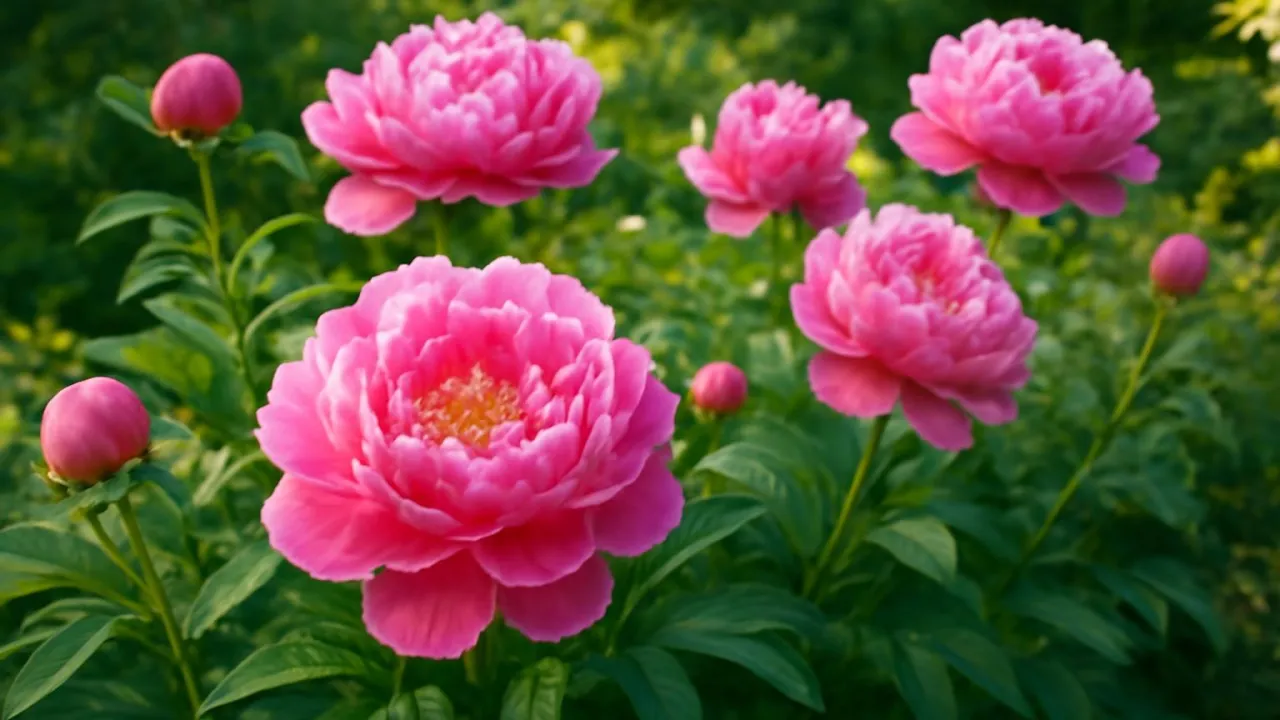
Peonies can live for over 100 years and still bloom beautifully every spring!
✨ Word Sparks (Grade 2 Glossary)
Tap 🔊 to hear
nectar
Sweet juice inside flowers for bees
bloom
When a flower opens up
stem
The part that holds up a flower
🪝
Have you ever smelled a flower that smells like candy?
1
Colorful and Fragrant Flowers
Peonies grow large flowers that come in pink, white, and red colors. Their petals are soft and smell sweet like candy. Many bees and butterflies visit peonies to drink from the flowers.
2
Where Peonies Grow
Peonies grow best in gardens with full sun and soft, well-drained soil. They need regular watering to stay healthy and well. People plant peonies in early spring to enjoy their blooms in late spring or early summer.
3
How Peonies Grow
Peony plants can grow between one and three feet tall with strong . Their leaves are green and grow in groups along the stems. Peonies once a year but can live for many years in the same garden.
Peony tubers store nutrients underground, helping the plant survive harsh winters and regrow yearly.
✨ Word Sparks (Grade 3 Glossary)
Tap 🔊 to hear
pollination
When pollen moves to help flowers make seeds
tuber
A thick root that stores food for plants
adaptation
A change that helps plants survive better
🪝
Did you know peonies use their bright colors to attract helpful insects?
1
Peony Appearance and Adaptation
Peonies have large, colorful petals that attract pollinators like bees and butterflies. Their bright colors help them stand out among green leaves, which is a form of . The soft petals also protect the flower’s reproductive parts from wind and rain. This helps peonies survive in different environments.
2
Pollination and Growth
happens when bees carry pollen from one flower to another, helping peonies make seeds. Peonies grow from roots called that store nutrients underground. These tubers help the plant survive cold winters and regrow each spring. The plant’s life cycle includes blooming, seed production, and dormancy during winter.
3
Habitat and Ecosystem Role
Peonies grow in temperate regions with well-drained soil and plenty of sunlight. They play an important role in their ecosystem by providing nectar and pollen to pollinators. These insects help other plants grow by spreading pollen. Peonies also add beauty to gardens and natural habitats.
4
Survival Strategies
Peonies have thick stems that support their heavy flowers and help resist strong winds. Their leaves can capture sunlight efficiently for photosynthesis, which produces energy for growth. The plant’s store water and nutrients, allowing it to survive dry periods. These features help peonies thrive in various climates.
Peonies support food webs by helping pollinators that assist many other plants in their ecosystems.
✨ Word Sparks (Grade 4 Glossary)
Tap 🔊 to hear
symbiotic
A helpful relationship between living things
biodiversity
Many different kinds of plants and animals
photosynthesis
How plants use sunlight to make food
🪝
How do peonies help other plants grow in their environment?
1
Peony Structure and Survival
Peonies have large, colorful flowers that attract pollinators, which helps the plant reproduce successfully. Their thick stems provide support against strong winds, preventing damage to the blooms. The leaves efficiently capture sunlight to create energy through , supporting growth. These adaptations enable peonies to survive in temperate climates with varying weather conditions.
2
Pollination and Ecosystem Role
Peonies play a vital role in ecosystems by providing nectar and pollen to bees and butterflies, which are important pollinators. These insects help pollinate other plants nearby, supporting and healthy food webs. Without peonies and their pollinators, many plants would struggle to reproduce. This relationship benefits both peonies and other species in their habitat.
3
Geographic Distribution and Growth
Peonies are native to temperate regions across Europe, Asia, and western North America, where they grow in well-drained soils with full sun exposure. Gardeners often cultivate peonies worldwide because of their beauty and fragrance. Their ability to adapt to different soil types and climates allows them to thrive in many environments, from wild forests to home gardens.
4
Human Impact and Conservation
Humans have cultivated peonies for centuries, selecting varieties with larger flowers and stronger scents for gardens and floral arrangements. However, habitat loss and overharvesting in the wild can threaten some peony species. Conservation efforts focus on protecting natural habitats and encouraging sustainable gardening practices to preserve peony diversity for future generations.
1. What do peonies provide to bees and butterflies?
2. Why is conserving peonies important?
🤯 Mind-Blowing Fact • Grade 5
Peonies can live for over 50 years and have been cultivated for more than 2,000 years worldwide.
✨ Word Sparks (Grade 5 Glossary)
Tap 🔊 to hear
genus
A group of related plants or animals
tuber
A thick root that stores food and water
photosynthesis
How plants use sunlight to make food
🪝
Did you know peonies belong to a special plant family with unique flower structures?
1
Scientific Classification and Taxonomy
Peonies belong to the Paeonia within the family Paeoniaceae, which is the only genus in this family. This genus includes about 33 species, mostly found in temperate regions of Europe, Asia, and North America. Peonies are classified as herbaceous perennials or woody shrubs, depending on their type. Their unique flower structure includes multiple layers of petals surrounding reproductive organs.
2
Physiological Mechanics and Growth
Peonies grow from thick underground that store nutrients and water, enabling them to survive cold winters. Their large, compound leaves efficiently perform to produce energy for flowering and growth. The flowers open in late spring, revealing numerous stamens and carpels that facilitate pollination by insects. Peonies have a deep root system that anchors the plant and absorbs minerals from the soil.
3
Conservation and Botanical History
Historically, peonies have been cultivated for over 2,000 years, especially in China, where they symbolize wealth and honor. Some wild peony species face threats from habitat destruction and overcollection, leading to conservation efforts. Botanical gardens and seed banks work to preserve genetic diversity and protect endangered species. Sustainable gardening promotes planting native peonies to support local ecosystems.
4
Quantitative Comparisons and Environmental Needs
Peony plants typically grow between 1 and 3 feet tall, with flowers measuring 4 to 6 inches in diameter. They thrive in temperatures ranging from 40 to 85 degrees Fahrenheit, needing full sun and well-drained soil. Peony can survive soil temperatures below freezing by entering dormancy during winter. Compared to other flowering plants, peonies have a longer lifespan, often living over 50 years in suitable conditions.
5
Ecological Importance and Human Uses
Peonies contribute to ecosystems by supporting pollinators such as bees and butterflies, which in turn pollinate many other plants. Humans have used peonies in traditional medicine and as ornamental plants for centuries. Their large, fragrant flowers are popular in floral arrangements and festivals worldwide. Understanding peony biology helps gardeners cultivate healthy plants and conserve wild populations.