🇺🇸 U.S. HISTORY
🏛️ National Civic Memorial • Dedicated September 11, 2008
VA History & Social Science SOL K.1, 1.2, 2.4, VS.1–VS.10, USI & USII
Pentagon Memorial & Resilience
Honoring Courage, Unity, and Renewal in Arlington, Virginia
Grade 2 • Developing • 99 words
⏳ Era / StatehoodRebuilt 2002 • Memorial Dedicated Sept. 11, 2008
🗺️ Region / CapitalArlington, Virginia (184 Illuminated Memorial Units)
📜 Key MilestonePhoenix Project Rebuilt the Pentagon Within One Year
⚡ Historical SparkHonors 184 lives with peaceful flowing water while showcasing American unity and resilience
🤯 Mind-Blowing Fact • Grade 1
At night, a warm golden light glows beneath every single water pool in the Pentagon Memorial!
✨ Word Sparks (Grade 1 Glossary)
Tap 🔊 to hear
pentagon
A shape with five straight sides
memorial
A special place built to remember people
resilience
Growing strong again after a hard time
🪝
How does a quiet park help a whole country remember brave neighbors?
1
A Five-Sided Building
Look across the river from Washington, D.C., into Arlington, Virginia! There stands a huge five-sided building called the . Helpers work inside to keep America safe.
2
Helping Hands Together
On a hard day in 2001, part of the was hurt. Firefighters, nurses, and builders rushed to help right away. Workers rebuilt the stone wall in less than one year!
3
Glowing Water Benches
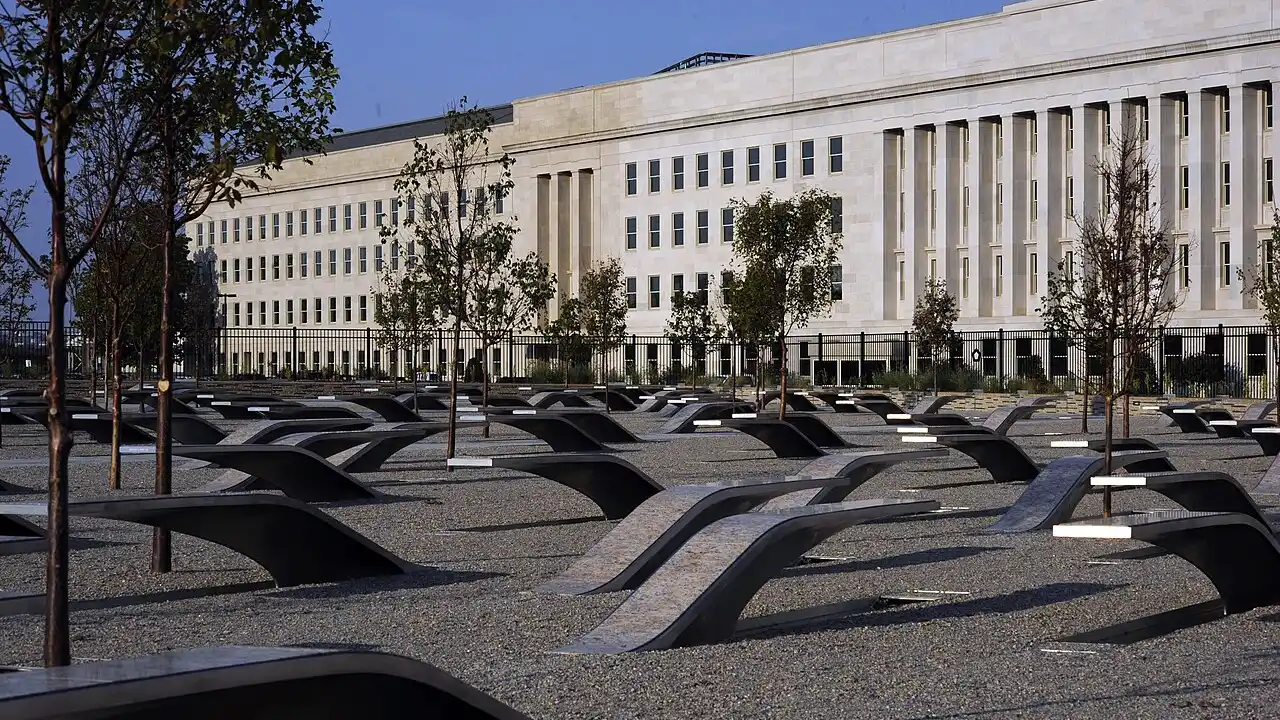
Outside sits a peaceful park with shady maple trees. Soft lights shine under 184 smooth benches to honor every person remembered there.
1. In which Virginia community does the Pentagon Memorial stand?
2. What shines gently underneath each bench at the Pentagon Memorial after sunset?
🤯 Mind-Blowing Fact • Grade 2
Construction crews were so proud of working together on the Phoenix Project that they finished rebuilding weeks ahead of their one-year goal!
✨ Word Sparks (Grade 2 Glossary)
Tap 🔊 to hear
quarry
A place where building stone is cut
responder
A firefighter, medic, or officer who helps fast
reflect
To bounce light off water or smooth metal
🪝
How did thousands of builders team up to restore the Pentagon faster than anyone thought possible?
1
Courage on September 11
Listen to the gentle ripple of water beneath shady maple trees in Arlington, Virginia! This quiet park honors 184 people remembered from September 11, 2001, and celebrates the brave first who helped others to safety.
2
The Phoenix Project
Right afterward, three thousand builders, electricians, and stonemasons worked day and night on a rebuild called the Phoenix Project. Using Indiana limestone from the exact same used in 1941, they repaired the Pentagon ahead of schedule within one single year!
3
A Park of Peace and Light
Opened in 2008, the Pentagon Memorial features 184 curving steel-and-granite benches. Each bench arches over a small pool of flowing water that light onto the visitor's face.
1. What was the name of the teamwork effort that rebuilt the Pentagon within one year?
2. How many illuminated bench units stand in the Pentagon Memorial?
🤯 Mind-Blowing Fact • Grade 3
In autumn, the eighty-five paperbark maple trees planted across the memorial turn brilliant shades of amber, orange, and crimson!
✨ Word Sparks (Grade 3 Glossary)
Tap 🔊 to hear
unity
Standing together as one caring community
civilian
A person not serving in the armed forces
cantilevered
Anchored at one end and extending outward
🪝
Why are the 184 benches in the Pentagon Memorial arranged along a timeline of birth years?
1
Standing Together in Virginia
Walk through a peaceful grove of eighty-five paperbark maple trees beside the Pentagon in Arlington, Virginia! On September 11, 2001, a tragic attack struck the western side of the Pentagon. Immediately, firefighters, medics, military members, and coworkers teamed up with remarkable bravery to rescue neighbors.
2
Rebuilding With Shared Purpose
Determined to show American resilience, engineers launched the Phoenix Project. Working twenty-four hours a day in rotating shifts, crews cleared damaged stone, laid new steel beams, and reopened the rebuilt offices by September 11, 2002—a full year ahead of early estimates.
3
Designed Around Lives and Ages
When the Pentagon Memorial opened on September 11, 2008, designers Julie Beckman and Keith Kaseman arranged the 184 benches along 'Age Lines' based on the year each person was born, from 1998 to 1930.
4
Quiet Space for Reflection
Crunching gravel footpaths and softly running fountains hush city noise, inviting students and families to reflect on kindness, service, and national .
1. How are the 184 memorial units organized across the Pentagon Memorial grounds?
2. How quickly did Phoenix Project crews rebuild and reopen the damaged section of the Pentagon?
🤯 Mind-Blowing Fact • Grade 4
The perimeter wall around the Pentagon Memorial gradually rises from 3 inches tall at one end to 71 inches tall at the other, matching the ages—3 to 71—of the 184 people honored inside!
✨ Word Sparks (Grade 4 Glossary)
Tap 🔊 to hear
facade
The outer front wall of a large building
commemorative
Created to honor an important person or event
perimeter
The outer boundary line around an area
🪝
How do subtle architectural details at the Pentagon Memorial tell every visitor's story through light, stone, and water?
1
Courage and the Phoenix Project
Stand before the western of the Pentagon in Arlington, Virginia, and look closely at the pale Indiana limestone wall! Following the attack of September 11, 2001, Northern Virginia first responders, Pentagon employees, and medical teams demonstrated extraordinary heroism. Soon after, more than 3,000 craftspeople united in the Phoenix Project, working three shifts a day to reconstruct 400,000 square feet of workspace within twelve months—embedding a dedication stone right at the point of renewal.
2
Thoughtful Design Chosen From 1,100 Entries
To create a permanent national tribute, an international competition reviewed over 1,100 proposals before selecting architects Julie Beckman and Keith Kaseman. Dedicated on September 11, 2008, the nearly two-acre memorial became the first completed national memorial at one of the September 11 sites.
3
Reading the Direction of Each Bench
Every stainless-steel bench inlaid with smooth granite extends over its own illuminated basin of flowing water. The designers added a meaningful detail: if you face a name engraved on a bench and see the Pentagon behind it, that person was working inside the building; if you face the open sky, that person was aboard Flight 77.
4
A Living Lesson in Civic Strength
Surrounded by a low wall that rises gently from three inches to forty-three inches—mirroring the ages three to seventy-one of those honored—the memorial teaches generations how communities heal through remembrance and service.
1. How does the orientation of each bench in the Pentagon Memorial share part of that person's story?
2. Why does the memorial's outer wall rise from 3 inches to 71 inches high?
🤯 Mind-Blowing Fact • Grade 5
Just months before September 2001, engineers had reinforced an adjacent section of the Pentagon's outer wall with two-inch-thick blast-resistant windows weighing 1,600 pounds each—an upgrade credited with saving hundreds of lives!
✨ Word Sparks (Grade 5 Glossary)
Tap 🔊 to hear
solidarity
Deep unity and mutual support within a group
adjacent
Next to or right beside something else
adversity
A very difficult challenge or hardship
🪝
How did engineers, stonemasons, and landscape architects transform a site of national sorrow in Arlington, Virginia, into an enduring symbol of civic resilience?
1
First Responders and Immediate Solidarity
Look out over the 1.93-acre Pentagon Memorial in Arlington County, Virginia, just across the Potomac River from the nation's capital! On the morning of September 11, 2001, Arlington County firefighters, military personnel, police officers, and Pentagon staff rushed selflessly toward danger, establishing a model of unified emergency incident command studied by rescue agencies nationwide. Notably, offices directly to the damaged wedge had just undergone structural blast-resistant renovations—reinforced steel columns and shatter-resistant windows that saved hundreds of lives.
2
Engineering Triumph of the Phoenix Project
Within days, engineers launched the Phoenix Project with an ambitious pledge: return personnel to the rebuilt E-Ring by September 11, 2002. Over 3,000 ironworkers, masons, electricians, and engineers labored in round-the-clock shifts. Quarrymen in Bloomington, Indiana—source of the Pentagon's original 1941–1943 facade—cut 4,000 tons of matching limestone, finishing structural restoration weeks ahead of the one-year anniversary.
3
Architectural Symbolism of the 184 Units
Chosen from 1,126 international submissions, architects Julie Beckman and Keith Kaseman designed a contemplative landscape anchored by 184 cantilevered stainless-steel and granite Memorial Units, each weighing roughly 1,100 pounds. Ordered chronologically along parallel Age Lines spanning birth years 1998 to 1930, the units orient visitors toward the Pentagon facade for the 125 individuals inside the building and toward the open sky along the approach path for the 59 individuals aboard Flight 77.
4
Landscape Acoustics and Living Canopy
Walkways of crushed gravel invite unhurried footsteps, while eighty-five cinnamon-barked paperbark maples provide seasonal shade and vibrant autumn foliage. Individual weir fountains circulate water beneath each cantilever, masking nearby highway sound with gentle white noise while energy-efficient LEDs illuminate the rippling basins after dusk.
5
Civic Legacy of Service and Renewal
Dedicated on September 11, 2008, the Pentagon Memorial stands in Virginia civic education not only as a place of quiet remembrance, but also as lasting proof of what communities achieve when neighbors answer with courage, skill, and unity.