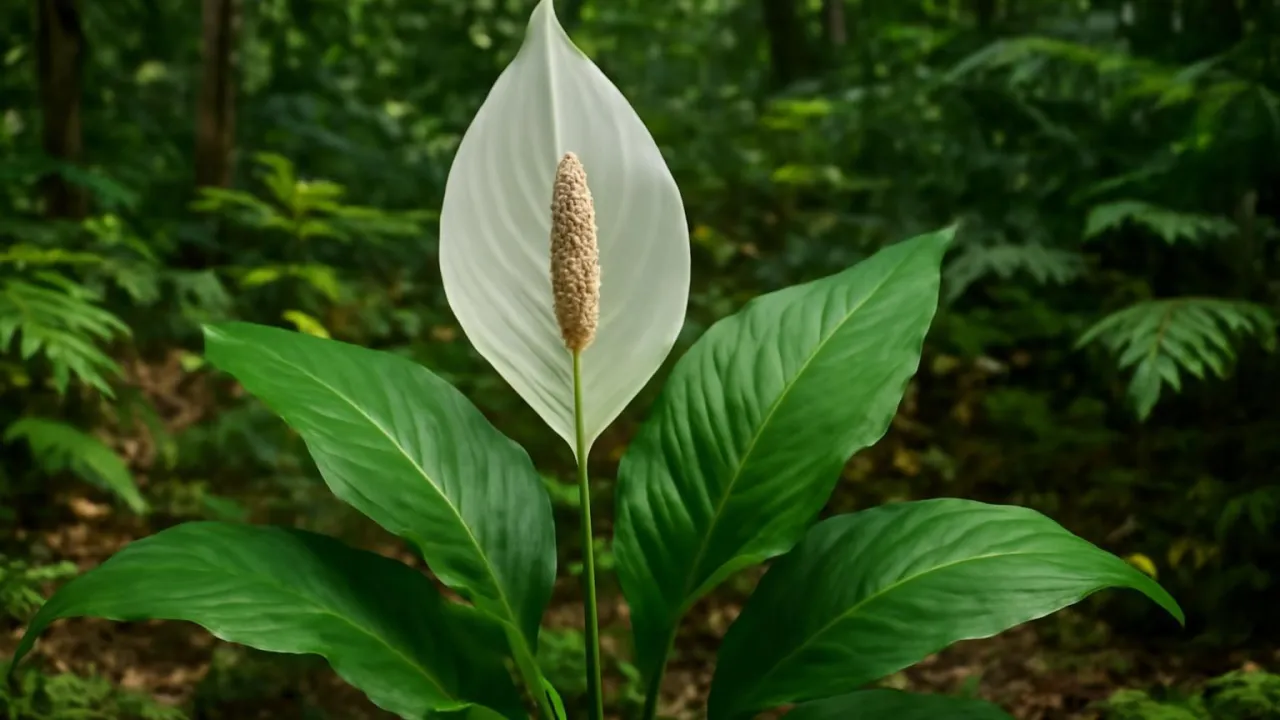
Peace lilies can remove harmful toxins like benzene from indoor air!
✨ Word Sparks (Grade 2 Glossary)
Tap 🔊 to hear
shiny
Bright and smooth, like light on water
moist
A little wet, not dry or too wet
toxin
A harmful thing that can make you sick
🪝
Have you ever seen a flower that cleans the air in your home?
1
What Does a Peace Lily Look Like?
The peace lily has big, green leaves and white flowers that look like flags. It grows about one to two feet tall. Its flowers bloom indoors and outside in warm places.
2
Where Does It Grow?
Peace lilies grow best in shady places with soil. They come from tropical rainforests in Central and South America. People often keep them inside their homes as houseplants.
3
Why Is It Special?
This flower can clean the air by removing harmful chemicals. It helps people breathe better indoors. Peace lilies are easy to care for and need only water and little sunlight.
Peace lilies can remove dangerous chemicals from the air using their leaves and roots!
✨ Word Sparks (Grade 3 Glossary)
Tap 🔊 to hear
spathes
The white leaf-like part that looks like a flower
phytoremediation
Plants cleaning harmful chemicals from the air
pollinator
An animal that helps flowers make seeds
🪝
Did you know the peace lily uses its leaves to clean indoor air?
1
Appearance and Adaptations
The peace lily has broad, shiny green leaves that help it absorb light in shady places. Its white flowers called surround a spadix, which holds tiny flowers. This flower uses its shape to attract even indoors. Its leaves also help filter toxins from the air.
2
Habitat and Growth
This plant grows naturally in the tropical rainforests of Central and South America. It thrives in low-light environments and moist soil, which helps it survive under the forest canopy. People grow peace lilies indoors because they adapt well to indirect light and moderate watering.
3
Air Cleaning Power
Peace lilies remove harmful chemicals like benzene and formaldehyde from indoor air through a process called . Their leaves absorb these toxins and break them down, improving air quality. This makes them popular houseplants for healthier homes.
4
Care and Use
To keep a peace lily healthy, water it regularly but avoid overwatering to prevent root rot. It prefers warm temperatures and indirect sunlight. Beyond beauty, these plants play a role in indoor ecosystems by supporting cleaner air and adding humidity.
1. What part of the peace lily helps clean the air?
2. Why do peace lilies grow well indoors?
🤯 Mind-Blowing Fact • Grade 4
Peace lilies improve indoor air by breaking down harmful chemicals through natural processes!
✨ Word Sparks (Grade 4 Glossary)
Tap 🔊 to hear
photosynthesis
How plants use light to make food
phytoremediation
Plants cleaning harmful chemicals from the air
canopy
The top layer of trees in a forest
🪝
How does the peace lily help improve indoor air and ecosystems?
1
Physical Features and Adaptations
The peace lily has broad, glossy leaves that maximize in low-light environments, allowing it to thrive indoors. Its white spathes surround a spadix, attracting pollinators even in shaded habitats. These adaptations help the plant survive under dense forest canopies and inside homes.
2
Habitat and Geographic Range
Native to tropical rainforests of Central and South America, peace lilies grow under the where sunlight is limited. They have adapted to humid, warm climates and moist soils. Today, they are widely cultivated worldwide as popular houseplants due to their air-purifying abilities.
3
Role in Ecosystems and Human Impact
Peace lilies play an important role in indoor ecosystems by removing toxins such as benzene and formaldehyde from the air through . This improves air quality and helps reduce indoor pollution. Their popularity has increased, benefiting human health but also requiring responsible care to prevent overwatering.
4
Cause and Effect of Care
If peace lilies receive too much water, their roots can rot, causing the plant to weaken and die. Conversely, proper watering and indirect sunlight promote healthy growth and flowering. This balance is essential for the plant’s survival and its ability to clean indoor air effectively.
1. What happens if a peace lily gets too much water?
2. Where do peace lilies naturally grow?
🤯 Mind-Blowing Fact • Grade 5
Peace lilies can remove up to 87% of certain harmful indoor air toxins within 24 hours!
✨ Word Sparks (Grade 5 Glossary)
Tap 🔊 to hear
phytoremediation
Plants cleaning harmful chemicals from the air
volatile organic compounds
Harmful chemicals found in indoor air
symbiotic
Two living things helping each other
🪝
What scientific traits make the peace lily a powerful natural air purifier?
1
Taxonomy and Scientific Classification
The peace lily, scientifically named Spathiphyllum wallisii, belongs to the Araceae family, which includes many tropical flowering plants. It is classified within the monocot group, characterized by parallel leaf veins and flower parts in threes. This taxonomy helps scientists understand its evolutionary relationships and care needs. Knowing its classification aids in botanical research and conservation.
2
Physiological Mechanics and Adaptations
Peace lilies perform photosynthesis efficiently under low light by using broad, glossy leaves to capture scarce sunlight. They utilize to absorb and metabolize indoor air toxins such as benzene, formaldehyde, and trichloroethylene. Their root systems work symbiotically with microbes to break down these harmful compounds. This process improves indoor air quality significantly.
3
Conservation and Botanical History
Originally discovered in the tropical rainforests of Central and South America, peace lilies have been cultivated worldwide as popular houseplants since the early 20th century. While not endangered, their natural habitats face deforestation threats. Conservation efforts focus on preserving rainforest ecosystems to protect native plant diversity. Botanical gardens also help maintain genetic diversity.
4
Quantitative Comparisons and Environmental Impact
Peace lilies typically grow between 12 and 30 inches tall (30 to 76 centimeters) and can remove up to 87% of airborne toxins in a small room within 24 hours. They thrive in temperatures ranging from 65 to 80 degrees Fahrenheit (18 to 27 degrees Celsius) and require moderate watering to maintain healthy growth. These measurable traits make them effective natural air purifiers.
5
Practical Uses and Indoor Benefits
Besides their aesthetic appeal, peace lilies improve indoor air quality by reducing , which can cause headaches and respiratory problems. Their ability to increase indoor humidity also benefits skin and respiratory health. These traits make peace lilies valuable for homes, offices, and hospitals. Their ease of care encourages widespread use.