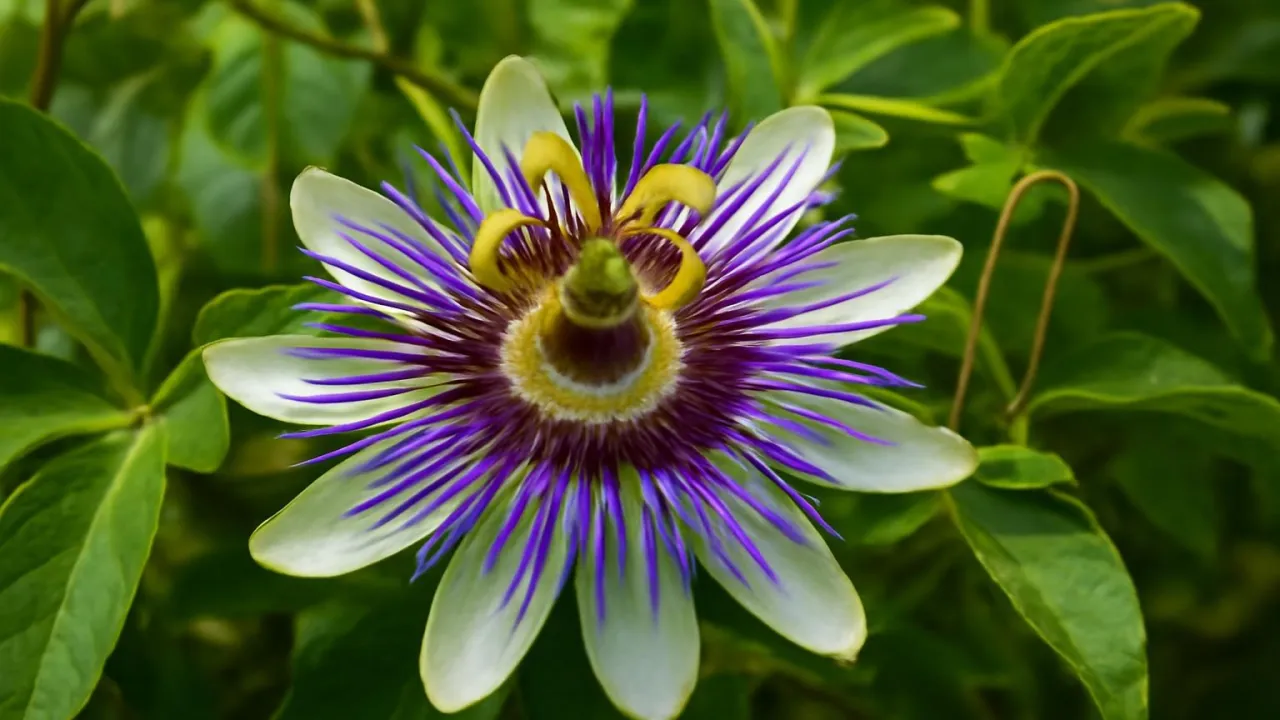
Passionflower vines can grow up to 20 feet long to reach sunlight!
✨ Word Sparks (Grade 2 Glossary)
Tap 🔊 to hear
nectar
Sweet juice inside flowers that bees drink
pollinate
When bees help flowers make seeds
tropical
Warm places near the equator
🪝
Have you ever seen a flower that looks like a star puzzle?
1
Amazing Flower Shape
The passionflower has many thin petals that spread out like a star. Its colors are bright and eye-catching to bees and butterflies. The petals help the flower stand out in warm sunny places.
2
Where It Lives and Grows
Passionflowers grow on long vines that climb trees and fences in warm places. They like and subtropical areas with plenty of sun and water. The vines can grow very long to reach sunlight.
3
How It Grows and Survives
The passionflower needs sunlight and water every day to grow strong. Bees and butterflies visit the flowers to collect and help them. This helps the flower make seeds for new plants.
1. Why do passionflower petals look bright and colorful?
2. Where do passionflower vines like to grow?
🤯 Mind-Blowing Fact • Grade 3
Passionflower’s corona filaments act like a fuzzy ring to guide pollinators to nectar!
✨ Word Sparks (Grade 3 Glossary)
Tap 🔊 to hear
adaptation
A change that helps plants survive better
pollination
When pollen moves to help make seeds
tendrils
Thin plant parts that help it climb
🪝
What makes the passionflower’s shape so special in nature?
1
Unique Flower Structure
Passionflowers have a complex structure with many thin petals arranged like a star. This design helps attract specific pollinators such as bees and butterflies. Their bright colors and intricate shapes are a natural for survival. The flower’s corona filaments add a fuzzy ring that guides pollinators to nectar.
2
Habitat and Growth
These flowers grow on vines in tropical and subtropical forests, often climbing trees to reach sunlight. The vines can grow up to 20 feet long, allowing the plant to access better light for photosynthesis. Passionflowers thrive in warm climates with plenty of water and sun. Their climbing habit helps them avoid ground predators.
3
Pollination and Reproduction
Pollinators like bees and butterflies gather nectar from passionflowers, transferring pollen between flowers. This process, called , is essential for seed production and plant reproduction. The flower’s unique shape helps ensure only certain pollinators can reach the nectar. This selective pollination increases the chance of successful fertilization.
4
Adaptations for Survival
The passionflower’s leaves and help it climb and attach to supports securely. Some species have edible fruits that attract animals, helping spread seeds. The plant’s complex flower structure protects reproductive parts from predators. These improve the passionflower’s survival in competitive environments.
1. What helps passionflowers attract the right pollinators?
2. Why do passionflower vines climb trees and fences?
🤯 Mind-Blowing Fact • Grade 4
Passionflowers have a special flower shape that helps only certain pollinators reach nectar!
✨ Word Sparks (Grade 4 Glossary)
Tap 🔊 to hear
symbiosis
When two living things help each other
biodiversity
Many different plants and animals living together
ecosystem
A place where plants and animals live together
🪝
How does the passionflower’s design help it survive and support its ecosystem?
1
Complex Flower Design and Pollination
The passionflower’s intricate petals and corona filaments create a unique structure that attracts specialized pollinators like bees and butterflies, ensuring effective pollination. This cause-and-effect relationship helps the flower reproduce successfully by guiding pollinators to nectar. The flower’s shape also prevents less effective pollinators from stealing nectar without pollinating. This selective pollination supports the plant’s survival in diverse .
2
Role in Ecosystems and Food Webs
Passionflowers provide nectar to pollinators, which are vital parts of many food webs, supporting birds and insects. The plant’s fruits feed animals such as birds and small mammals, which help disperse seeds to new locations. This symbiotic relationship between passionflowers and animals maintains in tropical and subtropical forests. Human cultivation of passionflowers for fruit and decoration also impacts positively and negatively.
3
Geographic Distribution and Habitat
Native to tropical and subtropical Americas, passionflowers thrive in warm, humid climates with ample sunlight and water. They grow on vines that climb trees and man-made structures to reach sunlight, adapting to both wild and cultivated environments. Some species have spread to other parts of the world due to human activity, showing the plant’s adaptability. Habitat loss and climate change threaten some passionflower species.
4
Adaptations and Human Impact
The passionflower’s tendrils and climbing ability allow it to compete for sunlight in dense forests, while its complex flower structure protects reproductive organs from predators. Humans cultivate passionflowers for their edible fruits and ornamental beauty, but habitat destruction reduces wild populations. Conservation efforts focus on protecting natural habitats and educating about the plant’s ecological role. These efforts help maintain passionflower diversity.
1. Why do passionflowers have a complex flower shape?
2. How do animals help passionflowers in nature?
🤯 Mind-Blowing Fact • Grade 5
Some passionflower species have over 100 corona filaments forming a stunning floral crown!
✨ Word Sparks (Grade 5 Glossary)
Tap 🔊 to hear
coevolution
When plants and animals evolve together over time
tendrils
Thin parts that help plants climb and hold on
photosynthesis
How plants use sunlight to make food
🪝
What scientific secrets make the passionflower a marvel of nature’s design?
1
Scientific Classification and Botanical Features
Passionflower belongs to the genus Passiflora within the family Passifloraceae, consisting of over 500 species worldwide. These species vary widely but share a common complex floral structure that includes five petals, five sepals, and a distinctive corona of filaments. Botanically, passionflowers are climbing vines that use to attach to supports and reach sunlight efficiently. Their flowers are perfect examples of with specialized pollinators.
2
Physiological Mechanics of Flower and Vine Growth
The passionflower’s function as sensitive organs that detect contact with surfaces, enabling the vine to coil tightly and climb. This climbing mechanism allows the plant to maximize light exposure in dense forest environments. The flower’s corona filaments produce nectar and visually guide pollinators toward reproductive organs, enhancing pollination efficiency. occurs in the leaves, which are broad and lobed, optimizing energy production.
3
Ecological Role and Conservation Status
Passionflowers play a crucial role in tropical ecosystems by supporting pollinators, which in turn support food webs involving birds and mammals. Some species produce edible fruits known as passionfruits, which humans cultivate globally for food and medicinal uses. However, habitat destruction and climate change threaten several wild passionflower species, prompting conservation efforts to protect native habitats and genetic diversity. Botanical gardens and seed banks also preserve rare species.
4
Botanical History and Human Uses
The passionflower was first described scientifically in the 16th century by European explorers who noted its unique flower structure and symbolic religious meanings. Indigenous peoples have used passionflower extracts for traditional medicine to treat anxiety and insomnia. Today, passionfruit is commercially cultivated worldwide, contributing economically to tropical agriculture. Ornamental cultivation also promotes awareness of biodiversity and plant conservation.
5
Quantitative Comparisons and Interesting Measurements
Passionflower vines can grow up to 20 feet (6 meters) in length within a single growing season, climbing rapidly to reach sunlight. The corona filaments can number over 100 in some species, creating a striking floral display. Passionfruit weighs about 4 to 6 ounces (120 to 170 grams) and contains numerous small seeds. Optimal growth temperatures range from 68 to 82 degrees Fahrenheit (20 to 28 degrees Celsius), reflecting their tropical origins.