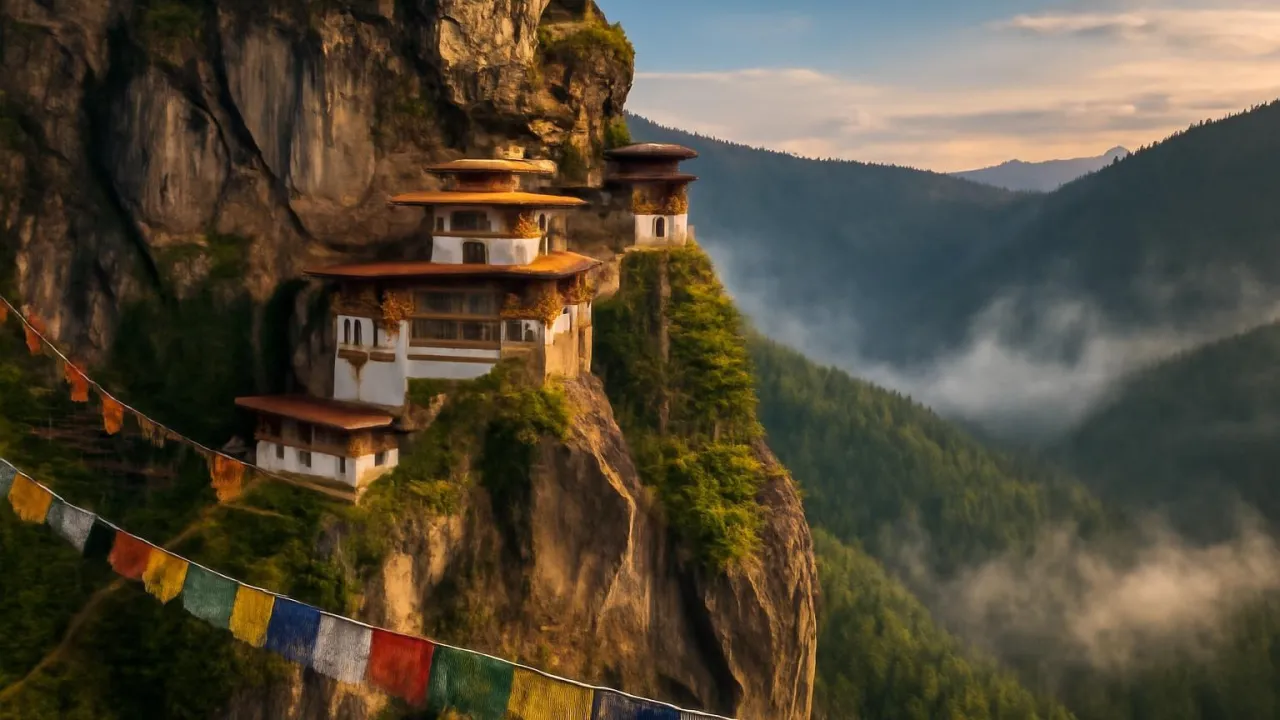
Tiger’s Nest is almost 3,000 feet above the valley floor!
✨ Word Sparks (Grade 2 Glossary)
Tap 🔊 to hear
prayer
Words people say to hope or wish
temple
A special place for worship
mist
Tiny drops of water in the air
🪝
What would it feel like to walk above the clouds?
1
A Monastery in the Mountains
Tiger’s Nest Monastery sits high on a cliff in Bhutan. People hike up steep paths to reach it, and the view is amazing. The building looks like it is glued to the rocks, surrounded by and sky.
2
Colorful Flags and Quiet Bells
Visitors see bright flags waving in the wind as they climb. Monks live and pray inside, and gentle bells ring softly through the halls. The walls are painted with red, gold, and white designs.
3
A Special Place to Visit
Many people come from far away to see Tiger’s Nest. Some bring wishes to leave at the , hoping for good luck. The journey is hard, but the peaceful feeling is worth it.
Tiger’s Nest was rebuilt after a fire in 1998, using traditional Bhutanese methods.
✨ Word Sparks (Grade 3 Glossary)
Tap 🔊 to hear
erosion
Wearing away by wind or rain
pilgrimage
A special journey for faith
architecture
How buildings are planned and built
🪝
What secrets might a temple in the clouds hold?
1
Perched Above the Paro Valley
Paro Taktsang, known as Tiger’s Nest Monastery, clings to a cliff high above Bhutan’s Paro Valley. The monastery stands nearly 900 meters above the valley floor, surrounded by swirling mists and pine forests. Visitors must hike a steep, winding trail to reach its gates. The journey is challenging, but the view is breathtaking.
2
Legends and Sacred Caves
According to legend, a Buddhist master flew here on the back of a tigress. He meditated in caves that are now part of the temple. Monks chant prayers and ring bells, filling the air with peaceful sounds. The monastery’s blends into the rocky cliff, making it seem part of the mountain.
3
Colors, Flags, and Architecture
Tiger’s Nest is decorated with bright prayer flags that flutter in the wind. The walls are painted with gold and red, and the roofs shine in the sun. The structure uses wooden beams and stone, designed to resist from wind and rain. Special arches and supports help the building stay balanced on the steep rock.
4
A Place of Pilgrimage
Many people visit Tiger’s Nest as a , hoping for blessings or good fortune. Visitors leave offerings or light butter lamps inside the temple. The climb is hard, but reaching the top brings a sense of wonder and peace. The monastery is a symbol of Bhutan’s spiritual heritage.
Tiger’s Nest was rebuilt stone by stone after a fire, using only hand tools and no modern machines.
✨ Word Sparks (Grade 4 Glossary)
Tap 🔊 to hear
resonance
Echoing sound that fills a space
heritage
Traditions passed down through time
granite
A hard, strong rock
🪝
How was a monastery built on a sheer cliff, high above the clouds?
1
A Marvel of Himalayan Engineering
Paro Taktsang, or Tiger’s Nest Monastery, is perched on a vertical cliff nearly 3,000 feet above Bhutan’s Paro Valley. Builders used wooden beams driven deep into the rock to anchor the structure securely. Special stone terraces and stairways help the monastery cling to the mountain, even during harsh Himalayan weather. The design uses arches and layered roofs to balance weight and prevent collapse.
2
Legends, Meditation, and Sacred Caves
According to legend, Guru Padmasambhava flew to this spot on a magical tigress and meditated in the caves. These caves became the heart of the monastery, where monks still chant and meditate daily. The sound of bells and chanting creates a peaceful acoustic throughout the temple. Visitors report feeling a sense of calm and wonder as they explore the sacred halls.
3
Colors, Flags, and Cultural Traditions
Tiger’s Nest is decorated with thousands of fluttering prayer flags, each carrying hopes and blessings on the wind. The monastery’s walls are painted with traditional Bhutanese colors—deep reds, golds, and whites—symbolizing wisdom and compassion. Butter lamps and incense fill the air with gentle light and fragrance. The site is an important destination for Buddhist pilgrims from Bhutan and around the world.
4
Restoration and Lasting Legacy
A fire in 1998 destroyed much of the monastery, but Bhutanese craftsmen rebuilt it using ancient methods and local materials. The restoration preserved the original design, showcasing Bhutan’s commitment to its . Today, Tiger’s Nest stands as a symbol of resilience and spiritual devotion. It continues to inspire visitors with its breathtaking views and remarkable engineering.
1. What helps the monastery stay safe on the cliff?
2. Why do people hang prayer flags at Tiger’s Nest?
🤯 Mind-Blowing Fact • Grade 5
Tiger’s Nest’s main temple was rebuilt stone by stone after the 1998 fire, using only hand tools and no electricity.
✨ Word Sparks (Grade 5 Glossary)
Tap 🔊 to hear
precipice
A very steep, high cliff edge
counterweight
A heavy object that balances weight
sustainable
Able to last and protect nature
🪝
What engineering secrets allow Tiger’s Nest to defy gravity and storms on a Himalayan cliff?
1
A Feat of Cliffside Construction
Paro Taktsang, or Tiger’s Nest Monastery, is one of the world’s most dramatic architectural achievements, perched on a 900-meter (2,950-foot) granite cliff in Bhutan’s Paro Valley. Builders in 1692 used only hand tools, chiseling deep sockets into the rock to anchor massive wooden beams and stone foundations. The monastery’s design relies on gravity, , and interlocking joints to distribute weight safely along the cliff face. Ingeniously engineered stairways and terraces allow monks and visitors to move between four main temples and eight meditation caves, all balanced on the .
2
Legend, Meditation, and Sacred Acoustics
Tiger’s Nest is steeped in legend: Guru Padmasambhava, a founding figure of Tibetan Buddhism, is said to have flown here on a tigress in the 8th century, meditating in the caves that now form the monastery’s spiritual core. The stone walls and wooden halls are designed to amplify and sustain the resonance of chanting and bells, creating an immersive acoustic environment that enhances meditation. The entire complex is oriented to maximize sunlight and shelter from Himalayan winds, supporting both spiritual practice and structural resilience.
3
Traditional Materials and Environmental Adaptation
The monastery’s construction uses local granite, timber, and handmade plaster, chosen for their durability and ability to withstand erosion, earthquakes, and extreme weather. Roofs are layered with wooden shingles and weighted stones to resist fierce mountain winds. Intricate wooden brackets, called ‘zorings,’ transfer loads from the upper stories to the cliff’s natural ledges. The architecture demonstrates a profound understanding of Himalayan geology and climate, blending human ingenuity with environmental harmony.
4
Cultural Significance and Pilgrimage
Tiger’s Nest is Bhutan’s most revered pilgrimage site, attracting thousands of Buddhists and international visitors each year. Pilgrims hike a steep, forested trail, passing waterfalls and fluttering prayer flags, to reach the monastery’s gates. The site serves as a living symbol of Bhutanese identity, spiritual devotion, and resilience, especially after its painstaking restoration following the 1998 fire. Annual festivals and rituals reinforce its role as a center for meditation, blessing, and community gathering.
5
Preservation, Restoration, and Global Impact
After the devastating fire, Bhutanese artisans meticulously reconstructed Tiger’s Nest using traditional joinery and hand-forged tools, ensuring the site’s authenticity and longevity. Preservation efforts focus on preventing erosion, managing visitor impact, and maintaining the monastery’s unique acoustic and architectural features. Tiger’s Nest has inspired architects, engineers, and spiritual seekers worldwide, serving as a model of construction and cultural preservation in extreme environments.