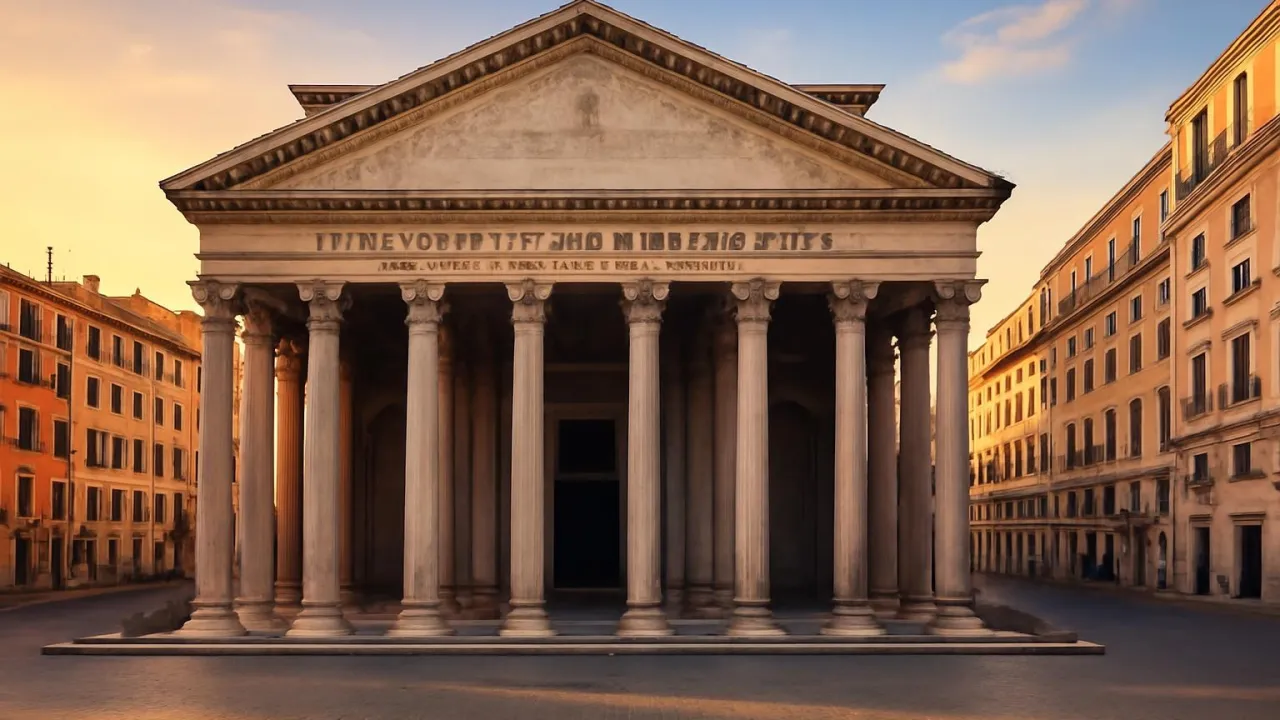
The Pantheon’s dome was the world’s biggest for over 1,300 years!
✨ Word Sparks (Grade 2 Glossary)
Tap 🔊 to hear
Roman
People from ancient Rome
patterned
Decorated with shapes or lines
visitor
A person who comes to see
🪝
Can you imagine standing under a giant stone dome with a hole at the top?
1
A Dome Full of Surprises
The Pantheon’s dome is round and smooth, and it is very high. Sunlight streams through the oculus, which is a big circle in the center. Sometimes, rain falls right onto the floor below.
2
Echoes and Light
Inside, your voice echoes when you talk or sing. The sunlight moves across the floor as the day goes on. are amazed by how bright and open the space feels.
3
A Special Place in Rome
People have visited the Pantheon for hundreds of years. It was built by the long ago and still stands strong. Many people travel from all over the world to see its beautiful dome.
The Pantheon’s oculus is 27 feet wide—big enough for a car to fit through!
✨ Word Sparks (Grade 3 Glossary)
Tap 🔊 to hear
concrete
A hard rock made by people
acoustics
How sound moves in a place
monument
A building made to remember
🪝
What would it feel like to stand beneath a perfect circle of sky inside an ancient temple?
1
A Dome Like No Other
The Pantheon’s dome is made from and is shaped like a half-sphere. At the very top is the oculus, a round opening that lets sunlight and even rain pour inside. This giant dome was built almost two thousand years ago by Roman engineers. It is still the world’s largest unreinforced concrete dome.
2
Light, Shadow, and Sound
As the sun moves, a bright circle of light slides across the patterned marble floor. When people talk or sing, their voices echo and fill the huge space. The oculus not only lights the temple but also lets visitors feel the weather outside. The Pantheon’s make it a magical place for music and ceremonies.
3
How Did It Stand So Long?
Roman builders used lighter stones at the top of the dome and thicker walls at the bottom. This clever engineering keeps the heavy roof from falling in. The dome’s round shape spreads out the weight, so the walls do not crack. The Pantheon has survived earthquakes, storms, and centuries of change.
4
A Wonder for All Time
People from around the world visit the Pantheon to see its beauty and history. Artists, scientists, and architects study its design and learn from its secrets. The Pantheon is not just a building—it is a to Roman creativity and skill. Its perfect dome inspires awe in everyone who enters.
1. Why did Romans use lighter stones at the top of the dome?
2. What happens when you speak inside the Pantheon?
🤯 Mind-Blowing Fact • Grade 4
The Pantheon’s concrete dome has no steel or iron inside—just stone, sand, and volcanic ash!
✨ Word Sparks (Grade 4 Glossary)
Tap 🔊 to hear
hemisphere
A shape like half a ball
volcanic
Made from melted rock from a volcano
proportions
How different parts fit together
🪝
Imagine hearing your footsteps echo beneath a dome built almost two thousand years ago—how did it last so long?
1
The Pantheon’s Marvelous Dome
The Pantheon’s dome is a masterpiece of ancient Roman engineering, crafted from concrete and shaped as a perfect . At its center, the oculus—a 27-foot-wide circular opening—allows sunlight and rain to enter, creating a moving spotlight inside. Roman builders cleverly used lighter stones near the top and heavier materials at the base to balance the massive weight. This design, along with thick support walls, has helped the dome survive earthquakes and centuries of use.
2
A Symphony of Light and Sound
As the sun travels across the sky, the oculus casts a shifting beam of light onto the Pantheon’s patterned marble floor. The building’s acoustics amplify every sound, causing footsteps, whispers, and music to echo dramatically. During rainstorms, water falls directly through the oculus, draining away through hidden holes in the floor. These features make the Pantheon not just an architectural wonder but also a sensory experience.
3
Roman Innovation and Influence
The Pantheon was completed around 125 CE under Emperor Hadrian, replacing earlier temples on the site. Its unreinforced concrete dome was an engineering breakthrough, unmatched for over a thousand years. The building’s harmonious and clever use of arches and columns influenced architects throughout history. Even today, modern domes and rotundas are inspired by the Pantheon’s design.
4
A Living Monument
Today, the Pantheon is both a church and a tourist destination, welcoming millions of visitors each year. Artists, scientists, and engineers study its structure to learn about ancient construction techniques. The Pantheon stands as a testament to Roman creativity, resilience, and the lasting power of great ideas. Its dome continues to inspire awe and curiosity in everyone who enters.
1. How does the Pantheon’s dome stay up without steel?
2. What does the oculus let inside the Pantheon?
🤯 Mind-Blowing Fact • Grade 5
The Pantheon’s ancient concrete is so durable that modern scientists still study its chemical secrets for building better structures today.
✨ Word Sparks (Grade 5 Glossary)
Tap 🔊 to hear
reinforced
Made stronger with extra support
resonance
When sound vibrates and grows louder
load distribution
How weight is spread out safely
🪝
What secrets of science and engineering let the Pantheon’s mighty dome stand for nearly two millennia—without a single steel beam?
1
A Dome That Defied the Ages
Step inside the Pantheon, and you’re surrounded by a perfect hemisphere of concrete soaring 142 feet above the marble floor. At the very top, the oculus—a 27-foot-wide circular opening—frames the sky and bathes the interior in shifting sunlight. The dome’s diameter and height are exactly equal, creating a harmonious sphere that was designed to impress both the eye and the mind. When it was completed around 125 CE, it became the world’s largest unreinforced concrete dome, a record it still holds today.
2
Roman Engineering Genius
The Pantheon’s dome is a triumph of ancient engineering, built without steel or iron reinforcement. Roman builders mixed volcanic ash, lime, and stones to create a strong yet lightweight concrete. They made the concrete lighter towards the top by adding pumice and other volcanic rocks, reducing the dome’s weight by nearly half. The walls below are over 20 feet thick, and hidden relieving arches help distribute the dome’s immense load. This brilliant combination of materials and design has allowed the Pantheon to survive earthquakes, fires, and centuries of change.
3
Light, Acoustics, and Atmosphere
The oculus at the dome’s apex is not just an architectural feature—it’s the Pantheon’s only source of natural light and ventilation. As the sun moves across the sky, the beam of light from the oculus traces a glowing path across the floor’s intricate geometric patterns. The building’s acoustics are remarkable; the curved dome causes sounds to echo and resonate, making music and voices sound fuller and richer. During rainstorms, water falls directly through the oculus, draining away through a hidden system beneath the floor.
4
Cultural Legacy and Global Influence
Originally built as a temple to all Roman gods, the Pantheon has been used as a church since the 7th century and is now one of Rome’s most visited monuments. Its harmonious proportions, grand columns, and innovative engineering have inspired countless buildings, from Renaissance churches to modern capitol domes. Architects and scientists still study the Pantheon to unlock secrets of Roman concrete and construction. The Pantheon’s enduring presence is a symbol of the creativity and resilience of ancient civilizations.
5
A Living Laboratory of Science and History
Today, the Pantheon is both a place of worship and a living museum, drawing millions of visitors each year. Researchers analyze its materials to learn why Roman concrete has lasted so long, while engineers marvel at its structural stability. The Pantheon’s design demonstrates principles of physics, such as and , that are still taught in engineering schools. Its continued survival challenges us to think about how science, art, and culture can endure for generations. The Pantheon remains a beacon of wonder, inviting each new visitor to look up and dream.