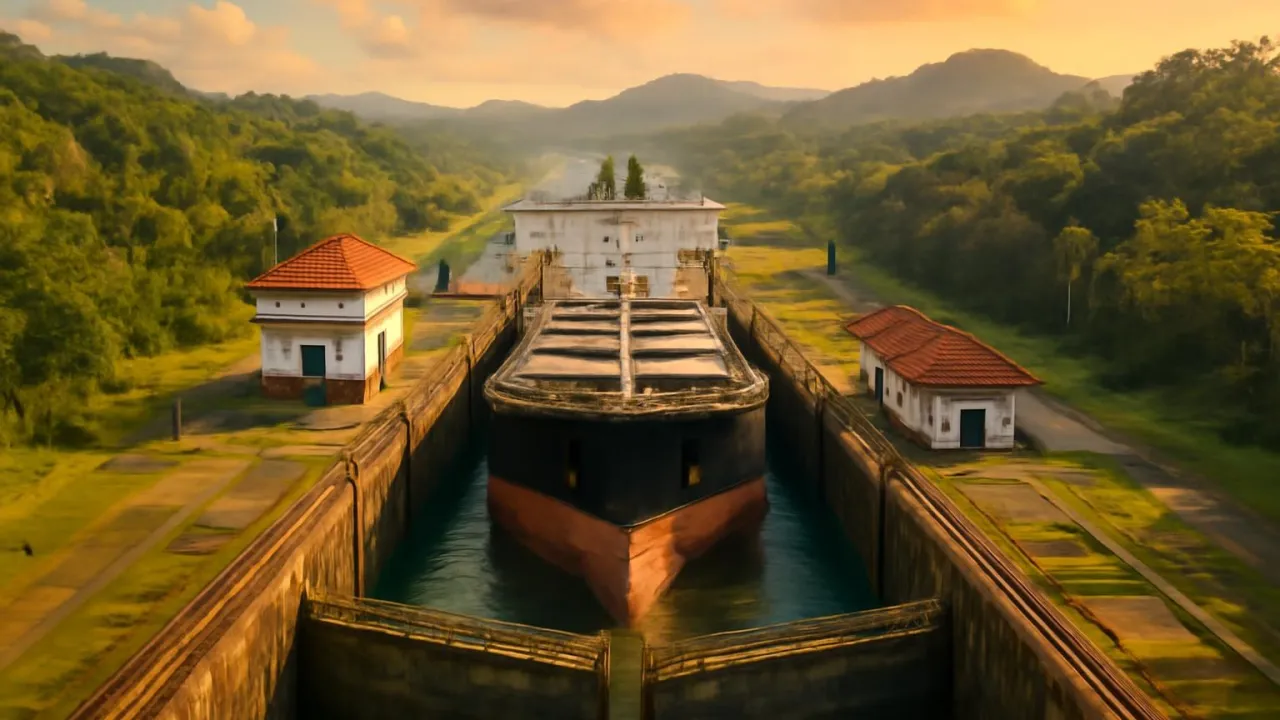
Each lock gate is so heavy, it weighs as much as 300 elephants!
✨ Word Sparks (Grade 2 Glossary)
Tap 🔊 to hear
shortcut
A faster way to get somewhere
ocean
A very big body of water
echo
A sound that bounces back
🪝
Have you ever heard a ship whistle echo through a rainforest?
1
A Shortcut Across Panama
The Panama Canal lets ships cross between two . Ships used to sail all the way around South America, but now they take this . The canal saves many days of travel for big ships.
2
How the Canal Works
The canal has special water rooms called locks. Locks lift ships up to a lake, then lower them back down. Big gates open and close to let ships move safely.
3
People and Ships from Everywhere
People from many countries work at the canal. Ships from all over the world pass through every day. The canal is a busy place full of sounds and movement.
Gatun Lake, part of the canal, was once the world’s largest man-made lake!
✨ Word Sparks (Grade 3 Glossary)
Tap 🔊 to hear
gravity
The force that pulls things down
engineer
A person who designs and builds things
chamber
A big room or space
🪝
Can you imagine a ship rising like an elevator over a mountain of water?
1
A Pathway Between Oceans
The Panama Canal slices through the country of Panama, joining the Atlantic and Pacific Oceans. Before the canal, ships had to sail thousands of miles around South America. Now, this shortcut saves time, fuel, and money for travelers and traders.
2
Locks: Water Elevators for Ships
The canal uses giant locks, which are that fill with water to raise or lower ships. Each lock can lift a ship up to 85 feet above sea level, using to move water in and out. These locks work like elevators, carrying ships over Panama’s hills.
3
Engineering and Nature Together
built the canal through thick rainforest and rocky hills, battling heat, rain, and disease. They created Gatun Lake, a huge man-made lake, to help ships cross the highest part. The canal’s design uses the power of water and to move ships safely.
4
A Global Meeting Place
Every year, over 12,000 ships from around the world pass through the canal. People from many countries work together to guide ships safely. The canal is a busy, noisy place full of whistles, engines, and splashing water.
The canal’s largest lock gates are each 7 feet thick and 82 feet high!
✨ Word Sparks (Grade 4 Glossary)
Tap 🔊 to hear
lock system
A set of water chambers for ships
dam
A wall that holds back water
trade
Buying and selling things between places
🪝
What if you could steer a ship through a rainforest, then watch it rise up a watery staircase?
1
An Engineering Marvel in the Jungle
The Panama Canal stretches across the narrowest part of Central America, connecting the Atlantic and Pacific Oceans. Before the canal, ships had to brave the long, stormy journey around Cape Horn at South America’s tip. By slicing through dense rainforest and rocky hills, engineers created a shortcut that changed world forever.
2
The Science of Locks and Water
The canal’s is a series of enormous chambers that use water and gravity to lift or lower ships. When a ship enters a lock, water is either added or drained, raising or lowering the vessel up to 85 feet above sea level. The locks’ massive gates, made of steel, open and close with the help of electric motors and gears.
3
Building Against Nature’s Challenges
Constructing the canal was a huge challenge, with workers battling tropical diseases, landslides, and heavy rainfall. Engineers created Gatun Lake by damming the Chagres River, providing a high, calm waterway for ships to cross. The project required new machines and creative solutions to move millions of tons of earth and rock.
4
A Canal That Connects the World
Today, the Panama Canal is one of the busiest waterways on Earth, with ships from every continent passing through. It saves ships about 8,000 miles of travel and plays a key role in global . The canal’s success shows how engineering and teamwork can shape the world’s future.
The Panama Canal Expansion added locks big enough for ships carrying over 14,000 containers each!
✨ Word Sparks (Grade 5 Glossary)
Tap 🔊 to hear
hydrostatics
The science of water at rest
ecosystem
A community of living things and their home
lockmaster
A person who controls the canal’s locks
🪝
What if you could command a 100,000-ton ship to rise up a mountain of water, then glide across the jungle from one ocean to another?
1
A Human-Made Passage Across Continents
Imagine standing on the deck of a massive cargo ship as it approaches the Panama Canal, a 50-mile engineering masterpiece that slices through the narrow isthmus of Panama. Before the canal opened in 1914, ships faced a dangerous 8,000-mile detour around South America’s Cape Horn, battling treacherous storms and unpredictable currents. The canal’s creation forever changed global shipping by providing a direct, safe, and efficient route between the Atlantic and Pacific Oceans.
2
The Physics of Locks and Water Elevators
The canal’s lock system consists of six giant lock chambers—three on each side—each measuring 1,000 feet long and 110 feet wide. These locks use the principles of and gravity, filling and draining with over 26 million gallons of freshwater to raise or lower ships up to 85 feet above sea level. The lock gates, weighing up to 750 tons each, open and close with precision, allowing ships as large as 965 feet long to safely pass through.
3
Engineering Triumphs and Environmental Challenges
Building the canal was one of the most difficult engineering feats in history, requiring the excavation of more than 200 million cubic yards of earth and rock. Engineers had to overcome deadly diseases like malaria and yellow fever, frequent landslides, and the unpredictable flooding of the Chagres River. The creation of Gatun Lake, once the world’s largest artificial lake, provided a stable waterway and helped control the river’s flow, but also dramatically altered the local .
4
A Lifeline for Global Trade and Innovation
Today, the Panama Canal is a vital artery for world commerce, handling over 12,000 transits and more than 250 million tons of cargo annually. The canal’s expansion in 2016 added even larger locks, called the ‘Panama Canal Expansion’ or ‘Third Set of Locks,’ allowing passage for enormous ‘New Panamax’ ships. The canal’s operation requires precise teamwork among pilots, engineers, and , all working together to move ships safely and efficiently.
5
Legacy and Future of a Landmark
The Panama Canal stands as a symbol of international cooperation, engineering innovation, and human determination to reshape geography. Its success inspired other major waterway projects and continues to influence global shipping routes and economies. As climate change and rising trade demands challenge its future, the canal’s ongoing upgrades and environmental protections will determine how it serves the world for generations to come.