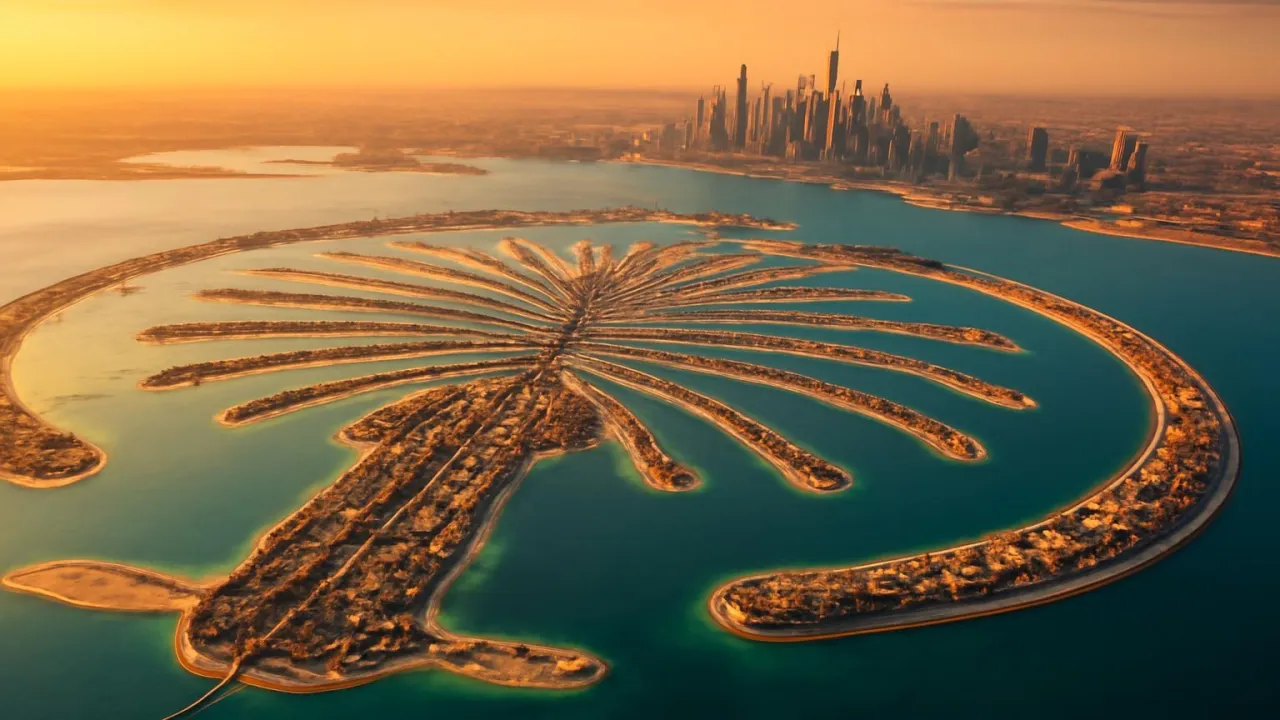
Palm Jumeirah is made from enough sand to fill 120 Empire State Buildings!
✨ Word Sparks (Grade 2 Glossary)
Tap 🔊 to hear
island
Land with water all around
machine
A tool that helps people work
beach
Sandy land next to the water
🪝
What would you see if you flew over a sparkling blue sea near Dubai?
1
A Palm Tree from Above
If you look down from an airplane, you might spot Palm Jumeirah’s palm shape. The stretches out into the bright blue water, looking just like a giant tree. Its special shape makes it famous all around the world.
2
Building the Palm
Huge and many workers moved sand and rocks to build the . They carefully placed everything to create the palm tree shape in the sea. It took several years to finish and is very strong.
3
A Place for Fun
Palm Jumeirah has hotels, , and parks for visitors to enjoy. People swim, play, and ride boats around the . It is a fun place to explore and enjoy the sun.
Palm Jumeirah’s breakwater is made from 7 million tons of rock!
✨ Word Sparks (Grade 3 Glossary)
Tap 🔊 to hear
artificial
Made by people, not nature
reclamation
Turning water into land
erosion
Wearing away by wind or water
🪝
What secrets hide beneath an island built to look like a palm tree?
1
A Palm Tree from the Sky
If you fly over Dubai, you might spot Palm Jumeirah’s unique palm shape. This island stretches out into the blue Persian Gulf. It was built to look just like a palm tree with a trunk and fronds. From space, astronauts can even see its outline!
2
Building an Island
Engineers used a process called land to create Palm Jumeirah. They poured millions of tons of sand and rocks into the sea. Special machines shaped the land into a palm using precise measurements. A curved breakwater protects it from strong waves and .
3
A Place Full of Life
Palm Jumeirah is home to hotels, homes, and water parks. Visitors swim, ride boats, and walk along sandy beaches. The island’s design helps calm the water inside its crescent. This creates safe spots for people and sea life to enjoy.
4
A Modern Engineering Wonder
Palm Jumeirah is one of the world’s largest islands. Its construction required careful planning and teamwork. The palm’s fronds are lined with villas and green plants. Today, it stands as a symbol of Dubai’s creativity and ambition.
Palm Jumeirah added over 40 miles (64 km) of new shoreline to Dubai!
✨ Word Sparks (Grade 4 Glossary)
Tap 🔊 to hear
archipelago
A group of islands together
symmetry
Same shape on both sides
habitat
A home for plants or animals
🪝
Have you ever wondered how engineers built a palm-shaped island in the sea?
1
A Palm Tree Rises from the Sea
Imagine gazing down from a plane and spotting a palm tree stretching across sparkling blue water. Palm Jumeirah is an artificial designed to resemble a giant palm, complete with a trunk, fronds, and a crescent-shaped breakwater. Located off the coast of Dubai, this island is visible from space and attracts visitors from around the globe.
2
Engineering the Impossible
The construction of Palm Jumeirah began in 2001, using a technique called land reclamation. Engineers dredged sand from the sea floor and sprayed it into precise shapes, while millions of tons of rock formed the protective breakwater. Careful measurements and GPS technology ensured the palm’s perfect , and the breakwater shields the island from erosion caused by waves.
3
A Hub of Activity and Innovation
Palm Jumeirah is not just a marvel of engineering; it is also a lively place to live and visit. The fronds are lined with luxurious villas, while hotels, parks, and beaches attract tourists year-round. The calm waters inside the crescent provide safe for marine life and enjoyable spots for swimming and boating.
4
Impact on Dubai and the World
Palm Jumeirah transformed Dubai’s coastline and became a symbol of modern ambition. Its success inspired the creation of other artificial islands and boosted Dubai’s tourism industry. The project also raised important questions about environmental impact, as engineers worked to protect marine and manage coastal changes.
1. How did engineers make sure the palm shape was correct?
2. What is one challenge Palm Jumeirah faced?
🤯 Mind-Blowing Fact • Grade 5
Palm Jumeirah’s crescent-shaped breakwater is so large it could fit the Empire State Building laid end-to-end over 11 times!
✨ Word Sparks (Grade 5 Glossary)
Tap 🔊 to hear
land reclamation
Making new land by filling water areas
breakwater
A barrier that stops strong waves
corrosion
When metal is slowly eaten by water
🪝
What would it take to design and build an island so massive and unique that it could be seen from outer space?
1
A Vision from Above
Imagine soaring high above the Persian Gulf and seeing a palm tree stretching into the sea, its fronds fanned out in perfect symmetry. Palm Jumeirah, the world’s largest artificial island shaped like a palm tree, was conceived as a bold statement of Dubai’s ambition and engineering prowess. Its unique design, visible from space, immediately captures the imagination of visitors and residents alike. The island’s intricate form includes a 2-kilometer trunk, 17 fronds, and a surrounding crescent that acts as a . This remarkable project has become an iconic symbol of modern Dubai.
2
Engineering Feats and Challenges
Palm Jumeirah’s construction began in 2001, employing a technique that involved dredging and relocating over 320 million cubic meters of sand and 7 million tons of rock. Engineers used GPS-guided ships to deposit materials with extraordinary precision, ensuring the palm’s fronds and trunk maintained their intended shape. The crescent-shaped , stretching 11 kilometers, was engineered to absorb and deflect wave energy, preventing erosion and protecting the island’s infrastructure. The project required constant monitoring of water currents, sediment movement, and environmental factors to ensure long-term stability.
3
Design, Sustainability, and Innovation
The design of Palm Jumeirah not only maximized real estate but also created over 64 kilometers of new shoreline for Dubai. The fronds were carefully spaced to allow water flow, reducing stagnation and supporting marine habitats within the lagoon. Engineers installed underwater tunnels and bridges to connect the trunk, fronds, and crescent, using advanced materials to withstand saltwater . Efforts to minimize environmental impact included coral relocation, artificial reef creation, and ongoing monitoring of marine life health.
4
Cultural and Economic Impact
Palm Jumeirah transformed Dubai’s global image, turning it into a world-renowned destination for luxury tourism and innovative architecture. The island features five-star hotels, private villas, shopping centers, and entertainment venues, attracting millions of visitors each year. Its construction inspired further mega-projects, such as The World Islands and Palm Jebel Ali, solidifying Dubai’s reputation as a hub of creativity and ambition. However, the project also highlighted the need for sustainable coastal development and responsible management of marine ecosystems.
5
A Lasting Legacy
Today, Palm Jumeirah stands as a testament to human ingenuity and the power of engineering to reshape landscapes. Its legacy includes not only its iconic palm shape and luxurious lifestyle but also valuable lessons in environmental stewardship, coastal engineering, and urban planning. As climate change and rising sea levels present new challenges, Palm Jumeirah’s story continues to inspire engineers and architects to design resilient, innovative solutions for the future. The palm-shaped island remains a shining example of what can be achieved when vision, science, and technology unite.