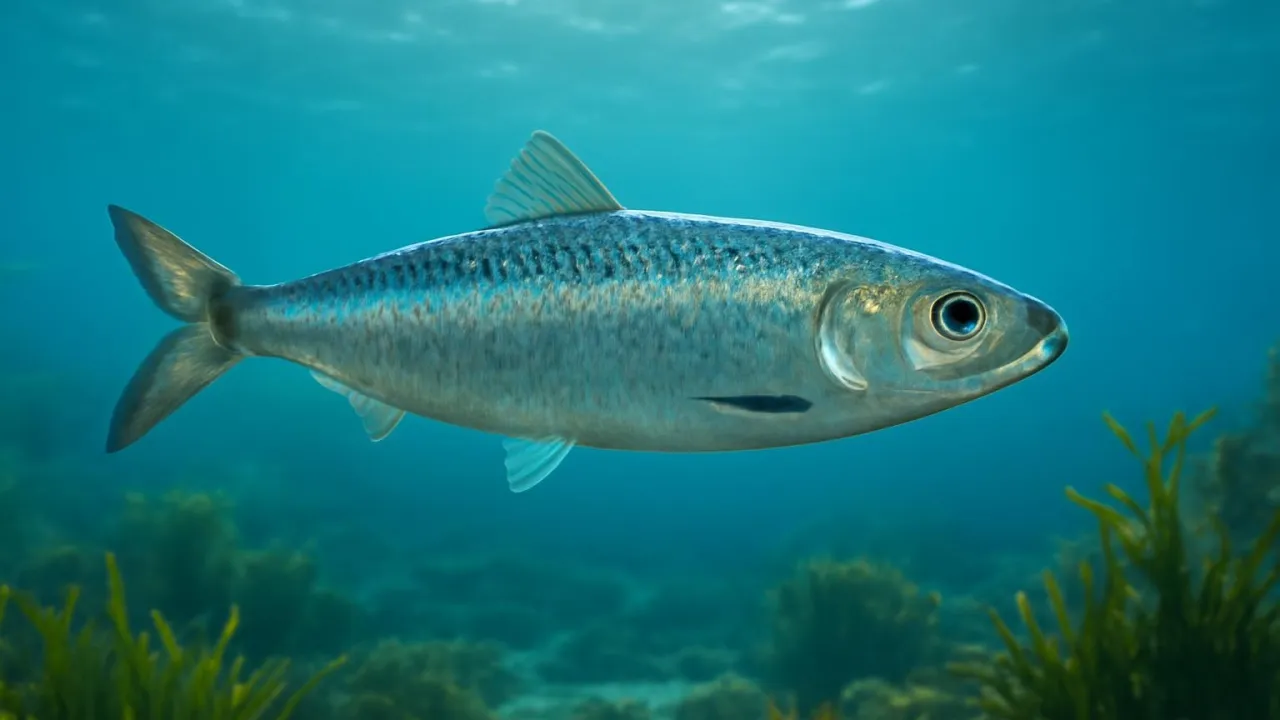
Pacific sardines can form schools so large they look like silver clouds in the ocean!
✨ Word Sparks (Grade 2 Glossary)
Tap 🔊 to hear
plankton
Tiny plants and animals in the water
predator
An animal that hunts other animals
gills
Fish parts that help them breathe underwater
🪝
Have you ever seen thousands of tiny fish swim together like one big team?
1
Shiny Fish in the Ocean
Pacific sardines have shiny silver scales that reflect sunlight underwater. They live in cool ocean waters along the west coast. These fish grow up to twelve inches long and swim very fast to avoid danger.
2
Life in Big Groups
Sardines travel in huge schools that can include thousands of fish. Swimming in groups helps them stay safe from . They eat tiny and small sea creatures that float in the water.
3
A Special Fish Feature
Their bodies are slim and streamlined, which helps them swim quickly. Sardines have sharp eyes to spot food and danger. They use their to breathe underwater all the time.
Pacific sardines’ shimmering schools can stretch for miles, dazzling like underwater silver clouds.
✨ Word Sparks (Grade 3 Glossary)
Tap 🔊 to hear
camouflage
Colors or shapes that help hide animals
plankton
Tiny plants and animals floating in water
schooling
Many fish swimming together as one group
🪝
Did you know Pacific sardines use teamwork to survive in the ocean?
1
Ocean Dwellers with Shiny Scales
Pacific sardines are small fish with shiny silver scales that help them . Their reflective bodies confuse predators by blending with sunlight. They live in the cool northeastern Pacific Ocean, where food is plentiful.
2
Schooling for Safety and Survival
These fish swim in large schools, which is a group of many fish moving together. helps protect sardines from predators by confusing them and making it hard to catch one fish. This adaptation is vital for their survival.
3
Feeding on Tiny Plankton
Pacific sardines feed mainly on , tiny plants and animals that drift in the water. Their gill rakers filter plankton from the water as they swim with mouths open. This feeding method provides essential nutrients to grow and stay healthy.
4
Body Shape and Movement
Their slim, streamlined bodies reduce water resistance and allow fast swimming. This helps sardines escape predators quickly and travel long distances. Their large eyes help spot food and danger in the ocean’s depths.
2. What do sardines use to filter plankton from water?
🤯 Mind-Blowing Fact • Grade 4
Pacific sardines are so important that their population changes can affect entire ocean food webs.
✨ Word Sparks (Grade 4 Glossary)
Tap 🔊 to hear
ecosystem
All living things and their homes together
migration
Moving to a new place for food or safety
predator
An animal that hunts other animals
🪝
How do tiny Pacific sardines play a big role in ocean food webs?
1
Shiny Fish in the Pacific Ocean
Pacific sardines inhabit the cool waters of the northeastern Pacific Ocean from California to Canada. Their shiny silver scales reflect sunlight, providing camouflage that helps them avoid . This adaptation allows them to survive in open water where hiding places are scarce and danger is high.
2
Schooling Behavior and Predator Defense
Sardines swim in massive schools that can contain thousands to millions of individuals. This schooling behavior confuses like larger fish and seabirds, reducing the chance of any one sardine being caught. The coordinated movement also helps them find food efficiently and stay safe.
3
Role in the Ecosystem and Human Impact
Pacific sardines feed on plankton, converting tiny organisms into energy for larger animals. They are a crucial food source for many marine , including dolphins, whales, and seabirds. Overfishing and environmental changes have caused sardine populations to fluctuate, impacting the balance of the marine .
4
Physical Features and Geographic Range
Their streamlined bodies and large eyes help them swim quickly and spot or prey in dim ocean waters. Pacific sardines range from Baja California in Mexico to British Columbia in Canada. Seasonal changes in water temperature influence their and spawning patterns along the coast.
Pacific sardines can swim up to 25 miles per hour in massive schools that stretch for miles underwater.
✨ Word Sparks (Grade 5 Glossary)
Tap 🔊 to hear
Clupeidae
The family of fish that includes sardines and herrings
plankton
Tiny plants and animals floating in ocean water
sustainable
Using resources carefully to protect nature
🪝
What makes the Pacific sardine a key species in marine ecosystems along the North American west coast?
1
Scientific Classification and Habitat
The Pacific sardine, scientifically known as Sardinops sagax, belongs to the family. It inhabits the northeastern Pacific Ocean, ranging from Baja California to British Columbia. These fish prefer cool, nutrient-rich waters where thrive, supporting their diet and reproduction. Their presence indicates healthy ocean conditions, making them important ecological indicators.
2
Physiological Adaptations for Survival
Pacific sardines have streamlined, laterally compressed bodies that reduce water resistance, enabling swift swimming speeds up to 25 miles per hour. Their large, sensitive eyes allow them to detect predators and prey in low-light ocean depths. Gill rakers efficiently filter , their primary food source, from seawater. These adaptations help sardines evade predators and feed effectively in dynamic ocean environments.
3
Ecological Role and Food Web Importance
As primary consumers, Pacific sardines convert microscopic into energy that sustains larger predators such as tuna, seabirds, dolphins, and whales. Their schooling behavior provides defense against predation and enhances feeding efficiency, influencing the structure and stability of marine food webs. Changes in sardine populations can ripple through the ecosystem, affecting many species.
4
Conservation and Human Impact
Pacific sardine populations have historically fluctuated due to overfishing and environmental changes like ocean temperature shifts. fisheries management aims to balance commercial harvests with ecosystem health to prevent population collapses and maintain biodiversity. Protecting sardines helps preserve the ocean’s delicate food chains and supports fishing communities.
5
Quantitative Comparisons and Migration Patterns
Pacific sardines can form schools extending several miles, containing millions of individuals. They migrate seasonally along the coast, following water temperatures between 50 and 68 degrees Fahrenheit. Individuals typically reach lengths up to 12 inches and weigh about half a pound. Their swimming speed of up to 25 miles per hour helps them evade predators and travel long distances during migration.