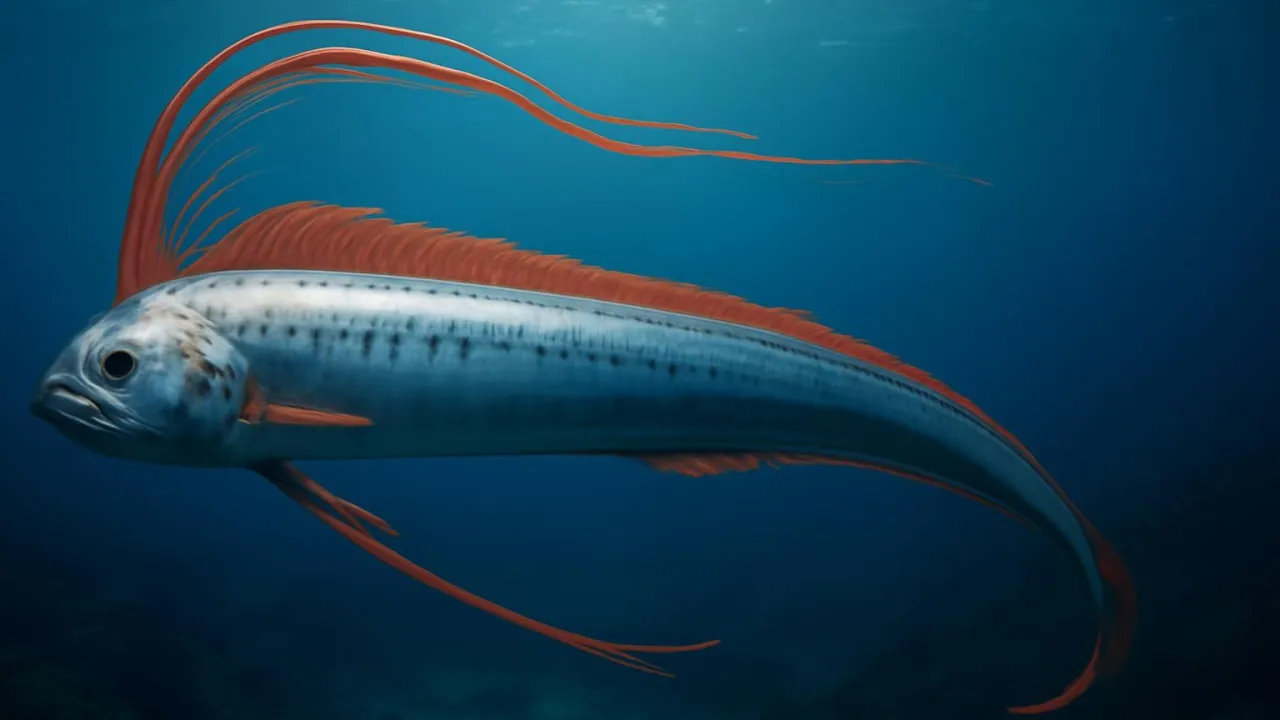
Oarfish are the longest bony fish in the world, reaching lengths longer than a school bus.
✨ Word Sparks (Grade 2 Glossary)
Tap 🔊 to hear
ribbon
A long, flat strip that looks like cloth
plankton
Tiny animals and plants that float in water
temperate
A climate that is not too hot or cold
🪝
Have you ever heard of a fish as long as a big school bus?
1
Oarfish Size and Shape
Oarfish can grow very long, up to thirty-six feet in length. Their bodies are flat and look like . They swim by waving their long, thin bodies through the water.
2
Where Oarfish Live
Oarfish live deep in oceans all around the world. They prefer warm and waters far below the surface. They are rarely seen near the shore or shallow areas.
3
What Oarfish Eat
Oarfish eat small fish and tiny floating in the water. They use their mouths to catch these tiny animals. Their diet helps them stay alive in deep ocean waters.
Oarfish can swim vertically like a waving ribbon, a unique way to move in deep water.
✨ Word Sparks (Grade 3 Glossary)
Tap 🔊 to hear
camouflage
To blend in with surroundings to hide
predator
An animal that hunts other animals
plankton
Tiny animals or plants that float in water
🪝
Did you know the oarfish is the longest bony fish in the ocean?
1
Amazing Size and Shape
Oarfish can grow up to thirty-six feet long, making them the longest bony fish. Their bodies are flat and ribbon-like, which helps them swim smoothly. This shape allows them to move up and down in the water easily. Their bright red dorsal fin runs along their back like a comb.
2
Deep Ocean Habitat
Oarfish live in deep ocean waters, often below one thousand feet. They prefer temperate and tropical regions worldwide. Their deep habitat helps protect them from many . They are rarely seen near the surface except when sick or dying.
3
Diet and Feeding
Oarfish eat small fish, squid, and by filtering water through their mouths. This feeding method helps them catch tiny prey in the dark ocean. Their long bodies help them swim slowly while searching for food. They use their sharp teeth to capture small animals.
4
Survival Adaptations
The oarfish’s ribbon-like body helps it in deep water by blending with sunlight rays. Its vertical swimming helps it avoid below. The bright red fin may scare or confuse predators. These adaptations increase its chances of survival in the ocean.
Oarfish are rarely seen alive because they live deep in the ocean, but they can grow longer than a bus.
✨ Word Sparks (Grade 4 Glossary)
Tap 🔊 to hear
ecosystem
A community of plants and animals living together
camouflage
To blend in with surroundings to hide
predator
An animal that hunts other animals
🪝
How does the oarfish’s long, ribbon-like body help it survive in the deep ocean?
1
Body Shape and Movement
The oarfish’s long, flat body allows it to swim gracefully in deep ocean currents. Its ribbon-like shape helps it move vertically, which is rare among fish. This vertical swimming helps the oarfish blend with sunlight filtering down through the water. As a result, it can avoid by camouflaging itself effectively.
2
Role in the Ocean Ecosystem
Oarfish play an important role as both and prey in deep-sea food webs. They feed on plankton, small fish, and squid, helping control these populations. Meanwhile, larger predators like sharks may hunt oarfish. Their presence contributes to the balance of the deep ocean .
3
Habitat and Distribution
Oarfish are found worldwide in temperate and tropical oceans, usually at depths between 500 and 3,000 feet. They prefer open water far from shorelines and coral reefs. Occasionally, they come near the surface when sick or dying, which is when humans sometimes spot them.
4
Human Impact and Conservation
Because oarfish live deep underwater, they are rarely caught by fishing nets or affected by pollution. However, ocean changes like warming waters could impact their habitat. Scientists study oarfish to learn more about deep-sea environments and how to protect them.
1. Why does the oarfish swim vertically in the ocean?
2. What role does the oarfish play in the ocean?
🤯 Mind-Blowing Fact • Grade 5
Oarfish can grow up to thirty-six feet, making them the longest bony fish alive today.
✨ Word Sparks (Grade 5 Glossary)
Tap 🔊 to hear
mesopelagic
The ocean zone from 500 to 1,000 meters deep
laterally compressed
Flattened from side to side
filter feeding
Eating by straining tiny food from water
🪝
What makes the oarfish the longest bony fish, and how does it survive deep in the ocean?
1
Scientific Classification and Size
The oarfish, scientifically named Regalecus glesne, belongs to the family Regalecidae. It is the longest bony fish known, reaching lengths up to thirty-six feet or eleven meters. This extraordinary length surpasses most other fish species in the ocean. Its elongated, ribbon-like body is uniquely adapted for life in deep waters.
2
Physiological Adaptations and Movement
Oarfish possess a body with a dorsal fin running the entire length of their back. This fin undulates to propel them vertically through the water column, a rare swimming style among fish. Their bodies contain specialized muscles that allow slow, graceful movements suited to deep ocean currents. Their red dorsal fin may serve as a warning or camouflage in dim light.
3
Habitat, Behavior, and Feeding
Oarfish inhabit to bathypelagic zones, typically between five hundred and three thousand feet deep. They feed on zooplankton, small fish, and squid by or suction. Their slow swimming conserves energy in the nutrient-sparse deep ocean. Occasionally, oarfish surface when ill or dying, which is when humans sometimes observe them.
4
Conservation Status and Human Interaction
Due to their deep-sea habitat, oarfish are rarely impacted by commercial fishing or pollution. However, climate change and ocean warming could alter their habitat and prey availability. Scientific study of oarfish provides insights into deep ocean ecosystems and biodiversity. Conservation efforts focus on protecting deep-sea environments to preserve species like the oarfish.
5
Comparative Facts and Mind-Blowing Numbers
Oarfish can be three times longer than a great white shark and longer than a typical school bus. They weigh up to one hundred pounds despite their length. Their vertical swimming speed is slow, around one mile per hour, which suits their energy-saving lifestyle. These facts highlight their unique place among ocean giants.