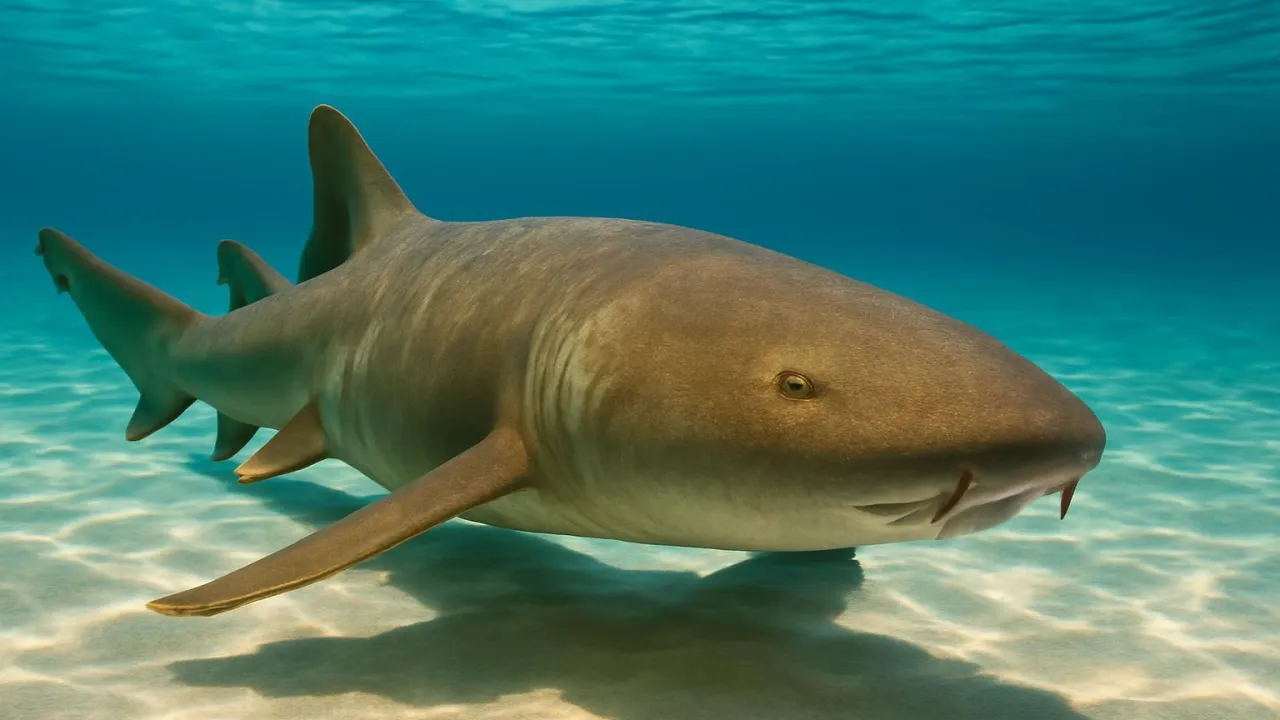
Nurse sharks can rest quietly for hours without moving or swimming!
✨ Word Sparks (Grade 2 Glossary)
Tap 🔊 to hear
suction
Pulling something in by sucking.
mollusk
Soft animals with shells like clams.
coral reef
Colorful ocean homes made by tiny animals.
🪝
Have you ever seen a shark that sleeps on the ocean floor at night?
1
Where Nurse Sharks Live
Nurse sharks live in warm, shallow waters near and rocky areas. They like to hide during the day and come out at night. These sharks are found in the Atlantic Ocean and Caribbean Sea.
2
What Nurse Sharks Eat
They eat small fish, crabs, and . Nurse sharks use strong to pull prey into their mouths. They hunt mostly at night when it is dark and quiet in the ocean.
3
Nurse Shark Features
Nurse sharks have smooth, brown skin and small whiskers near their mouths. They can grow up to ten feet long. Their whiskers help them find food hidden in the sand.
Nurse sharks can breathe while resting still by using special holes called spiracles!
✨ Word Sparks (Grade 3 Glossary)
Tap 🔊 to hear
camouflage
Colors that help hide from others.
barbels
Whisker-like feelers near the mouth.
spiracles
Small holes sharks use to breathe.
🪝
Did you know nurse sharks use suction to catch prey hidden in the sand?
1
Nurse Shark Habitat
Nurse sharks live in warm, shallow waters near coral reefs and rocky bottoms. These habitats provide shelter and food for them. They often rest on the ocean floor during the day. This behavior helps them avoid predators.
2
Hunting and Diet
Nurse sharks are nocturnal predators that hunt at night. They feed on small fish, crustaceans, and mollusks. Their strong suction helps pull prey from crevices or sand. This adaptation allows them to reach food other sharks cannot.
3
Physical Adaptations
Nurse sharks have smooth brown skin that helps them on the ocean floor. Their , or whisker-like organs near the mouth, detect prey hidden in sand. These adaptations improve their chances of successful feeding. Their large size also helps protect them from predators.
4
Behavior and Movement
Unlike many sharks, nurse sharks can rest motionless for long periods. They use to breathe while resting on the sea floor. This unique behavior conserves energy and helps them survive. They swim slowly and quietly when hunting.
1. What helps nurse sharks catch prey hidden in the sand?
2. How do nurse sharks breathe while resting on the ocean floor?
🤯 Mind-Blowing Fact • Grade 4
Nurse sharks contribute to ocean health by controlling populations of small animals on reefs.
✨ Word Sparks (Grade 4 Glossary)
Tap 🔊 to hear
nocturnal
Active at night instead of day.
ecosystem
All living things in one place.
conservation
Protecting animals and their homes.
🪝
How does the nurse shark’s slow movement help it survive in ocean ecosystems?
1
Habitat and Distribution
Nurse sharks inhabit warm, shallow waters along the Atlantic coast and Caribbean Sea, often near coral reefs or rocky bottoms where they find shelter. Their presence supports the health of these by controlling populations of crustaceans and mollusks. Because they prefer shallow waters, they are commonly found near shorelines and islands. Human activities like fishing and habitat destruction can impact their populations.
2
Ecological Role and Behavior
Nurse sharks are predators that hunt small fish and invertebrates at night, which helps maintain balance in the food web. Their slow, deliberate movements reduce energy use and avoid alerting prey. They also rest motionless for hours during the day, using spiracles to breathe without swimming. This behavior conserves energy and allows them to survive in environments with limited food.
3
Physical Adaptations for Survival
Their brown, smooth skin provides excellent camouflage against sandy and rocky ocean floors, protecting them from predators and helping them ambush prey. Barbels near their mouths detect prey hidden in sediment, improving hunting success. Their strong suction ability allows them to extract food from tight spaces, which is a unique adaptation among sharks. These features help nurse sharks thrive in competitive marine environments.
4
Human Impact and Conservation
Although nurse sharks are not currently endangered, overfishing and habitat loss threaten some local populations. They are sometimes caught accidentally in fishing nets, which can harm their numbers. efforts focus on protecting habitats and regulating fishing to ensure nurse sharks remain a healthy part of marine . Educating people about their important role can help reduce fear and promote coexistence.
Nurse sharks can breathe through spiracles while resting motionless for hours on the ocean floor.
✨ Word Sparks (Grade 5 Glossary)
Tap 🔊 to hear
benthic
Living on or near the ocean floor.
spiracles
Small holes sharks use to breathe underwater.
taxonomy
How scientists group living things.
🪝
What unique adaptations allow nurse sharks to thrive in warm, shallow marine environments?
1
Taxonomy and Scientific Classification
The nurse shark, scientifically named Ginglymostoma cirratum, belongs to the family Ginglymostomatidae, which includes several species of bottom-dwelling sharks. It is classified within the order Orectolobiformes, commonly known as carpet sharks due to their patterned skin. This taxonomic group is characterized by nocturnal habits and lifestyles, meaning they live near or on the ocean floor. Understanding this classification helps scientists study their evolutionary relationships.
2
Physiological Adaptations and Mechanics
Nurse sharks possess specialized behind their eyes that allow them to breathe while resting motionless on the sea floor, an adaptation uncommon among many shark species. Their barbels serve as sensory organs to detect prey buried in sediment, enhancing their hunting efficiency. The strong suction generated by their oral cavity enables extraction of crustaceans and mollusks from narrow crevices. Their slow metabolism suits their nocturnal and sedentary lifestyle, conserving energy effectively.
3
Ecological Role and Conservation Status
As nocturnal predators, nurse sharks regulate populations of small fish and invertebrates, maintaining balance in coral reef ecosystems. Although currently listed as Least Concern by conservation organizations, localized threats such as overfishing and habitat degradation pose risks. Conservation measures include habitat protection, fishing regulations, and public education to reduce human fear and promote coexistence. Their ecological role highlights the importance of preserving marine biodiversity.
4
Botanical and Culinary Confusions Clarified
Unlike some marine species that are often confused with plants or fruits, nurse sharks are strictly animals with no botanical classification. However, their name might confuse some because 'nurse' suggests care, but it actually refers to their calm behavior. Understanding these distinctions helps clarify biological classifications and reduces misconceptions in marine biology education.
5
Quantitative Comparisons and Interesting Measurements
Adult nurse sharks can grow up to 10 feet (3 meters) in length and weigh approximately 330 pounds (150 kilograms). They swim at slow speeds, typically around 1 mile per hour (1.6 kilometers per hour), which suits their energy-saving hunting style. Their habitat temperature ranges from 72 to 82 degrees Fahrenheit (22 to 28 degrees Celsius), favoring warm tropical waters. These measurements provide concrete data for understanding their biology and environmental preferences.