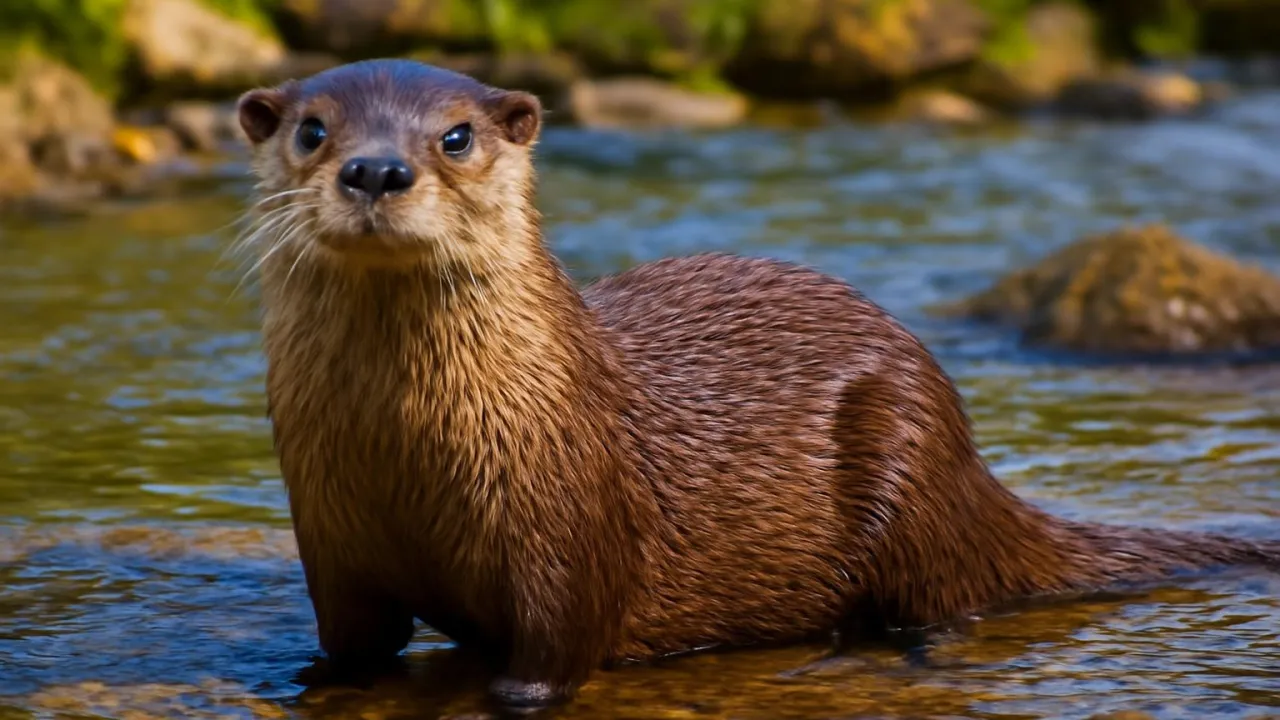
River otters can stay underwater for up to eight minutes while hunting.
✨ Word Sparks (Grade 2 Glossary)
Tap 🔊 to hear
freshwater
Water from rivers or lakes, not salty.
webbed
Skin between toes that helps swimming.
den
A cozy home where otters live.
🪝
Have you ever seen an otter slide and swim so fast in water?
1
Otters’ Homes and Water
North American river otters live near rivers and lakes. They build close to water edges. These homes protect them from cold and predators.
2
Otters’ Food and Hunting
Otters eat fish, frogs, and crayfish for energy. They use their sharp teeth and quick paws to catch food. Hunting underwater helps them find tasty meals.
3
Otters’ Special Swimming Skill
Otters have sleek bodies and feet for fast swimming. Their long tails help steer underwater. These features let otters move quickly and catch prey easily.
River otters can close their ears and nostrils underwater to keep water out while swimming.
✨ Word Sparks (Grade 3 Glossary)
Tap 🔊 to hear
adaptation
A body change that helps animals survive.
ecosystem
A place where plants and animals live together.
carnivore
An animal that eats meat or fish.
🪝
Did you know river otters use their bodies like torpedoes to swim fast underwater?
1
River Otter Habitat
North American river otters live in freshwater wetlands, lakes, and rivers. These habitats provide clean water and abundant food. Otters rely on healthy to survive. Pollution can harm their homes and food supply.
2
Otter Adaptations for Swimming
Otters have webbed feet and sleek fur that helps reduce water resistance. Their long, muscular tails act like rudders for steering underwater. These allow otters to swim quickly and catch prey. Their dense fur also keeps them warm in cold water.
3
Diet and Hunting Techniques
River otters are that eat fish, amphibians, and crustaceans like crayfish. They use sharp teeth and sensitive whiskers to find prey underwater. Otters hunt by diving and chasing prey with agility. Their ability to hold breath underwater helps them stay submerged longer.
4
Role in the Ecosystem
Otters help control fish and amphibian populations, keeping balanced. They are prey for larger predators like eagles and coyotes. Otters also clean waterways by eating dead animals. Their presence indicates healthy freshwater habitats.
River otters can swim up to 7 miles per hour, using their powerful tails for propulsion.
✨ Word Sparks (Grade 4 Glossary)
Tap 🔊 to hear
pollution
Dirty or harmful stuff in water or air.
predator
An animal that hunts other animals for food.
conservation
Protecting plants and animals and their homes.
🪝
How do North American river otters help keep rivers healthy and full of life?
1
Habitat and Geographic Range
North American river otters inhabit freshwater rivers, lakes, and wetlands across much of the United States and Canada. Their presence depends on clean water and abundant prey populations, which are affected by human activities. and habitat loss reduce suitable living areas, forcing otters to move or decline in numbers.
2
Physical Adaptations for Survival
River otters possess dense, water-repellent fur and webbed feet that enable efficient swimming and insulation. Their streamlined bodies reduce drag, while their long tails provide balance and steering underwater. These adaptations allow otters to hunt agile prey and escape effectively within aquatic environments.
3
Ecological Role and Food Web
As carnivorous , river otters regulate fish and amphibian populations, maintaining ecological balance in freshwater systems. They are both predator and prey, feeding on smaller aquatic animals while serving as food for larger predators such as eagles and bobcats. Their scavenging habits also help keep waterways clean by removing dead animals.
4
Human Impact and Conservation
efforts focus on protecting freshwater habitats and reducing water to support river otter populations. Legal protections and habitat restoration have helped stabilize some populations, but ongoing threats from habitat fragmentation and pollution remain. Educating the public about otters’ ecological importance encourages conservation support.
2. Why is protecting clean water important for otters?
🤯 Mind-Blowing Fact • Grade 5
River otters can hold their breath underwater for eight minutes and swim up to seven miles per hour.
✨ Word Sparks (Grade 5 Glossary)
Tap 🔊 to hear
Mustelidae
The animal family that includes otters and weasels.
apex predator
The top hunter in an ecosystem with no enemies.
habitat fragmentation
When animal homes get broken into smaller pieces.
🪝
What unique traits make the North American river otter a master of freshwater habitats?
1
Scientific Classification and Range
The North American river otter, scientifically named Lontra canadensis, belongs to the family. It inhabits freshwater ecosystems across Canada, the United States, and parts of northern Mexico. Its distribution depends heavily on clean, unpolluted water bodies rich in prey species. These habitats support the otter’s survival and reproduction.
2
Physiological Adaptations for Aquatic Life
River otters exhibit several physiological traits such as dense, water-repellent fur and webbed feet that enhance swimming efficiency. Their muscular, streamlined bodies reduce drag, while their long, tapered tails provide precise underwater steering and propulsion. Additionally, otters can close their nostrils and ears to prevent water entry during dives, allowing longer underwater hunting.
3
Ecological Importance and Conservation Status
As in freshwater food webs, river otters regulate fish and amphibian populations, supporting ecosystem stability. Conservation efforts including habitat protection and pollution control have improved their numbers, but ongoing threats like and chemical pollutants continue to challenge populations. Maintaining water quality is vital for their continued survival.
4
Behavioral Traits and Hunting Strategies
River otters are highly social and playful animals that communicate through vocalizations and scent markings. They hunt by diving and chasing agile prey such as fish and crayfish, using sensitive whiskers to detect movements underwater. Their ability to hold breath for up to eight minutes allows extended underwater foraging and efficient hunting in deep waters.
5
Quantitative Comparisons and Physical Measures
Adult river otters range from 2 to 3.9 feet in length and weigh between 10 to 30 pounds. They can swim at speeds up to 7 miles per hour and dive to depths of 60 feet. Their fur insulates them in water temperatures as low as 32 degrees Fahrenheit, enabling survival in cold climates. These physical traits make them remarkable freshwater mammals.