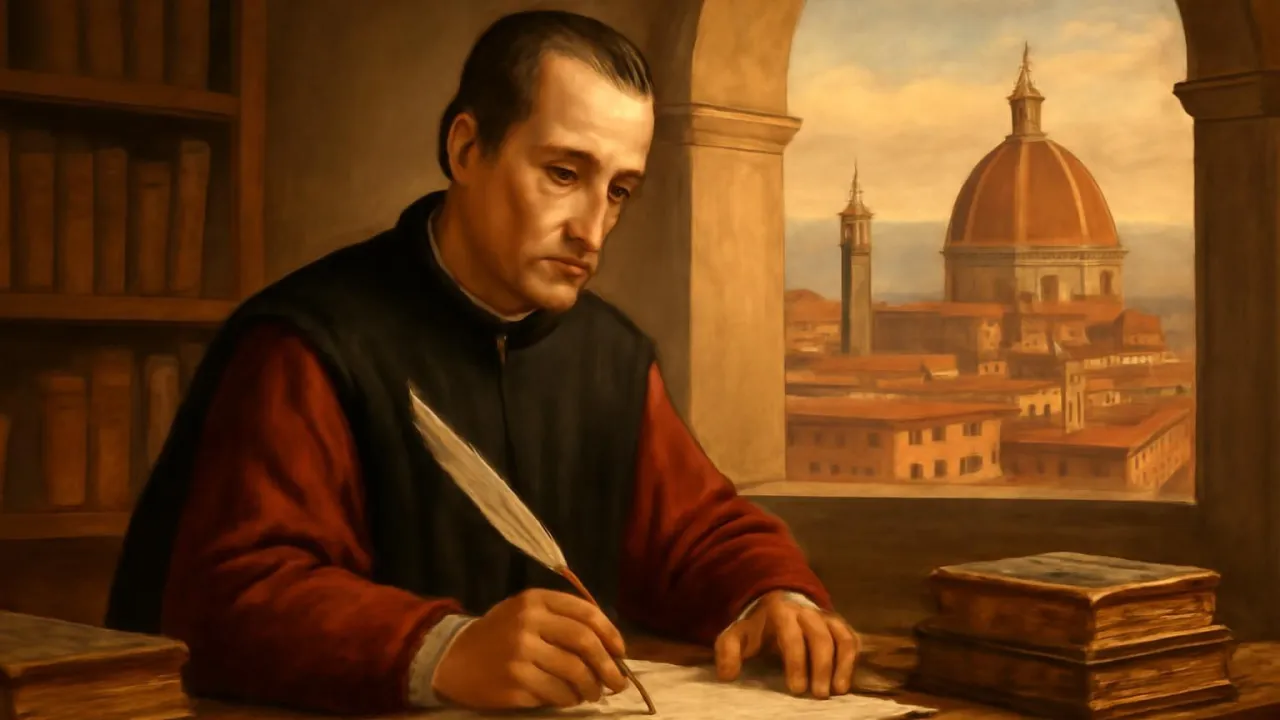
Have you ever wondered what makes a leader good or fair?
1
Curious in the City
Niccolò grew up in , where people talked about ideas every day. He listened to stories about rulers and cities. He always wondered how leaders could help people best.
2
Writing Big Thoughts
He worked very hard to write his ideas down. Niccolò used a and ink to make a book. He wanted everyone to think about what makes a leader strong and wise.
3
A Book for the World
His book, 'The Prince,' became famous for its smart . Many people still read it to learn about leadership. Niccolò hoped his words would help cities and leaders everywhere.
Niccolò’s book was once banned, but now it’s studied in schools around the world!
✨ Word Sparks (Grade 3 Glossary)
Tap 🔊 to hear
debate
A talk where people share different ideas
strategy
A smart plan to reach a goal
legacy
Something important left for others
🪝
Imagine you could give advice to a king—what would you say?
1
A City Full of Questions
Florence was full of art, music, and when Niccolò was a boy. He listened to adults talk about how cities should be run. These conversations made him curious about power and fairness.
2
Learning from Leaders
Niccolò worked for the city government and watched rulers make decisions. He saw that being a leader was hard and sometimes confusing. He wondered if there were rules for good leadership.
3
The Prince and Its Ideas
He wrote 'The Prince,' a book about how rulers should act. He used words like 'power,' ',' and 'responsibility' to explain his ideas. The book became famous for its honest advice.
4
A Legacy That Lasts
People still read Niccolò’s book to learn about government and leadership. His ideas changed how people think about power and fairness. He showed that asking questions can help make better leaders.
Machiavelli’s name inspired the word 'Machiavellian,' meaning clever or tricky in politics!
✨ Word Sparks (Grade 4 Glossary)
Tap 🔊 to hear
diplomat
A person who works with leaders in other countries
virtù
Skill and strength in leadership
responsibility
Doing what you should for others
🪝
If you could design the perfect leader, what qualities would you choose?
1
Florence: The Heart of the Renaissance
Niccolò Machiavelli grew up in Florence, a city bursting with creativity, debate, and discovery during the Renaissance. He listened to artists, scientists, and politicians discuss how to make their city strong and fair. This lively environment inspired him to think deeply about leadership and power. He became fascinated with how decisions could shape the lives of many people.
2
A Life of Observation and Service
Machiavelli worked as a , traveling to meet kings and rulers across Europe. He watched how leaders made choices and how their actions affected their people. Sometimes, he saw rulers use clever strategies to solve big problems. These experiences taught him that being a leader was complicated and required both wisdom and courage.
3
Writing 'The Prince'
After losing his government job, Machiavelli wrote 'The Prince' to share his ideas about power. He used real stories from history to explain what makes a ruler successful or unsuccessful. His book introduced words like '' (skill and strength) and 'fortuna' (luck) to talk about leadership. Some people thought his advice was too honest, but others admired his clear thinking.
4
A Lasting Influence on the World
Today, Machiavelli’s writings are studied in schools and universities around the world. His ideas changed how people understand politics, government, and . Leaders still debate whether it is better to be loved or feared, a question he made famous. Machiavelli’s curiosity and courage to ask tough questions continue to inspire thinkers everywhere.
Machiavelli’s 'The Prince' has been translated into over thirty languages and studied worldwide for centuries.
✨ Word Sparks (Grade 5 Glossary)
Tap 🔊 to hear
philosophy
The study of big questions about life and ideas
ethics
Thinking about what is right and fair
adaptability
Being able to change when needed
🪝
What if you could write a guidebook that shaped how leaders rule for centuries?
1
Florence’s Buzzing Streets and Big Questions
In the lively city of Florence during the Renaissance, Niccolò Machiavelli grew up surrounded by artists, merchants, and thinkers debating how to build a better society. As a young boy, he listened carefully to conversations about government, fairness, and power, which sparked his lifelong curiosity. The city’s constant political changes made him wonder how leaders could keep their people safe and prosperous. This environment inspired him to study the real challenges that rulers faced every day. Machiavelli’s early fascination with civic life set the stage for his groundbreaking ideas.
2
Diplomat, Observer, and Student of Power
Machiavelli began working for the Florentine government, where he served as a diplomat and advisor for fourteen years. He traveled to courts across Europe, meeting kings, popes, and generals, and observed their strategies and mistakes. These experiences taught him that leadership required more than just good intentions; it demanded , courage, and sometimes, tough decisions. He noticed that rulers who balanced clever strategies with responsibility often protected their cities best. Machiavelli’s careful observations helped him develop a new way of thinking about politics and power.
3
The Prince: A Guidebook for Rulers
After losing his government position, Machiavelli wrote 'The Prince' in 1513, hoping to win back political favor. In this famous book, he argued that leaders should be practical and realistic, using both virtù (skill and strength) and fortuna (luck) to succeed. Machiavelli used real examples from history to show that sometimes, rulers needed to make difficult choices to protect their people. His honest advice—like whether it is better to be loved or feared—made the book controversial, but also deeply influential. 'The Prince' remains one of the most widely studied works in political .
4
Legacy and Lasting Impact
Machiavelli’s ideas changed how people think about leadership, politics, and responsibility. The term 'Machiavellian' was coined to describe cunning or strategic actions in politics, though his real message was more complex. Today, scholars and leaders still debate his questions about power and . His writings have influenced presidents, generals, and thinkers for over five hundred years. Machiavelli’s willingness to ask hard questions made him a trailblazer in political thought.
5
Inspiration for Future Leaders
By studying real leaders and sharing his honest observations, Machiavelli showed the world that understanding power can help create better societies. He believed that leaders should be wise, adaptable, and always ready to learn from history. His books encourage readers to think critically about fairness, responsibility, and the true meaning of leadership. Niccolò Machiavelli’s legacy reminds us that asking questions and seeking the truth can shape the future. His work continues to inspire anyone who dreams of making a difference in the world.