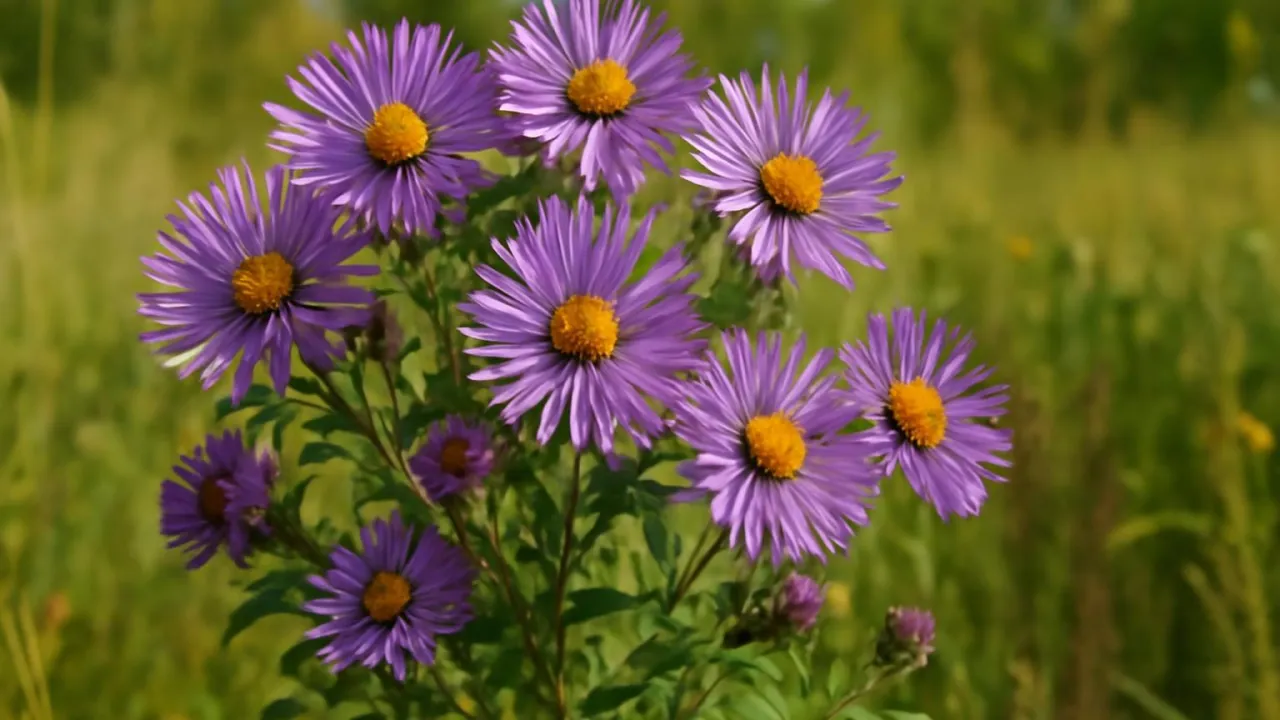
New England Asters bloom late to provide food for pollinators when other flowers are gone!
✨ Word Sparks (Grade 2 Glossary)
Tap 🔊 to hear
nectar
Sweet juice inside flowers that insects drink
pollinators
Animals like bees that help flowers make seeds
frost
Ice that forms on plants when it gets cold
🪝
Have you seen flowers that bloom when most plants stop growing?
1
Colorful Purple Blooms
New England Asters have many purple petals that look like small stars. They bloom late in the year. Bees and butterflies often visit these flowers for .
2
Where They Grow
These asters grow in eastern North America in meadows and along roadsides. They prefer full sun and moist soil. Their tall stems can reach up to six feet high.
3
Special Flower Features
The flowers have yellow centers surrounded by purple petals. This bright color helps find them easily. They bloom from late summer until the first .
2. What helps pollinators find New England Asters?
🤯 Mind-Blowing Fact • Grade 3
New England Asters bloom late to feed pollinators preparing for winter rest!
✨ Word Sparks (Grade 3 Glossary)
Tap 🔊 to hear
pollination
When pollen moves to help plants make seeds
adaptation
A change that helps a plant survive better
camouflage
When something blends in with its surroundings
🪝
Why do New England Asters bloom when many other flowers have stopped?
1
Late Blooming Adaptation
New England Asters bloom late in the growing season to attract pollinators when few flowers remain. This helps ensure successful . Their bright purple petals and yellow centers stand out in autumn fields.
2
Pollination and Survival
Pollinators like bees and butterflies visit these asters to collect nectar and pollen. The flower’s color and scent help attract these important animals. Without , the plants cannot produce seeds to grow new asters.
3
Habitat and Growth
These asters grow in eastern North America’s meadows and along roadsides. They prefer full sun and moist, well-drained soil. Their tall stems, reaching up to six feet, help them compete for sunlight.
4
Camouflage and Protection
The green leaves help the plant blend with surrounding grasses, protecting it from some predators. The plant’s structure also supports strong stems to resist wind damage. These features improve its chances of survival in open habitats.
1. Why do New England Asters bloom late in the year?
2. How do green leaves help New England Asters?
🤯 Mind-Blowing Fact • Grade 4
New England Asters support pollinators late in the year, helping ecosystems survive winter.
✨ Word Sparks (Grade 4 Glossary)
Tap 🔊 to hear
ecosystem
A community of plants and animals living together
biodiversity
Many different kinds of living things in one place
herbivores
Animals that eat plants
🪝
How does the New England Aster’s late blooming affect its ecosystem?
1
Role in the Food Web
New England Asters bloom in late summer and fall, providing crucial nectar for pollinators preparing for winter. This late food source supports bees, butterflies, and other insects, which in turn feed birds and small mammals. Without these asters, many pollinators could struggle to survive the colder months. Their presence helps maintain a balanced during seasonal changes.
2
Geographic Distribution and Habitat
Native to eastern North America, these asters thrive in meadows, roadsides, and open fields with full sun and moist soil. Human activities like farming and road construction can both destroy and create new habitats for these flowers, influencing their distribution. Conservation efforts aim to protect these natural habitats to support native plant populations.
3
Physical Adaptations for Survival
The tall stems of New England Asters allow them to reach sunlight above grasses and shrubs, while their bright purple petals and yellow centers attract pollinators efficiently. Their leaves’ green color provides camouflage, reducing damage from . These adaptations help them survive in competitive environments where sunlight and pollinators are limited.
4
Human Impact and Conservation
Though common, New England Asters benefit from conservation efforts that protect natural meadows and roadside habitats. Planting asters in gardens helps support pollinators and maintains . Increased awareness of their ecological role encourages humans to preserve these valuable native flowers and their important habitats.
1. Why are New England Asters important in the food web?
2. How do human activities affect New England Asters?
🤯 Mind-Blowing Fact • Grade 5
New England Asters bloom late due to hormonal signals triggered by day length and temperature changes.
✨ Word Sparks (Grade 5 Glossary)
Tap 🔊 to hear
taxonomy
The science of naming and grouping living things
florets
Small flowers that make up a big flower head
pollinator
An animal that helps plants make seeds by moving pollen
🪝
What makes the New England Aster a key species in late-season ecosystems?
1
Scientific Classification and Taxonomy
The New England Aster, scientifically named Symphyotrichum novae-angliae, belongs to the Asteraceae family, which includes daisies and sunflowers. This taxonomic group is known for composite flower heads made of many small . Understanding its classification helps scientists study its evolutionary relationships and ecological roles.
2
Physiological Mechanics of Blooming
New England Asters initiate flowering in late summer through complex hormonal signals triggered by day length and temperature changes. Their tall, sturdy stems support numerous flower heads that maximize visits. The bright purple ray and yellow disk florets work together to attract diverse pollinators efficiently.
3
Ecological Role and Conservation History
These asters provide essential nectar and pollen during late-season when other floral resources are scarce, supporting populations vital for ecosystem health. Conservation efforts focus on protecting native meadows and roadside habitats, as urbanization and agriculture reduce available natural areas. Garden cultivation also aids in preserving genetic diversity.
4
Quantitative Comparisons and Growth
New England Asters typically grow between 2 and 6 feet tall (0.6 to 1.8 meters), with flower heads about 1 to 2 inches (2.5 to 5 cm) wide. They thrive in temperatures ranging from 60°F to 85°F (15°C to 29°C) and require well-drained soil with consistent moisture. Their blooming period can last up to two months, longer than many other native flowers.
5
Human Interactions and Future Outlook
Humans benefit from New England Asters through their support of critical for agriculture and natural ecosystems. Increasing awareness about native plant gardening promotes their use in urban and suburban landscapes. Future research aims to understand climate change impacts on their blooming cycles and pollinator interactions to ensure continued ecological balance.