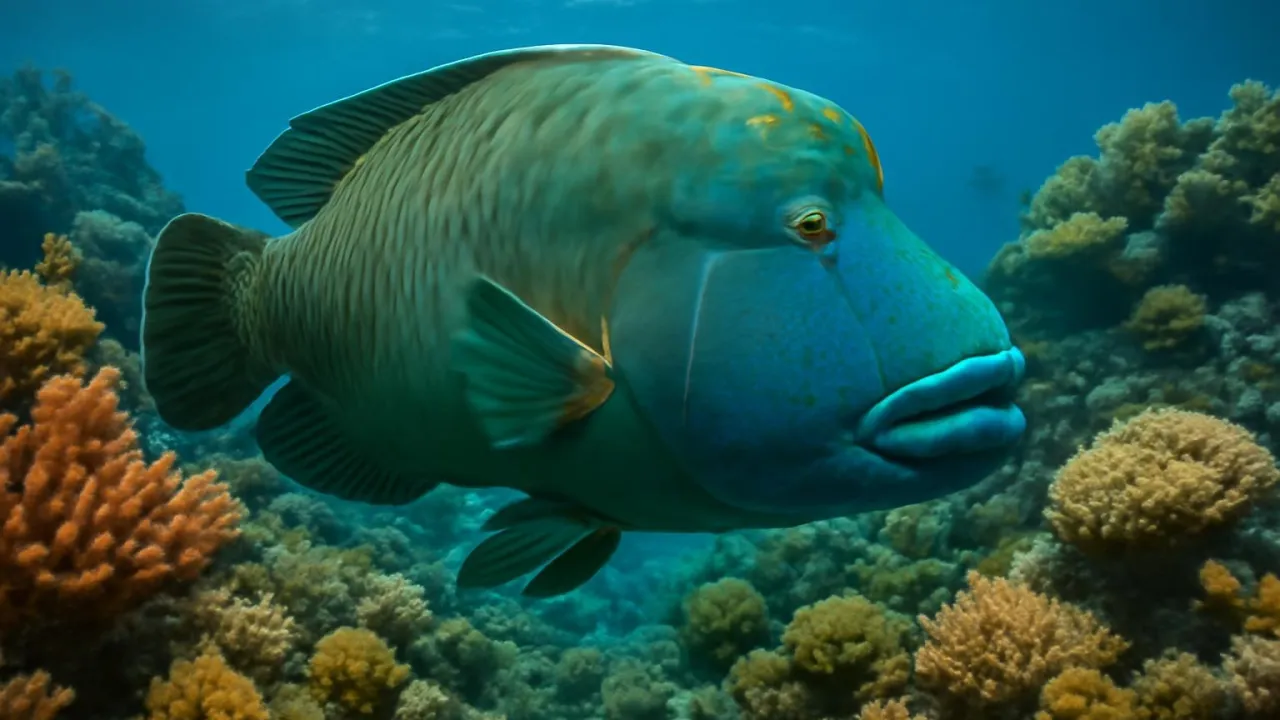
Napoleon Wrasse can change sex from female to male during its life!
✨ Word Sparks (Grade 2 Glossary)
Tap 🔊 to hear
scales
Small plates that cover a fish's body
crush
To press hard and break into pieces
reef
A home under the sea made of coral
🪝
Can you imagine a fish changing from girl to boy as it grows?
1
Bright Colors and Big Size
The Napoleon Wrasse swims slowly near coral with bright green and blue . It can grow as long as a tall person and shines underwater. These colors help it hide among the coral and stay safe.
2
Strong Lips for Crunching Food
It eats crabs, shellfish, and small fish by crushing their hard shells with strong lips. This fish uses its mouth like a tool to get food inside the shells. It likes to eat animals that live in coral .
3
Changing Sex to Survive
The Napoleon Wrasse starts life as a female fish and later changes to a male. This change helps it find mates and keep the fish group healthy. It lives in warm ocean water near coral .
Napoleon Wrasse can live for over 30 years in coral reefs.
✨ Word Sparks (Grade 3 Glossary)
Tap 🔊 to hear
camouflage
Colors that help hide in surroundings
hermaphroditism
Changing sex during life to survive
crustaceans
Sea animals with hard shells like crabs
🪝
Did you know the Napoleon Wrasse can change its sex to survive better?
1
A Giant Fish of Coral Reefs
The Napoleon Wrasse lives in coral reefs across the Indo-Pacific region. It is one of the largest reef fish, growing up to six feet long. Its bright green and blue scales help it blend into the colorful coral. This protects it from predators.
2
Strong Jaws for Crushing Shells
This fish has strong jaws and thick lips to crush hard shells of crabs and mollusks. Its diet includes shellfish, , and small fish found near the reef. The ability to eat tough prey gives it an advantage in its habitat.
3
Sex Change for Survival
Napoleon Wrasse start life as females and can later change to males, a process called sequential . This adaptation helps maintain population balance and improves breeding success. It usually changes sex when it grows larger and stronger.
4
Helping Coral Reefs Stay Healthy
By eating shellfish that can harm coral, the Napoleon Wrasse protects reef health. It is part of a food web that supports many ocean animals. Healthy reefs depend on fish like the Napoleon Wrasse to keep balance.
Napoleon Wrasse’s sex change helps maintain healthy reef populations and social balance.
✨ Word Sparks (Grade 4 Glossary)
Tap 🔊 to hear
predation
When one animal eats another for food
mollusks
Soft-bodied sea animals with shells
hermaphroditism
Changing sex during life for survival
🪝
How does the Napoleon Wrasse’s sex change impact coral reef ecosystems?
1
Large Fish in Coral Reefs
The Napoleon Wrasse inhabits coral reefs throughout the Indo-Pacific, ranging from East Africa to the Pacific Islands. Growing up to six feet long, this fish’s bright green and blue scales provide excellent camouflage among the reef’s colorful corals. This adaptation reduces its risk of and helps it ambush prey effectively.
2
Diet and Ecological Role
It feeds mainly on hard-shelled animals like crustaceans and , using powerful jaws to crush their shells. By controlling populations of these shellfish, the Napoleon Wrasse helps maintain coral reef health and balance. Its role as a predator is essential in preventing overgrowth of species that could damage the reef.
3
Sequential Hermaphroditism and Social Structure
This species exhibits sequential , where individuals start as females and later change to males, often triggered by social cues or size dominance. This sex change ensures reproductive success and maintains stable population dynamics within reef communities. Larger males defend territories and attract multiple females.
4
Conservation and Human Impact
Napoleon Wrasse populations face threats from overfishing and habitat loss due to coral reef degradation. Because of their slow growth and late maturity, they are vulnerable to population declines. Conservation efforts include marine protected areas and fishing regulations to preserve this important reef species.
1. What role does the Napoleon Wrasse play in coral reefs?
2. Why is the Napoleon Wrasse vulnerable to overfishing?
🤯 Mind-Blowing Fact • Grade 5
Napoleon Wrasse can weigh up to 400 pounds and live more than 30 years in coral reefs.
✨ Word Sparks (Grade 5 Glossary)
Tap 🔊 to hear
pharyngeal teeth
Teeth in throat used to crush hard food
keystone predator
Important hunter that keeps ecosystem balanced
IUCN Red List
List showing animals that are endangered
🪝
What makes the Napoleon Wrasse a unique species in fish taxonomy and reef ecology?
1
Taxonomy and Scientific Classification
The Napoleon Wrasse, scientifically named Cheilinus undulatus, belongs to the family Labridae, known for vibrant reef fishes. It is one of the largest members of this family, characterized by its distinctive hump on the forehead and thick lips. This species is distributed widely across Indo-Pacific coral reefs, spanning from the Red Sea to the Great Barrier Reef.
2
Physiological Adaptations and Mechanics
Its powerful jaw muscles and allow it to crush hard-shelled prey such as crustaceans and mollusks efficiently. The fish exhibits sequential hermaphroditism, beginning life as female and later transitioning to male, regulated by hormonal changes triggered by social environment and size dominance. Its large size and coloration provide camouflage and deter predators.
3
Conservation Status and Human Impact
Due to overfishing and habitat destruction, the Napoleon Wrasse is listed as endangered on the . Its slow growth rate, late sexual maturity, and low reproductive rate make population recovery difficult. Conservation measures include marine protected areas, fishing restrictions, and international trade controls under CITES to prevent exploitation.
4
Ecological Role and Reef Ecosystem Dynamics
As a , the Napoleon Wrasse regulates populations of invertebrates that could otherwise damage coral reefs. This predation maintains biodiversity and reef resilience. Its sex change mechanism supports stable social hierarchies and reproductive success, which are critical for sustaining healthy reef fish populations.
5
Quantitative Comparisons and Interesting Metrics
Napoleon Wrasse can reach lengths up to 6 feet (2 meters) and weigh as much as 400 pounds (180 kilograms). They can live over 30 years in the wild. Their ability to change sex typically occurs when they reach about 3 feet (1 meter) in length, which is linked to social dominance within reef communities.