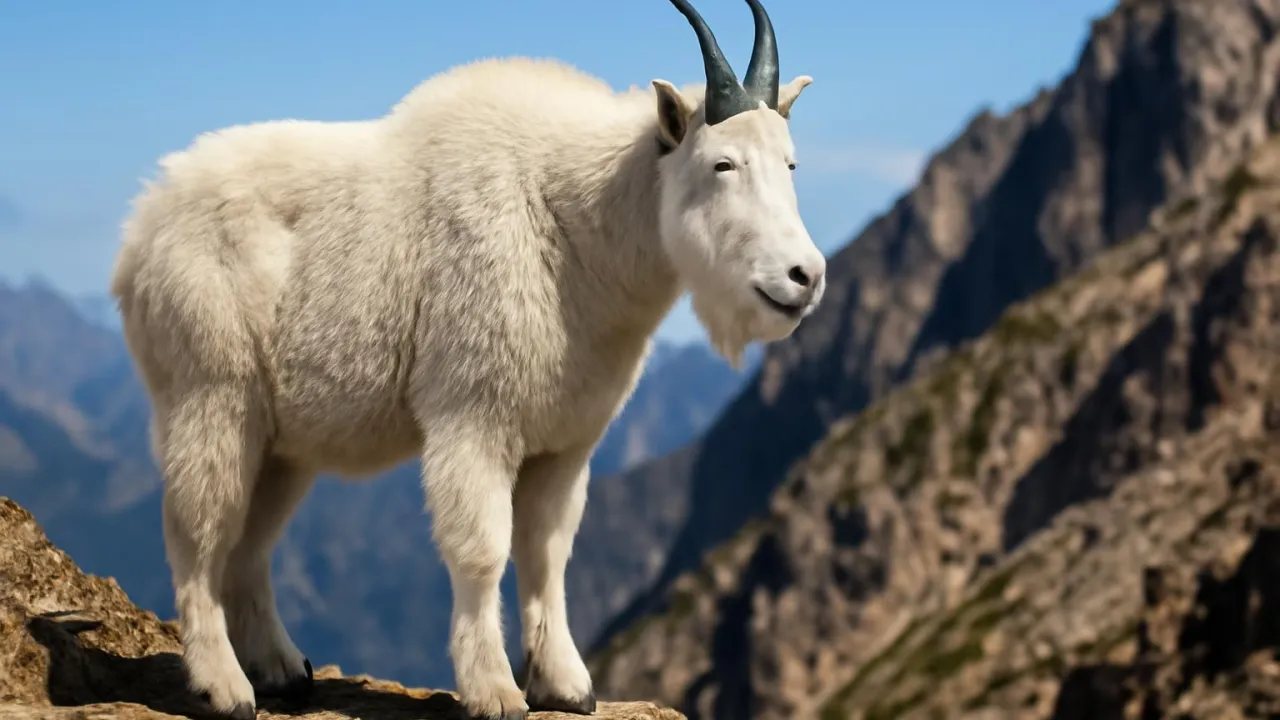
Baby mountain goats can climb just one day after they are born!
✨ Word Sparks (Grade 2 Glossary)
Tap 🔊 to hear
ledge
A narrow, flat part of a rock
moss
Tiny green plants that grow on rocks
kids
Baby mountain goats
🪝
Can you imagine living on a rocky cliff all day?
1
Life High Up
Mountain goats spend their days on steep, rocky mountains. Their thick white fur keeps them warm in cold weather. They can stand on tiny that look scary to us. These goats are always searching for food.
2
Climbing Experts
Their hooves are split and rubbery, so they grip rocks tightly. This helps them climb up and down cliffs without slipping. Even baby goats, called , can climb soon after birth. Mountain goats can leap far to reach safe spots.
3
Finding Food
Mountain goats eat grasses, , and leaves they find on cliffs. They use their strong jaws to chew tough plants. Sometimes, they even eat lichen growing on rocks. They drink water from melting snow or mountain streams.
Mountain goats can leap across gaps as wide as twelve feet!
✨ Word Sparks (Grade 3 Glossary)
Tap 🔊 to hear
herbivore
An animal that eats only plants
camouflage
Blending in to hide from danger
adaptation
A body part or skill that helps survive
🪝
How do mountain goats balance on cliffs where people would slip?
1
Masters of the Mountain
Mountain goats are famous for living on steep, rocky cliffs in North America. Their thick, woolly white coats keep them warm during freezing winters. They are not true goats but belong to a special group called 'goat-antelopes.' These animals are rarely seen far from high, rugged peaks.
2
Amazing Climbing Adaptations
Mountain goats have special for climbing. Their hooves are split and have rough pads that grip rocks tightly. Strong leg muscles help them leap up to twelve feet in one jump. Even young kids can climb safely just hours after birth.
3
What’s on the Menu?
Mountain goats are , eating grasses, mosses, and alpine flowers. In summer, they graze on green plants found on mountain slopes. In winter, they dig through snow to find hidden food. Sometimes, they even lick rocks to get important minerals.
4
Staying Safe from Predators
Mountain goats use to blend in with snowy cliffs, hiding from predators like cougars and eagles. Their sharp horns help them defend themselves if threatened. Living high up keeps them safe from many dangers. Their climbing skills are their best protection.
Mountain goats can survive temperatures as low as -50°F thanks to their thick coats!
✨ Word Sparks (Grade 4 Glossary)
Tap 🔊 to hear
alpine
High mountain areas above the trees
predator
An animal that hunts other animals
ecosystem
A place where living things interact
🪝
What lets a mountain goat walk easily where almost nothing else can?
1
Life on the Edge
Mountain goats are native to the rugged, rocky peaks of northwestern North America, including the Rocky and Cascade Mountains. Their thick, double-layered coats allow them to withstand freezing winds and heavy snowfall at high elevations. These animals rarely descend below the tree line, spending most of their lives above 4,000 feet. Their ability to live in such harsh environments keeps them safe from many .
2
Climbing Champions
The mountain goat’s hooves are specially designed for climbing: a hard outer shell grips rocks, while a soft, rubbery pad provides traction. Their strong shoulders and muscular legs help them leap across wide gaps, sometimes as far as twelve feet. Even newborn kids are able to scale steep cliffs within a day of birth. This remarkable climbing ability allows them to reach food and escape .
3
Ecosystem Helpers
Mountain goats play an important role in their by grazing on grasses, mosses, and wildflowers. Their feeding helps control plant growth and provides nutrients to the soil through their droppings. such as cougars and golden eagles rely on mountain goats as a food source. By moving between rocky ledges, mountain goats also create tiny trails that other animals use.
4
Where Do Mountain Goats Live?
Mountain goats are found in the United States and Canada, mostly in places where winters are long and cold. They are not true goats, but are more closely related to antelopes. People sometimes confuse them with bighorn sheep, but mountain goats have sharper horns and pure white coats. Human activities like mining and road building can harm their mountain habitats, so it’s important to protect these special places.
1. Why do mountain goats stay high in the mountains?
2. How do mountain goats help their ecosystem?
🤯 Mind-Blowing Fact • Grade 5
A mountain goat’s hooves can grip ledges only two inches wide—about the width of a crayon!
✨ Word Sparks (Grade 5 Glossary)
Tap 🔊 to hear
alpine
High mountain places above the trees
herbivore
An animal that eats only plants
adaptation
A special trait that helps survival
🪝
What makes the mountain goat one of the world’s most extreme climbers?
1
Meet the Mountain Goat: Not a True Goat
Despite their name, mountain goats (Oreamnos americanus) are not true goats, but are actually members of the goat-antelope family. They are found across the steep, rocky ranges of northwestern North America, from Alaska to the northern Rocky Mountains. Adult mountain goats stand about 3.5 feet (1.1 meters) tall at the shoulder and can weigh up to 300 pounds (136 kilograms). Their thick, shaggy white coats are made of two layers: a soft insulating undercoat and a long, waterproof outer layer. This unique fur allows them to survive in temperatures as low as -50°F (-45°C).
2
Climbing Mechanics: Built for the Impossible
Mountain goats possess specialized hooves with a hard outer rim for gripping rocky surfaces and a soft, textured pad for extra traction. Their strong forelimbs and muscular shoulders enable them to leap up to twelve feet (3.7 meters) in a single bound. These allow them to scale nearly vertical cliffs that would be impossible for most other mammals. Even newborn kids, weighing only about six pounds (2.7 kilograms), can climb steep slopes within a day of birth. Their balance and agility are so precise that they can stand on ledges only two inches (5 centimeters) wide.
3
Alpine Diet and Survival
Mountain goats are , feeding on grasses, mosses, lichens, and wildflowers that grow in high-altitude environments. During summer, they graze on lush plants, but in winter, they use their strong hooves to dig through snow for hidden food. To supplement their diet, mountain goats often lick mineral-rich rocks and soil, which provide essential nutrients like sodium and calcium. Their digestive systems are highly efficient at extracting nutrients from tough, fibrous plants that many other animals cannot eat. This unique diet enables them to survive in places where food is scarce for much of the year.
4
Role in the Mountain Ecosystem
Mountain goats are an important part of ecosystems, shaping plant communities through their grazing and serving as prey for predators such as cougars and golden eagles. Their movement across cliffs and ledges creates narrow trails that are used by other animals, including smaller mammals and birds. The nutrients in their droppings help fertilize the thin mountain soil, supporting plant growth in these harsh environments. However, mountain goats can also compete with native species, such as bighorn sheep, for limited food resources. Their presence influences the balance of life in high mountain habitats.
5
Conservation and Human Impact
Although mountain goat populations are stable in many areas, they face threats from habitat loss due to mining, road construction, and climate change. Warmer temperatures can shrink the zones where they thrive, reducing available food and safe living spaces. Scientists monitor mountain goat populations to track changes and protect their habitats. In some regions, mountain goats have been introduced outside their native range, which can disrupt local ecosystems. Conservation efforts focus on preserving their rugged habitats and minimizing human disturbance to ensure these remarkable climbers continue to thrive in the wild.