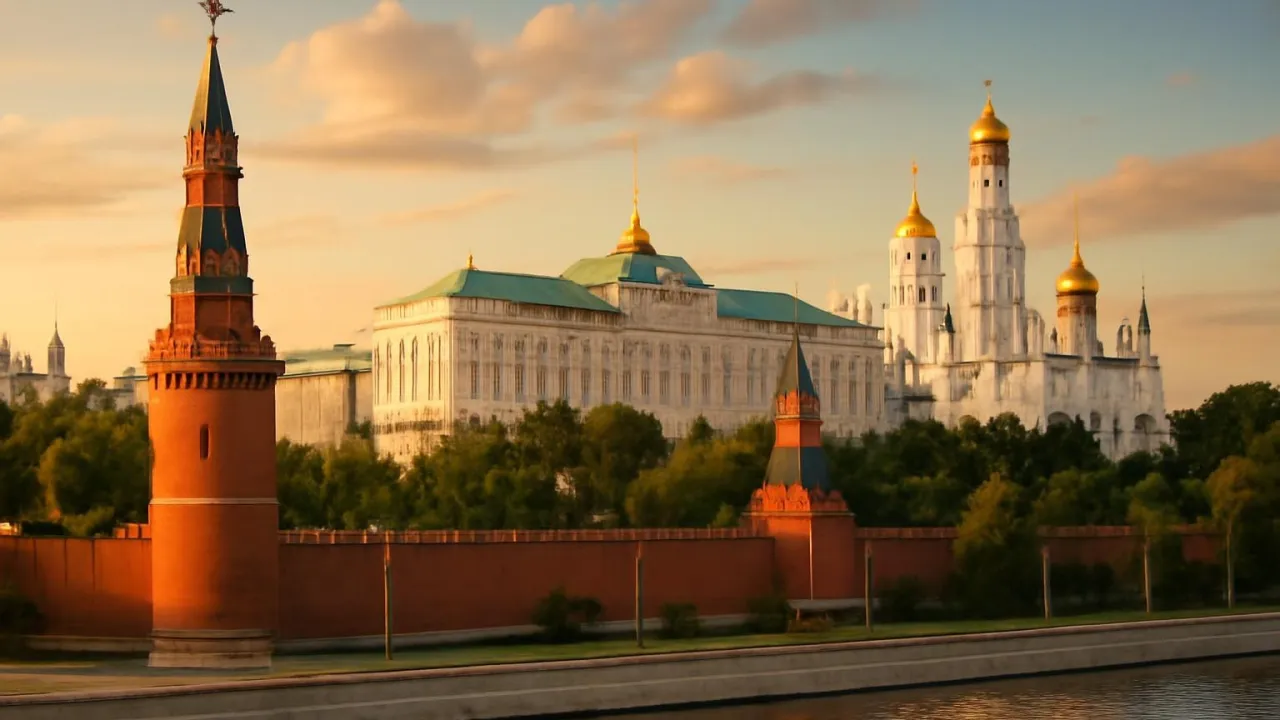
The Kremlin's tallest tower, the Troitskaya Tower, is 80 meters high!
✨ Word Sparks (Grade 2 Glossary)
Tap 🔊 to hear
fortress
A strong building for protection
palace
A big, fancy house for leaders
symbol
A thing that stands for something
🪝
What would it feel like to stand beside a giant red fortress?
1
A Fortress in the City
The Kremlin sits in the center of Moscow, surrounded by busy streets. Its tall red walls and many towers make it look like a castle. Each tower has its own shape, and some have green or golden tops. People come from all over to see the famous walls and towers.
2
Golden Domes and Old Palaces
Inside the Kremlin, golden domes shine brightly in the sunlight. These domes belong to beautiful old churches and . Leaders of Russia have worked here for hundreds of years. Visitors walk through the big gates to explore the history inside.
3
A Place Full of Stories
The Kremlin is more than just buildings; it holds many secrets and stories. Some towers have clocks, and others have bells that ring loudly. People visit to learn about the past and see where important decisions are made. The Kremlin is a of Russia's history and pride.
The Kremlin's walls use over 2 million bricks, each placed by hand!
✨ Word Sparks (Grade 3 Glossary)
Tap 🔊 to hear
cathedral
A very large, important church
acoustics
How sound moves in a space
monument
A building that honors history
🪝
Have you ever heard bells echo from ancient red walls in the heart of a city?
1
A Fortress of Red Stone
The Moscow Kremlin rises above the city with its thick red walls and twenty towers. Built in the 1400s, its stone walls protected leaders and treasures from invaders. Each tower has a unique shape, and some have spires or green-tiled roofs. Visitors are amazed by the fortress's size and bright colors.
2
Golden Domes and Grand Cathedrals
Inside the Kremlin, golden domes glitter above ancient and palaces. The cathedrals are famous for their echoing and beautiful paintings. Leaders once gathered here for ceremonies and important meetings. Today, people admire the art and listen to the bells' clear vibration.
3
Engineering Marvels: Walls and Towers
The Kremlin's walls are made of strong brick and stone, with arched gateways for protection. The tallest tower, Troitskaya, stands 80 meters high and holds a clock. Engineers designed the towers to watch for danger and to ring bells across the city. The fortress's design helped it survive centuries of storms and battles.
4
A Living Monument
The Kremlin is a to Russian history and culture, still used by leaders today. Its buildings have survived fires, wars, and even erosion from the weather. People from around the world visit to learn its stories and see its treasures. The Kremlin remains a powerful symbol of Moscow and Russia.
1. Why did engineers build the Kremlin's towers so high?
2. What makes the Kremlin's cathedrals special?
🤯 Mind-Blowing Fact • Grade 4
The Kremlin’s oldest tower, the Taynitskaya Tower, hides a secret escape tunnel beneath its base!
✨ Word Sparks (Grade 4 Glossary)
Tap 🔊 to hear
fresco
A painting made on wet plaster walls
resonance
The way sound vibrates and echoes
moat
A deep ditch filled with water for defense
🪝
Imagine standing beneath ancient red walls as golden domes glimmer and bells ring across Moscow—what secrets would you discover?
1
The Kremlin: Moscow’s Timeless Fortress
Stretching along the Moscow River, the Kremlin’s red brick walls and twenty towers have guarded Russia’s leaders for over five centuries. Built between 1482 and 1495, its design combined Italian Renaissance engineering with Russian traditions. The fortress’s walls stand up to 19 meters tall and are nearly 6 meters thick, protecting palaces, cathedrals, and treasures within. Each tower served a special purpose, from defense to ringing bells that signaled important events.
2
Golden Domes and Sacred Spaces
Inside the Kremlin, golden domes crown cathedrals like the Assumption Cathedral, where czars were crowned and choirs filled the halls with resonant music. The acoustics inside these cathedrals allow voices and bells to echo beautifully, creating a powerful atmosphere for ceremonies. and icons decorate the walls, telling stories from Russian history and faith. Visitors marvel at the craftsmanship and the sense of awe these sacred spaces inspire.
3
Engineering Brilliance: Walls, Towers, and Gates
The Kremlin’s walls were engineered to resist both attacks and the harsh Russian winters, using millions of bricks and strong arched gates. The tallest tower, Troitskaya, rises 80 meters and once held a drawbridge over a . Engineers used arches and thick foundations to prevent erosion and support the heavy structures. The fortress’s design allowed defenders to watch for enemies and communicate quickly using bells and signals.
4
A Living Symbol of Russia
Today, the Kremlin remains the heart of Russian government, culture, and history. Its palaces host world leaders, while its museums display priceless artifacts and ancient armor. The Kremlin’s image appears on coins, stamps, and national emblems, symbolizing Russian pride and resilience. Millions visit each year to experience its stories, architecture, and the view from Red Square.
1. How did the Kremlin’s thick walls help protect it?
2. Why do the cathedrals have such amazing acoustics?
🤯 Mind-Blowing Fact • Grade 5
The Kremlin’s Spasskaya Tower clock is so precise, it’s used to mark Russia’s official New Year countdown every year!
✨ Word Sparks (Grade 5 Glossary)
Tap 🔊 to hear
machicolation
A stone opening for dropping objects on attackers
resilience
The ability to recover from challenges
summit
A meeting of important leaders
🪝
What would you uncover if you explored the Kremlin’s labyrinth of red walls, ancient towers, and golden domes at sunrise?
1
Architectural Marvel: Walls That Withstood Centuries
The Moscow Kremlin’s formidable walls, constructed between 1482 and 1495, stretch 2,235 meters and enclose an area of 27.7 hectares. Built from millions of red bricks, these walls are up to 19 meters high and nearly 6 meters thick, designed to withstand both medieval siege weapons and the harsh Russian climate. The fortress features twenty towers, each uniquely engineered with defensive elements such as , arrow slits, and secret passages. The walls’ foundations were reinforced to prevent erosion from the nearby Moscow River, ensuring the Kremlin’s survival through centuries of conflict and weathering.
2
Golden Domes and the Science of Acoustics
The Kremlin’s cathedrals, especially the Assumption and Archangel Cathedrals, are renowned for their golden onion domes and remarkable acoustics. The domes’ shape not only symbolizes religious aspiration but also helps distribute sound waves, creating resonance that amplifies choral music and bell vibrations. Architects carefully designed the cathedrals’ interiors with high arches and thick masonry, which reflect and blend sounds, producing a unique acoustic experience during ceremonies and concerts. These scientific principles allowed even a single voice or bell to fill the vast sacred spaces with sound.
3
Engineering Ingenuity: Towers, Gates, and Secret Tunnels
Each of the Kremlin’s twenty towers served a specialized function, from observation and communication to ceremonial entrances. The tallest, Troitskaya Tower, rises 80 meters and once controlled a drawbridge over a defensive moat. The Spasskaya Tower houses the Kremlin’s iconic clock, whose chimes are synchronized with national events. Ingenious features like the Taynitskaya Tower’s hidden escape tunnel and the use of arches for structural strength demonstrate advanced medieval engineering. These innovations not only protected the Kremlin but also allowed rapid communication and movement within its walls.
4
Historical Evolution and Cultural Impact
The Kremlin has evolved from a medieval fortress to the political and spiritual heart of Russia. Over centuries, it has witnessed coronations, invasions, revolutions, and international . Its architecture reflects a blend of Italian Renaissance artistry and Russian design, influencing countless buildings across Russia and Eastern Europe. Today, the Kremlin is a UNESCO World Heritage Site, hosting both the Russian government and world-class museums. Its image is a powerful symbol of Russian identity, , and cultural heritage.
5
A Living Landmark: Science, Symbolism, and Legacy
The Kremlin’s enduring legacy lies in its combination of scientific innovation, architectural beauty, and historical significance. Its walls and towers demonstrate advanced knowledge of physics, materials science, and defensive strategy. The cathedrals’ acoustics reveal a deep understanding of sound resonance and spatial design. As a living landmark, the Kremlin continues to shape Russian society, hosting state ceremonies, cultural festivals, and millions of visitors each year. Its story is one of adaptation, creativity, and the enduring power of human ingenuity.