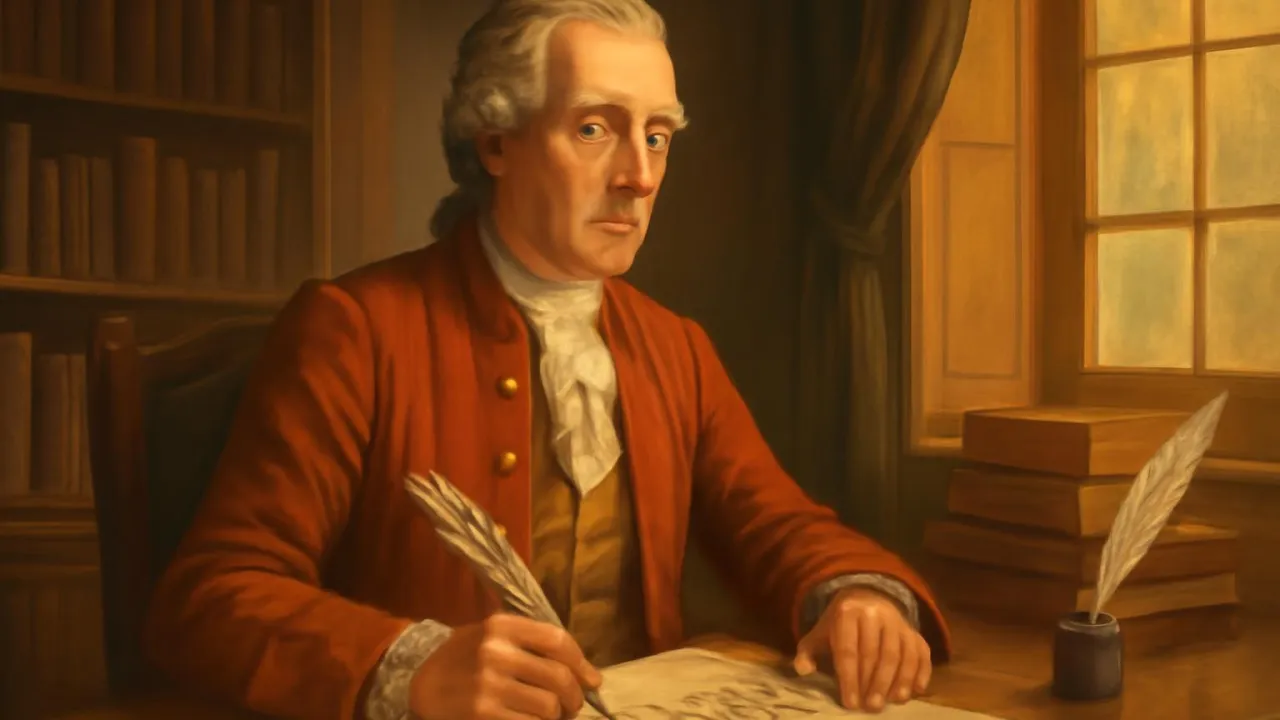
Montesquieu’s book, 'The Spirit of the Laws,' changed history!
✨ Word Sparks (Grade 2 Glossary)
Tap 🔊 to hear
government
A group that makes rules for a country
fairness
Making sure everyone is treated equally
divide
To split into smaller parts
🪝
Why do some countries have leaders who share power?
1
Curious Young Thinker
Montesquieu grew up asking lots of questions, especially about rules and . He loved reading books and learning about different places. He wanted to understand how people could live together peacefully.
2
Working Hard on Ideas
Montesquieu studied history and for many years, writing down his thoughts. He believed that no one person should have all the power in a country. He thought people would be safer if leaders shared power.
3
A Big Achievement
Montesquieu wrote a famous book about his ideas. His book explained how could be fair by dividing power. Many countries used his ideas to make their own rules.
1. What did Montesquieu think would keep people safe?
2. What did Montesquieu write about?
🤯 Mind-Blowing Fact • Grade 3
The United States and many other countries use Montesquieu’s three-branch system!
✨ Word Sparks (Grade 3 Glossary)
Tap 🔊 to hear
branch
A part of government with a special job
justice
Making sure everyone is treated fairly
inspire
To give someone a new idea
🪝
Have you ever wondered why governments have different branches?
1
A Curious Mind
As a child, Montesquieu loved to ask questions about how things worked. He read every book he could find, especially about history and law. He noticed that when one person had too much power, people were not treated fairly. This made him want to find a better way for governments to work.
2
Learning from the World
Montesquieu studied many countries and their governments. He saw that some rulers made all the decisions, while others shared power. He thought carefully about what made a country peaceful and just. His studies helped him create new ideas about leadership.
3
Separation of Powers
Montesquieu’s most famous idea is called the separation of powers. He believed government should have three : one to make laws, one to carry them out, and one to judge them. This way, no one branch could become too strong or unfair.
4
Changing the World
Montesquieu wrote his ideas in 'The Spirit of the Laws.' His book inspired leaders in America and other countries. Many governments now use his system to protect people's rights. Montesquieu’s thinking still shapes the world today.
1. What did Montesquieu believe would stop unfair rulers?
2. What is Montesquieu’s famous book called?
🤯 Mind-Blowing Fact • Grade 4
Montesquieu’s ideas inspired the writers of the U.S. Constitution in 1787!
✨ Word Sparks (Grade 4 Glossary)
Tap 🔊 to hear
liberty
The freedom to make your own choices
democracy
A government where people help make laws
Enlightenment
A time when people valued reason and learning
🪝
What if governments had no limits and leaders could do anything they wanted?
1
A Young Thinker in France
Growing up in France during the Age of , Montesquieu was fascinated by how people made and followed rules. He eagerly read books about history, philosophy, and law, asking questions about fairness and freedom. He observed that when rulers had all the power, citizens often lost their rights. These early experiences sparked his lifelong quest to understand what makes a just government.
2
Exploring Governments Around the World
Montesquieu traveled and studied many different governments, from monarchies to republics. He noticed that countries with unchecked rulers often faced injustice and unrest, while those with shared power were more peaceful. Through careful research and observation, Montesquieu developed the idea that dividing government power was essential for protecting people's . He wrote down his findings in detailed notes and essays.
3
The Separation of Powers
Montesquieu’s most influential idea, the separation of powers, divided government into three branches: legislative, executive, and judicial. Each branch had its own responsibilities and could check the others, preventing any one group from becoming too powerful. This system, described in his book 'The Spirit of the Laws,' became a model for modern democracies.
4
A Lasting Legacy
Montesquieu’s theories greatly influenced the writers of the United States Constitution and many other countries’ governments. His belief in , fairness, and balanced power helped shape the world’s understanding of . Today, his ideas continue to protect citizens’ rights and guide leaders in making fair laws. Montesquieu is remembered as a champion of freedom and justice.
1. Why did Montesquieu want to divide government power?
2. Which three branches did Montesquieu describe?
🤯 Mind-Blowing Fact • Grade 5
Over 100 countries today use Montesquieu’s separation of powers to protect liberty!
✨ Word Sparks (Grade 5 Glossary)
Tap 🔊 to hear
tyranny
When one person rules unfairly over others
checks and balances
Ways branches of government limit each other
legacy
What someone leaves behind for others
🪝
How did one philosopher’s ideas about dividing power change the course of world history?
1
A Childhood of Curiosity
In the rolling countryside of France, young Montesquieu spent countless hours pondering questions about justice and authority. He was born into a noble family, giving him access to a vast library filled with books on law, philosophy, and history. Even as a boy, Montesquieu noticed how different rulers treated their people, and he wondered why some societies were fairer than others. His early experiences shaped his lifelong quest to understand the best way to organize a government. This curiosity led him to study law and develop a passion for learning about different cultures.
2
The Path to Enlightenment
As Montesquieu grew older, he became a respected judge and scholar in Bordeaux, France. He traveled throughout Europe, observing governments and collecting information about how laws were made and enforced. He realized that absolute monarchies, where one person held all the power, often resulted in unfair treatment and loss of liberty for ordinary people. Montesquieu’s careful research and sharp observations helped him recognize patterns in history and government that others had overlooked. His experiences during the Age of Enlightenment inspired him to question tradition and seek new solutions for society’s problems.
3
Inventing the Separation of Powers
Montesquieu’s groundbreaking idea, the separation of powers, divided government into three branches: legislative, executive, and judicial. He explained that each branch should have its own responsibilities and the ability to limit the others, preventing any one group from becoming too powerful. In his influential book, 'The Spirit of the Laws,' published in 1748, Montesquieu used examples from England and Rome to show how divided power could protect freedom and prevent . His theory introduced vocabulary like ',' which became essential concepts in modern political science. This framework became a model for democratic governments around the world.
4
Global Influence and Historical Legacy
Montesquieu’s ideas reached far beyond France, inspiring the writers of the United States Constitution and leaders in many other countries. The American Founding Fathers, including James Madison and Alexander Hamilton, studied Montesquieu’s work as they designed a government with three separate branches and a system of . Today, more than 100 countries use some form of Montesquieu’s system to protect citizens’ rights and prevent abuse of power. His influence is still felt in debates about justice, equality, and government structure in the twenty-first century.
5
Lessons for the Future
Montesquieu’s life teaches us the importance of asking questions, seeking fairness, and protecting individual rights. His belief that power should never rest in the hands of one person remains a cornerstone of democracy. By studying history and learning from different cultures, Montesquieu showed that ideas can shape nations and improve people’s lives. His reminds us that every voice matters in a fair society, and that thoughtful laws help keep freedom alive for generations to come. As the world continues to change, Montesquieu’s vision of balanced government remains a guiding light for leaders everywhere.