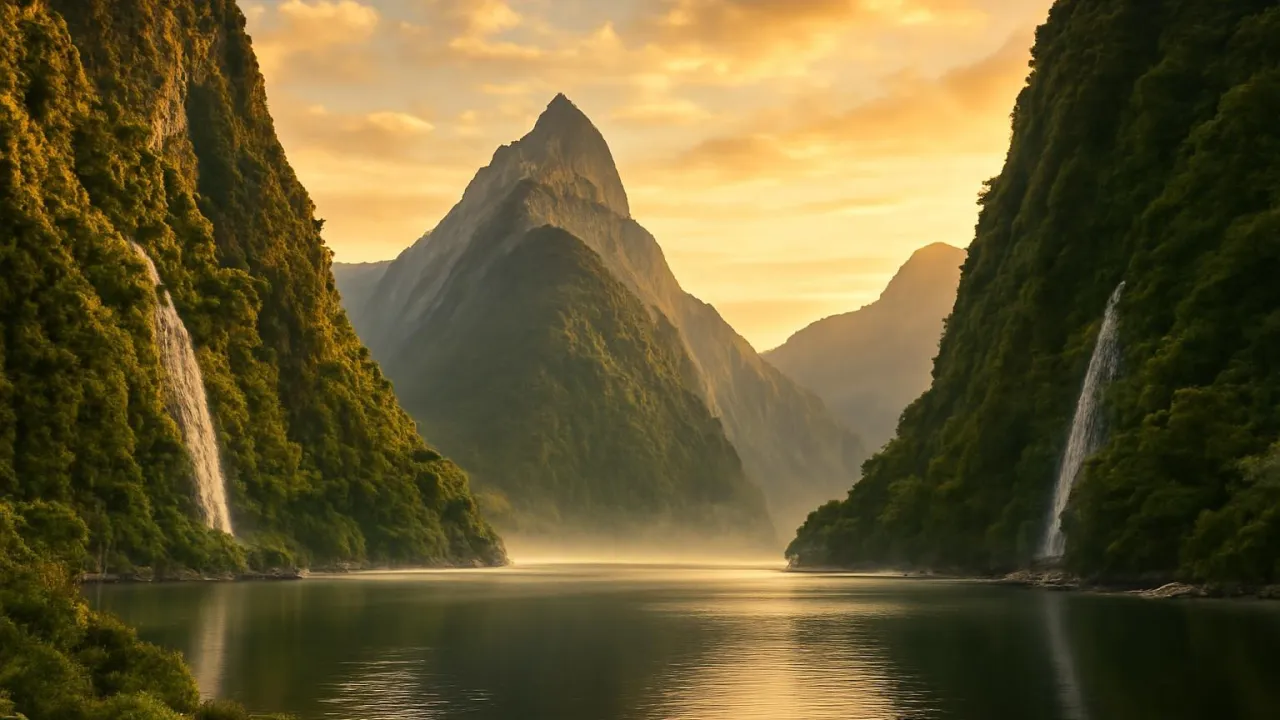
Some cliffs in Milford Sound are taller than the Empire State Building!
✨ Word Sparks (Grade 2 Glossary)
Tap 🔊 to hear
glacier
A big, slow-moving ice river
mist
Tiny drops of water in the air
rainforest
A forest with lots of rain
🪝
What would it feel like to stand under a waterfall as tall as a skyscraper?
1
A Place Carved by Ice
Long ago, huge cut through the land. They made deep valleys filled with seawater. These valleys are called fjords, and Milford Sound is the most famous one in New Zealand.
2
Waterfalls and Rainforests
Milford Sound has many giant waterfalls that tumble down its cliffs. The rain falls almost every day, making the forests thick and green. You might spot dolphins or seals swimming near the boats.
3
Exploring by Boat
People visit Milford Sound by taking boat rides. They look up at the cliffs and listen to the water splash. Some lucky visitors see rainbows shining through the misty air.
Milford Sound’s cliffs are nearly twice as tall as the Eiffel Tower!
✨ Word Sparks (Grade 3 Glossary)
Tap 🔊 to hear
fjord
A sea valley made by glaciers
vibration
A shaking or moving back and forth
monument
A place kept for its importance
🪝
Imagine the echo of a waterfall bouncing off cliffs as high as skyscrapers—how loud would it sound?
1
Glaciers Shape the Land
Thousands of years ago, massive glaciers moved slowly across New Zealand’s South Island. Their powerful movement carved out deep valleys, which filled with seawater when the ice melted. These special valleys are called , and Milford Sound is the most famous of them all.
2
Towering Cliffs and Waterfalls
Milford Sound’s cliffs rise over 1,200 meters, creating dramatic scenery. Waterfalls like Stirling and Bowen Falls crash down from the cliffs, their sound echoing through the . The constant rain feeds these waterfalls and keeps the rainforest lush and green. Sometimes, so much rain falls that hundreds of tiny waterfalls appear at once.
3
Rainforests and Wildlife
The rainforest around Milford Sound is filled with moss, ferns, and tall trees. Unique birds like the kea and tui call this place home. Dolphins, seals, and even penguins swim in the chilly waters. The area’s high rainfall creates a thick mist that floats above the water.
4
Exploring the Fjord
Visitors explore Milford Sound by boat, kayak, or hiking trails. The sound’s steep sides and deep water make it perfect for boat tours. People listen to the of waterfalls and watch rainbows in the mist. Milford Sound is a natural , protected for everyone to enjoy.
1. What causes the echoing sound in Milford Sound?
2. Why do many tiny waterfalls appear after heavy rain?
🤯 Mind-Blowing Fact • Grade 4
Milford Sound gets so much rain that it can create over 200 waterfalls after a single storm!
✨ Word Sparks (Grade 4 Glossary)
Tap 🔊 to hear
erosion
Wearing away of land by water or ice
resonance
Echoing sound bouncing off surfaces
habitat
A place where plants and animals live
🪝
What would you discover if you sailed through misty Milford Sound, listening to the thunder of waterfalls and the calls of rare birds?
1
A Fjord Born from Ice
Milford Sound was formed during the last Ice Age, when gigantic glaciers carved deep valleys into the land. As the glaciers melted, seawater flooded these valleys, creating the fjord we see today. The process of glacial left behind sheer cliffs that rise dramatically from the water. This natural wonder is now part of Fiordland National Park, a UNESCO World Heritage Site.
2
Towering Cliffs and Waterfall Wonders
The cliffs of Milford Sound soar up to 1,200 meters, making them some of the tallest in the world. Rainfall is constant, with the area receiving over 6,800 millimeters each year, feeding countless waterfalls. The two most famous, Stirling and Bowen Falls, crash down with incredible acoustic , their sound echoing off the rock walls. After heavy rain, hundreds of temporary waterfalls appear, turning the cliffs into shimmering veils of water.
3
Rainforests and Unique Wildlife
The region’s temperate rainforest thrives on the high rainfall, supporting mosses, ferns, and ancient trees. Milford Sound is home to rare birds like the kea and the flightless takahe, as well as marine life such as bottlenose dolphins, New Zealand fur seals, and Fiordland crested penguins. The thick mist and lush greenery create a unique unlike anywhere else on Earth.
4
Exploring and Protecting Milford Sound
Visitors can explore Milford Sound by boat, kayak, or on foot along scenic trails. The fjord’s steep sides and deep waters make it a favorite for nature lovers and photographers. Milford Sound is protected as part of a national park, ensuring its beauty and wildlife are preserved for future generations. Its natural monument status helps scientists study glacial geology and rainforest ecology.
1. What makes Milford Sound’s cliffs so tall and steep?
2. Why is Milford Sound home to so many unique animals?
🤯 Mind-Blowing Fact • Grade 5
Milford Sound’s cliffs are so tall that clouds often form halfway up their sides!
✨ Word Sparks (Grade 5 Glossary)
Tap 🔊 to hear
glacial erosion
Land shaped by moving ice glaciers
endemic
Found only in one special place
acoustic resonance
Echoes made by sound bouncing off surfaces
🪝
Picture yourself gliding through Milford Sound’s misty waters as waterfalls roar and ancient cliffs tower above—how did this dramatic landscape come to be?
1
The Glacial Origins of Milford Sound
Milford Sound’s breathtaking landscape was sculpted during the last Ice Age, approximately 20,000 years ago, by massive glaciers that advanced and retreated over millennia. These glaciers acted like natural bulldozers, grinding away rock and carving out a U-shaped valley that eventually filled with seawater as the ice melted. The process of created sheer, vertical cliffs that rise dramatically from the fjord’s dark waters, some reaching heights of 1,200 meters (3,900 feet). This unique topography is what defines Milford Sound as a classic fjord.
2
Rainfall, Waterfalls, and Acoustic Marvels
Milford Sound is one of the wettest places on Earth, receiving an average of 6,813 millimeters (268 inches) of rain annually. This extraordinary rainfall sustains lush temperate rainforests and feeds countless waterfalls, including the famous Stirling and Bowen Falls, which plunge over 150 meters (492 feet) into the fjord. The cliffs’ hard granite surfaces create powerful , amplifying the roar of the waterfalls and producing echoes that reverberate across the water. After heavy storms, hundreds of temporary waterfalls cascade down the cliffs, transforming the landscape into a living curtain of water.
3
Biodiversity and Unique Ecosystems
The high rainfall and mild climate foster a rich temperate rainforest ecosystem, home to ancient trees, mosses, and ferns. Milford Sound’s unique environment supports rare and species, such as the alpine parrot kea, the endangered takahe, and the Fiordland crested penguin. Beneath the water’s surface, a layer of dark freshwater sits atop the salty seawater, allowing deep-sea species like black coral to thrive unusually close to the surface. This layered aquatic environment is a subject of scientific study and ecological fascination.
4
Human Exploration and Conservation
First explored by Māori navigators and later by European settlers, Milford Sound has long been a place of awe and inspiration. Today, it is part of Fiordland National Park and the Te Wahipounamu UNESCO World Heritage Area, protected for its outstanding natural and scientific value. Conservation efforts focus on preserving the pristine environment, studying glacial geology, and managing tourism to minimize ecological impact. Visitors can experience the fjord’s wonders by boat, kayak, or hiking the world-famous Milford Track.
5
Global Significance and Enduring Wonder
Milford Sound is celebrated worldwide for its dramatic scenery, unique ecosystems, and scientific importance. Its towering cliffs, cascading waterfalls, and lush rainforests attract hundreds of thousands of visitors each year, making it a symbol of New Zealand’s natural heritage. The fjord’s geological history offers insights into the power of glaciers and the processes that shape our planet. As climate change threatens glacial regions, Milford Sound stands as a living classroom and a reminder of nature’s enduring power and beauty.