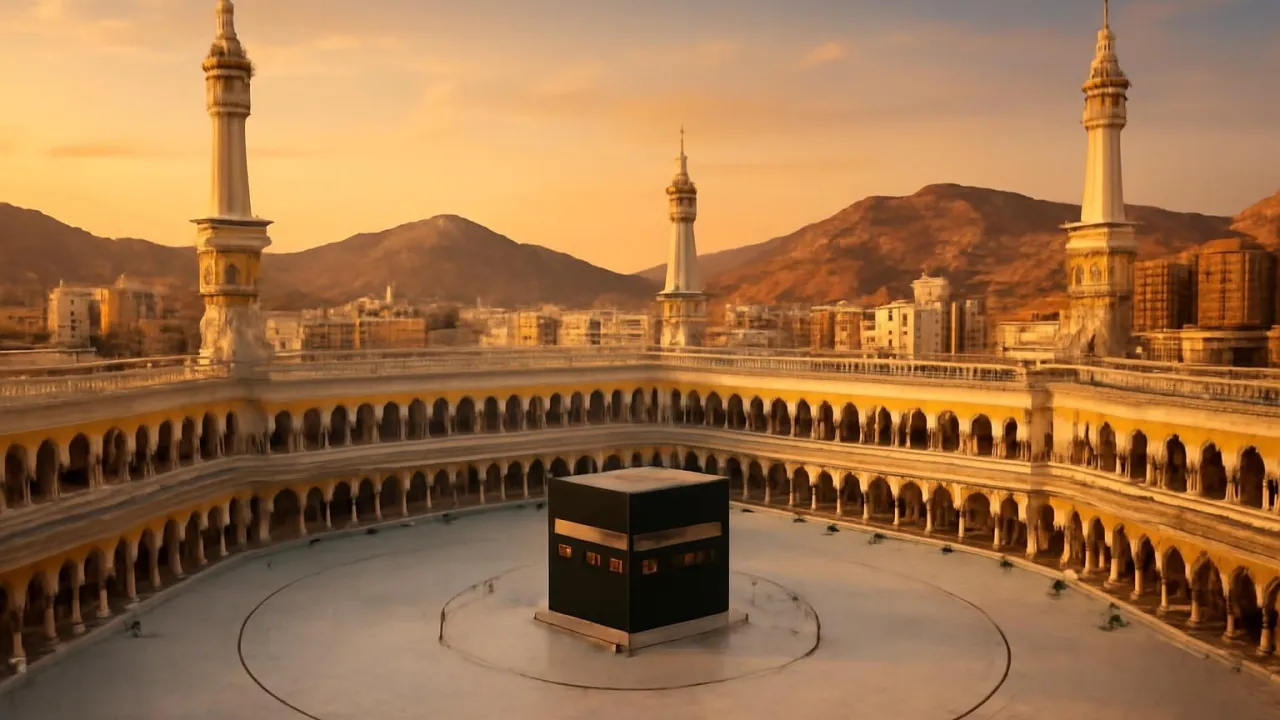
The Great Mosque can hold more people than most sports stadiums in the world!
✨ Word Sparks (Grade 2 Glossary)
Tap 🔊 to hear
pilgrim
A person who travels for faith
togetherness
Feeling close with other people
gathering
A big group meeting
🪝
What would it feel like to walk among millions of visitors?
1
A Giant Gathering Place
This mosque is the largest in the world, and it feels amazing to stand inside. People from many countries come here to pray and walk together. The floor is made of smooth white stone, which feels cool even in the sun.
2
Walking Around the Kaaba
In the center stands the Kaaba, a black cube that is very special. walk around it in circles as part of their prayer. The mosque is always busy, filled with voices and gentle footsteps.
3
A Place for Everyone
Families, children, and elders all visit this place together. There is room for over a million people at one time. It is a place of peace and for many people.
The mosque’s marble floors are cooled from below to help pilgrims walk comfortably, even in summer!
✨ Word Sparks (Grade 3 Glossary)
Tap 🔊 to hear
minaret
A tall tower on a mosque
tawaf
Walking in circles around the Kaaba
marble
A smooth, shiny stone
🪝
Imagine the echo of thousands of voices beneath a shining open sky.
1
The Heart of Mecca
Masjid al-Haram is the most important mosque in Islam, located in the city of Mecca. Pilgrims from every continent travel here for a journey called Hajj. The mosque’s open courtyard is paved with , which stays cool even on the hottest days.
2
The Kaaba’s Special Meaning
At the center stands the Kaaba, a cube-shaped structure covered in black cloth. Muslims around the world face the Kaaba when they pray. During Hajj, people walk around the Kaaba seven times, creating a pattern of movement called .
3
Building for Millions
Masjid al-Haram has grown much larger over time to welcome more visitors. There are tall , wide arches, and open spaces designed to help crowds move smoothly. Engineers use strong stone and careful planning to keep the mosque safe and beautiful.
4
Sounds and Sights
You can hear the soft hum of prayers and see the bright lights at night. The mosque glows with thousands of lamps and the sound gently echoes under the high ceilings. Pilgrims feel a sense of peace and unity as they gather together.
1. What is the main material used for the mosque's floor?
2. Why do people walk around the Kaaba seven times?
🤯 Mind-Blowing Fact • Grade 4
The mosque’s largest expansion, completed in 2016, allows it to welcome over 1.5 million worshippers at once!
✨ Word Sparks (Grade 4 Glossary)
Tap 🔊 to hear
qibla
The direction Muslims face to pray
symmetry
When both sides look the same
reinforced concrete
Very strong building material
🪝
What if you could join millions circling a sacred stone under the desert sun?
1
A Sacred Centerpiece
Masjid al-Haram is the holiest mosque in Islam and surrounds the Kaaba, which is believed to be the very first house of worship built by Abraham and his son Ishmael. Every year, millions of Muslims travel from all over the world to Mecca to perform Hajj, a pilgrimage that is one of the Five Pillars of Islam. The mosque’s open courtyard is paved with white marble, which is specially engineered to stay cool in the intense desert heat. This remarkable design allows pilgrims to walk barefoot in comfort, even during the hottest months.
2
Architectural Wonders
The mosque has been expanded many times throughout history to accommodate the growing number of visitors. Its grand design features towering minarets, gracefully curving arches, and vast prayer halls that can hold more than 1.5 million people at once. Engineers have used advanced cooling systems beneath the marble floors and strong to support the massive structure. The mosque’s elegant and careful planning help manage the flow of enormous crowds safely and efficiently.
3
The Ritual of Tawaf
At the heart of the mosque, the Kaaba stands as a cube-shaped building draped in black silk and gold embroidery. During Hajj, pilgrims perform tawaf by walking around the Kaaba seven times in a counterclockwise direction. This ritual creates a powerful sense of unity, as everyone moves together in a continuous, flowing circle. The Kaaba’s position also determines the , the direction that Muslims face during daily prayers, no matter where they are in the world.
4
A Place of Peace and Community
Inside Masjid al-Haram, the air is filled with the gentle sound of prayers and the soft echo of footsteps on stone. The mosque is illuminated by thousands of lights, creating a peaceful glow that welcomes worshippers day and night. People of all ages and backgrounds come together here, sharing in a tradition that has lasted for centuries. For many, visiting Masjid al-Haram is a dream come true and a deeply meaningful experience.
1. What special material keeps the mosque’s floors cool for barefoot pilgrims?
2. Why do millions gather at Masjid al-Haram every year?
🤯 Mind-Blowing Fact • Grade 5
Masjid al-Haram’s marble cooling system can lower surface temperatures by up to 10°C (18°F) compared to the surrounding air!
✨ Word Sparks (Grade 5 Glossary)
Tap 🔊 to hear
foundation piles
Deep supports that hold up big buildings
accommodate
To have enough space for many people
integrity
Keeping something strong and true
🪝
What engineering marvels allow Masjid al-Haram to welcome millions in the heart of a desert city?
1
The Spiritual and Historical Epicenter
Masjid al-Haram, or the Great Mosque of Mecca, stands as the holiest site in Islam and the focal point for the world’s largest annual religious gathering. The mosque’s origins trace back to the 7th century, with the Kaaba at its center believed by Muslims to have been built by the Prophet Abraham and his son Ishmael. Over centuries, this sacred site has witnessed countless historical events, expansions, and reconstructions, each reflecting the evolving architectural and cultural heritage of the Islamic world. Today, Masjid al-Haram is not only a place of worship but also a symbol of unity for over a billion Muslims worldwide.
2
Architectural Scale and Expansion
Covering an immense 356,800 square meters (88.2 acres), Masjid al-Haram is the largest mosque on Earth and can more than 1.5 million worshippers at peak capacity. The mosque’s design features 9 towering minarets, 210 majestic domes, and vast marble courtyards that facilitate the smooth movement of enormous crowds. Multiple expansions, especially in the 20th and 21st centuries, have incorporated advanced engineering techniques such as deep and earthquake-resistant structures to ensure the safety and stability of the complex. The most recent expansions have added multi-level prayer areas, new gates, and improved accessibility for people with disabilities.
3
Engineering Marvels and Cooling Technology
One of the most remarkable engineering achievements of Masjid al-Haram is its sophisticated climate control system, which keeps the marble floors cool even during scorching desert summers. Beneath the courtyard, an intricate network of chilled water pipes and air vents circulates cool air, allowing millions of barefoot pilgrims to walk comfortably. The mosque’s reinforced concrete superstructure and precisely engineered arches distribute weight efficiently, while advanced sound systems ensure that prayers and announcements are clearly heard throughout the vast space. These innovations blend seamlessly with traditional Islamic architectural elements, preserving both beauty and function.
4
Cultural and Global Significance
Masjid al-Haram is the destination for the Hajj pilgrimage, one of the Five Pillars of Islam, which every able Muslim is required to perform at least once in their lifetime. The ritual of tawaf, where pilgrims circle the Kaaba seven times, symbolizes unity and equality among all Muslims. The mosque’s influence extends far beyond Saudi Arabia, shaping Islamic architecture and urban planning worldwide. Its role as a center for spiritual reflection, community gathering, and cultural exchange has made it a beacon of peace and understanding for generations.
5
Preservation and Future Challenges
Preserving Masjid al-Haram’s historical while accommodating millions of visitors presents ongoing challenges for architects and engineers. Careful restoration of ancient structures, the use of durable modern materials, and the integration of advanced crowd management technologies are all essential to maintaining the mosque’s safety and sanctity. As the number of pilgrims continues to grow, future expansions will require even greater innovation to balance tradition with the needs of a global community. Masjid al-Haram remains a living testament to faith, ingenuity, and the enduring power of human connection.