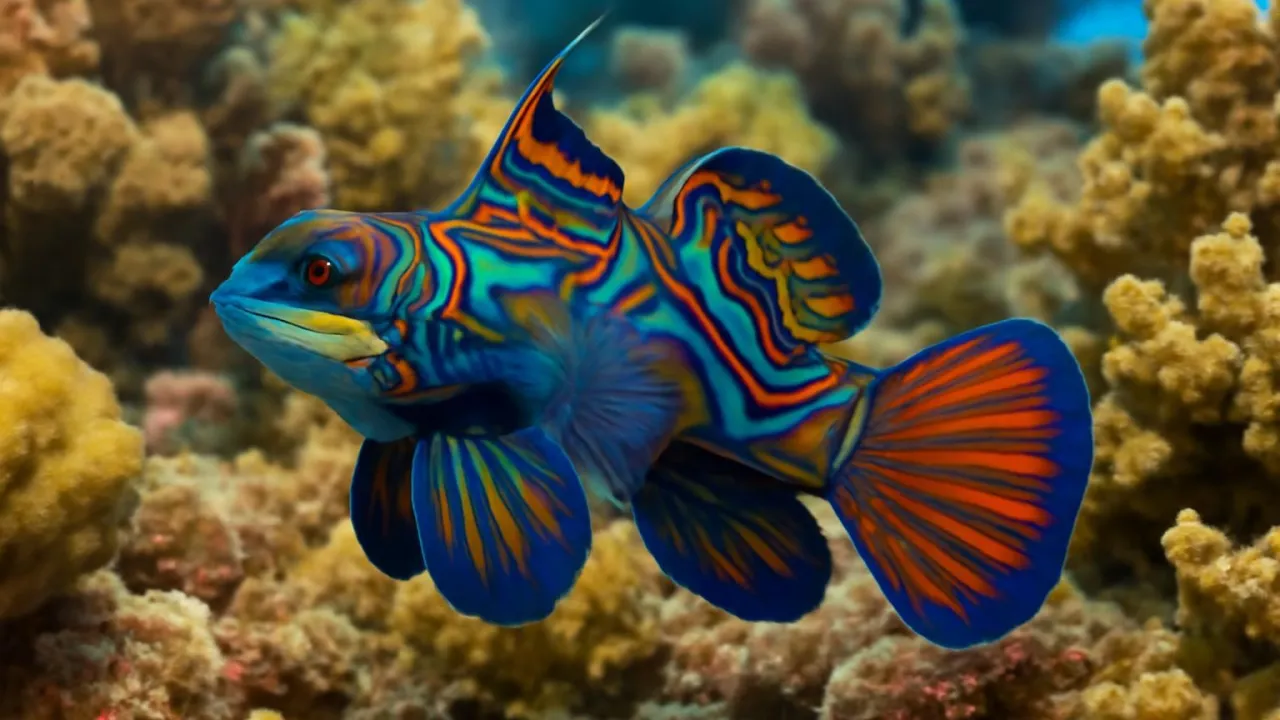
Mandarinfish colors come from special skin that shines like a rainbow!
✨ Word Sparks (Grade 2 Glossary)
Tap 🔊 to hear
coral reef
A colorful underwater home made by tiny animals
nutrients
Food parts that help animals grow strong
shelter
A safe place to hide from danger
🪝
Have you ever seen a fish that looks like a rainbow underwater?
1
Colorful Fish
The mandarinfish has bright blue and orange colors that shine underwater. Its colors help it hide among coral. This fish is small and moves slowly but looks very bright.
2
Home in Coral Reefs
Mandarinfish live in in warm ocean water. They hide in small spaces between coral branches. The reefs give them food and from big fish.
3
Eating Tiny Food
Mandarinfish eat tiny animals like small worms and shrimp. They use their mouths to pick food from the sand. This helps them get to grow and stay healthy.
Mandarinfish skin glows with iridescence, a light effect that changes with angle!
✨ Word Sparks (Grade 3 Glossary)
Tap 🔊 to hear
camouflage
Colors or shapes that help hide animals
crustaceans
Small sea animals with hard shells
iridescence
Colors that change when you look from different sides
🪝
Did you know mandarinfish use bright colors to hide from predators?
1
Amazing Colors and Camouflage
Mandarinfish have bright blue, orange, and green colors that help them blend into coral reefs. This protects them from predators. Their skin shines with a special glow called . This helps them look like part of the reef.
2
Habitat in Coral Reefs
They live in shallow coral reefs in the Western Pacific Ocean. The reefs provide shelter and food. Mandarinfish hide in coral branches to avoid bigger fish. The reef ecosystem supports many animals including mandarinfish.
3
Diet and Feeding
Mandarinfish eat small and worms found in the sand. They use their mouths to suck up tiny prey. This diet gives them nutrients needed for survival. Feeding mostly at night helps avoid predators.
4
Body Adaptations
Their small size and flat body help them move easily through coral branches. They have no scales but a thick mucus skin that protects them from toxins. These adaptations help mandarinfish survive in their reef habitat.
Mandarinfish warn predators with bright colors and toxic skin mucus to avoid being eaten.
✨ Word Sparks (Grade 4 Glossary)
Tap 🔊 to hear
aposematism
Bright colors that warn animals to stay away
ecosystem
A community of plants and animals living together
toxins
Poisons made by animals or plants to protect themselves
🪝
How do mandarinfish use their bright colors to survive in coral reefs?
1
Color and Survival
Mandarinfish display vivid blue and orange colors that serve as a warning to predators about their toxicity. Their bright patterns are a form of , which helps reduce attacks. This color signaling is crucial for their survival in coral reef . Their skin also produces a thick mucus that contains .
2
Role in the Ecosystem
Mandarinfish play a role in coral reef food webs by controlling small crustacean populations. They help keep the reef balanced by eating tiny invertebrates. Their presence supports the health of coral reefs, which are vital marine habitats. Humans impact these reefs through pollution and overfishing, threatening mandarinfish habitats.
3
Geographic Distribution
Mandarinfish are native to the Western Pacific Ocean, especially around the Philippines, Indonesia, and Australia. They prefer shallow lagoons and reef flats where coral is abundant. These areas provide shelter and food necessary for their growth. Climate change and habitat loss put pressure on their populations.
4
Adaptations for Reef Life
Their small size and flattened body allow mandarinfish to navigate narrow coral crevices easily. The mucus coating protects them from harmful bacteria and in the reef environment. Their slow, deliberate swimming helps conserve energy while searching for food. These adaptations make them well suited for coral reef survival.
Mandarinfish combine glowing colors and toxic mucus, a rare defense in coral reef fish.
✨ Word Sparks (Grade 5 Glossary)
Tap 🔊 to hear
chromatophores
Cells that make fish colors by reflecting light
aposematic
Bright colors that warn animals to stay away
ichthyotoxic
Poisonous to fish, used for protection
🪝
What makes the mandarinfish’s bright colors a powerful survival tool in toxic coral reefs?
1
Scientific Classification and Habitat
The mandarinfish, scientifically named Synchiropus splendidus, belongs to the Callionymidae family. It inhabits shallow coral reefs of the Western Pacific Ocean, including regions near the Philippines, Indonesia, and Australia. These tropical reefs provide complex structures essential for shelter and breeding. The fish’s distribution is limited to warm, clear waters where coral thrives.
2
Physiological Adaptations and Coloration
Mandarinfish exhibit brilliant iridescent blue, orange, and green coloration produced by specialized cells called . This coloration results from structural coloration, reflecting light to create a glowing effect. Their skin secretes a thick mucus containing compounds, which deter predators. This combination of bright coloration and toxic mucus is an effective defense mechanism.
3
Ecological Role and Conservation Challenges
Mandarinfish contribute to coral reef ecosystems by regulating populations of small crustaceans and worms, maintaining ecological balance. However, habitat degradation from climate change, pollution, and destructive fishing practices threatens their survival. Conservation efforts focus on protecting coral reefs and promoting sustainable aquarium trade practices to reduce wild capture.
4
Behavior and Reproductive Biology
Mandarinfish are slow swimmers that rely on their vivid coloration for protection rather than speed. They exhibit unique mating dances where males display their bright colors to attract females. Spawning occurs during dusk, releasing eggs into the water column for external fertilization. Their life cycle depends heavily on the health of coral reef habitats.
5
Quantitative Comparisons and Unique Traits
Mandarinfish grow up to 3 inches (7.5 cm) in length and weigh only a few grams. They swim slowly at about 0.1 meters per second, relying on camouflage and toxins for defense. Their mucus can deter predators for several hours, a rare trait among reef fishes. Compared to other reef fish, mandarinfish have one of the most vibrant and complex color patterns known.