Mandarin Duck
Rainbow Feathers on Quiet Water
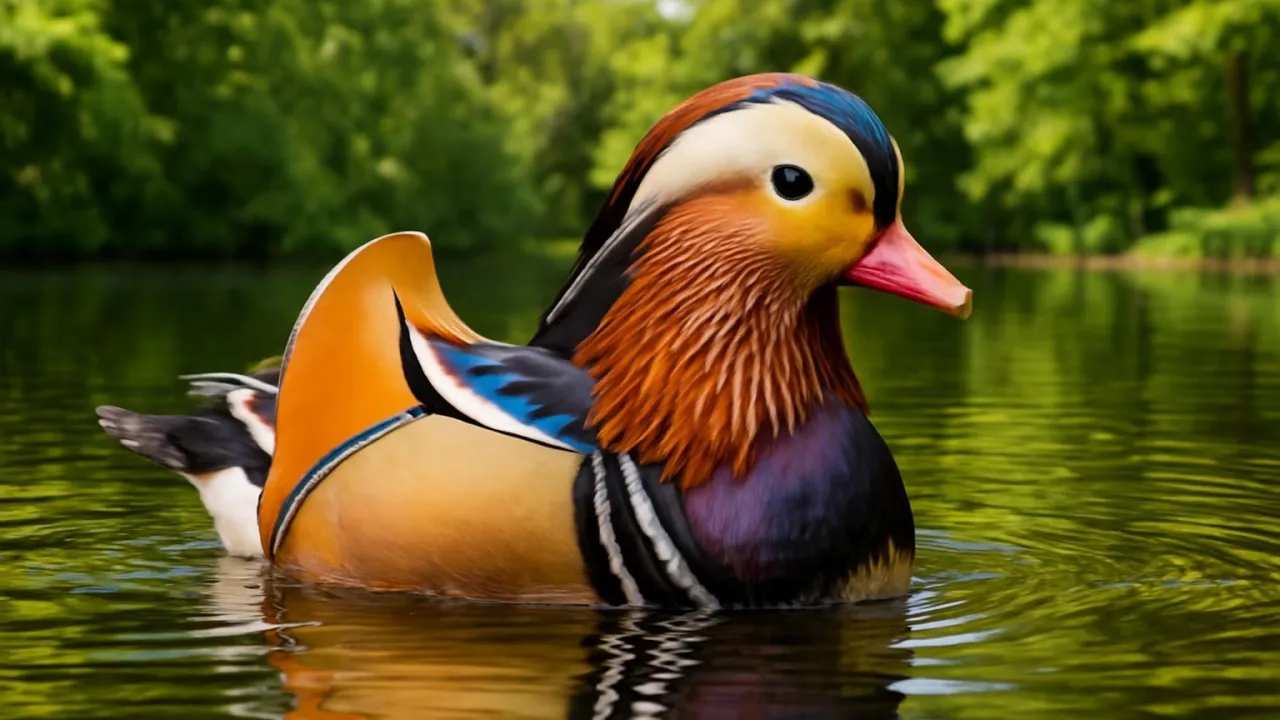
Male mandarin ducks shed their rainbow colors after breeding to stay safe from predators.
1 Brilliant Plumage and Courtship
Male mandarin ducks are famous for their spectacular orange 'sail' feathers, blue wings, and green crests, which they display during courtship rituals to attract females. These vivid colors make them one of the most beautiful ducks in the world, while the females remain brown and white for effective camouflage. The males' bright plumage is vital during mating season but is shed after breeding, leaving them looking more like the females. This seasonal color change helps protect them from predators when they are not trying to attract a mate.
2 Tree-Nesting and Duckling Survival
Mandarin ducks are unique among ducks because they build their nests in tree cavities, often high above the ground near water. After hatching, ducklings leap from their nest, sometimes falling over 30 feet, and land safely due to their lightweight, fluffy bodies. This extraordinary adaptation helps them avoid ground predators that might threaten eggs or young birds. The mother leads her ducklings to the water soon after they land, where they begin to swim and feed. Tree-nesting also allows mandarin ducks to occupy habitats that ground-nesting ducks cannot use.
3 Habitat and Diet
Mandarin ducks are native to East Asia, especially in China, Japan, and parts of Russia, where they live in wooded ponds, lakes, and slow-moving rivers. They are , feeding on seeds, aquatic plants, insects, and small fish, which they find by dabbling and foraging in shallow water. Their strong, flat beaks are perfect for picking up seeds and sifting through mud for tiny animals. In autumn, they eat more seeds and nuts to prepare for colder weather. This varied diet helps them survive in changing environments.
4 Mandarin Ducks Around the World
Although native to Asia, mandarin ducks have been introduced to parks and estates in Europe, especially in the United Kingdom, where small wild populations now thrive. Their striking appearance makes them popular in ponds and gardens, but escaped birds can form new colonies in the wild. Mandarin ducks play an important role in their ecosystems by spreading seeds and serving as prey for larger animals. However, habitat loss and pollution threaten their native populations, making conservation efforts increasingly important.
1. Why do mandarin ducklings leap from high nests?
2. What helps mandarin ducks survive in different environments?